Paris to Charles de Gaulle: Every Transfer Option Compared (2026 Guide)
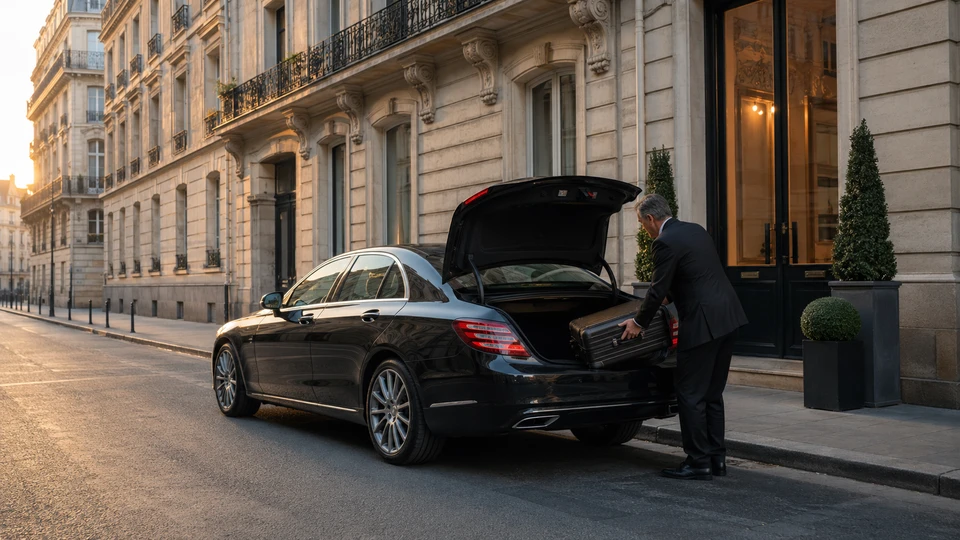
It's 5.40 a.m., and you're standing outside your hotel close to Le Marais, with your suitcase wheels getting stuck in the cobbles, as you try to decide whether the RER will have started running yet. Or perhaps it's 4 p.m. on a Friday, you have a 7.15 p.m. flight, and somebody has just said that the Périphérique is "bad again". Getting from central Paris to Charles de Gaulle Airport isn't difficult — but getting there correctly comes down completely to the time of your journey, the amount of luggage you're carrying, and how much your morning is worth to you.
On a clear day, the road journey from CDG to central Paris takes about 25 to 35 minutes, although during rush hour and because of Terminal 2's extensive size, this can be much longer; by train, the journey from a central station to the platform should take about 50 minutes.
The guide is aimed at people flying to or from CDG from Paris — including single travellers watching their expenses, families managing three suitcases and a stroller, and business travellers who only need to reach the correct terminal on time. While a privately booked transfer removes all the uncertainty, it's by no means the only way to get there, so let's consider frankly what actually works.
Quick Answer: The Best Way from Paris to Charles de Gaulle
For most travellers, a private transfer to Charles de Gaulle Airport offers the best combination of price and reliability, especially when two or more people have luggage. The RER B is the cheapest way for single travellers with only a small amount of luggage to get from Paris to CDG. A taxi journey from Paris to CDG is suitable for last-minute trips at odd hours.
| Distance | Fastest option | Cheapest option | Most comfortable |
|---|---|---|---|
| ~25–35 km (city centre to CDG) | Private transfer or taxi (off-peak) | RER B train | Private transfer |
Understanding the Paris → Charles de Gaulle Route
The airport is located to the northeast of Paris, having passed Saint-Denis and Le Bourget, in the Val-d'Oise / Seine-Saint-Denis region; people driving from central Paris usually take the A1 motorway in a northerly direction, occasionally using the Boulevard Périphérique en route, and the airport is accessible via a number of spur roads which serve each terminal.
On this route there is a very fast rail service, unlike the case with all Paris airport transfers: the RER B goes directly from stations such as Gare du Nord, Châtelet–Les Halles, and Saint-Michel–Notre-Dame to the terminals at CDG, namely Terminal 1/3 and Terminal 2, and usually requires no change when coming from central departure points.
The classic bottleneck on the A1 near Saint-Denis is the section around the Stade de France when there is a match or concert, since traffic can back up well beyond the normal rush hour. Those familiar with the route pay close attention to that area and, if necessary, take the A3 or adjust their timing instead of staying in the congestion.
Your Transfer Options, One by One
All the options available here involve different compromises between price, comfort, and the amount you're willing to carry down a flight of stairs. Here is how they work out for this particular route.
RER B Train
Verdict: It is reliable and inexpensive, but it was not designed for use in suitcases.
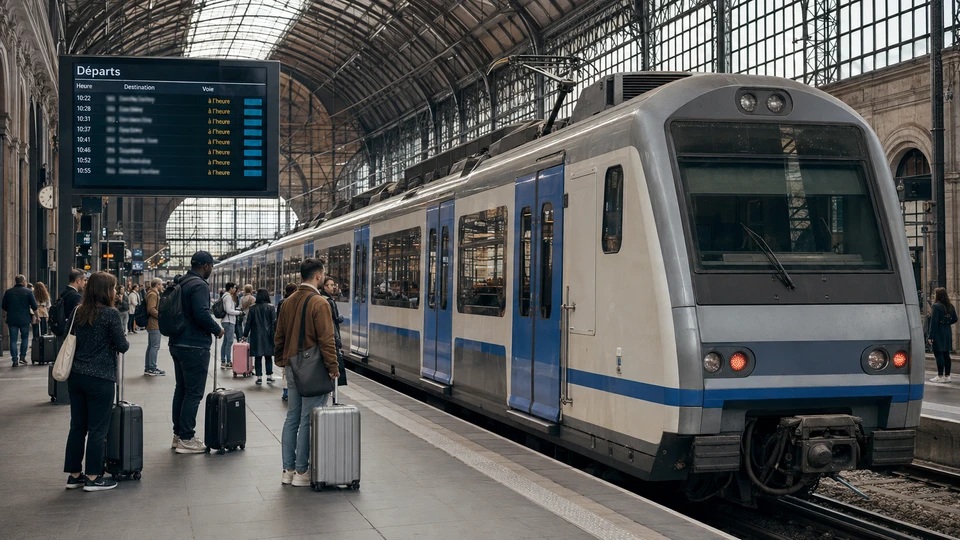
The RER B runs about every 10 to 15 minutes from the central stations and takes about 50 minutes to reach CDG, with stops at Terminal 1/3 (Aéroport CDG 1) and Terminal 2 (Aéroport CDG 2 TGV-RER); it is the choice most Parisians make.
The price is € and represents one of the cheapest options available for travel from Paris to CDG, with the price given per person.
The problem is that both Gare du Nord and Châtelet–Les Halles involve stairs, crowds, and—let us be clear about it—a greater risk of pickpocketing than most of the Paris stations, particularly since you're occupied with a suitcase and a phone. Moreover, the trains can be very crowded during the weekday rush hour, and that situation is rather unpleasant when you have a 23kg checked bag.
Pros:
- Frequent, direct trains with no transfer needed
- Cheapest way to get from Paris to CDG for one traveller
- Not affected by road traffic
Cons:
- Stairs and platform gaps are a real problem with heavy luggage
- Crowded at peak times, tight with kids or strollers
- Known pickpocketing hotspot at Gare du Nord
Actually, the RER B is really okay if you're travelling alone with a backpack—there's no need to worry about it.
You can check official train schedules and connections on the SNCF timetable page
Taxi from Paris to Charles de Gaulle
Verdict: It's simple and involves going from house to house, and the price is fair provided that you know the trick.
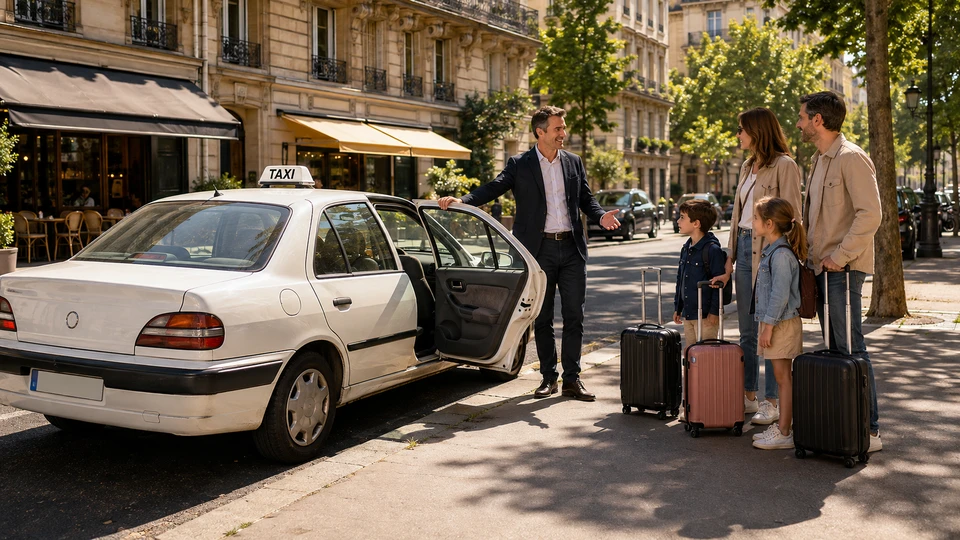
The flat-rate system used by Paris taxis for trips to and from CDG depends on which side of the Seine the pick-up or drop-off takes place on—there is one fixed price for the Rive Droite (Right Bank) and a different one for the Rive Gauche (Left Bank), no matter how much traffic there is or how long the journey takes. Few tourists are aware of ,this feature, so a slow journey along the A1 won't result in extra charges.
Price level: €€ since the price is charged on a per-vehicle basis, which can make it reasonable for two or three people to share it.
You can ask for an official Paris taxi—those (white cars with a sign on the roof)—at taxi ranks all over the city or arrange a journey by telephone or using an app. The fixed fare applies only within Paris; in the more distant suburbs, the meter is used as usual.
Pros:
- Flat fare within Paris means no surprises from traffic
- Door-to-door, no station stairs
- Available at short notice, day or night
Cons:
- Queues at ranks can be long during peak departure times
- No pre-booked meet-and-greet or flight tracking
- Driver quality and car condition vary
Ride-Hailing (Uber and similar apps)
Verdict: Easy to use on your phone, but the price can change without warning.

Uber and Bolt are both available all over Paris and all the way up to CDG. Although it is easy to book a ride, this route is subject to surge pricing, particularly in the early mornings, in the evening on Fridays, and whenever there is an event near the Stade de France causing traffic – and thus demand – to rise.
The price level is €–€€€, varying greatly depending on the time of day; it can be cheaper than a taxi during off-peak hours or more expensive than a private transfer during a surge.
Pros:
- Easy booking and live driver tracking
- Often cheaper than a taxi outside peak times
- Card payment built into the app
Cons:
- Surge pricing can spike sharply with no warning
- No guaranteed car type or luggage space
- Driver may not know CDG's terminal layout well
Roissybus
Verdict: It is cheap and straightforward, but only when starting from one point.
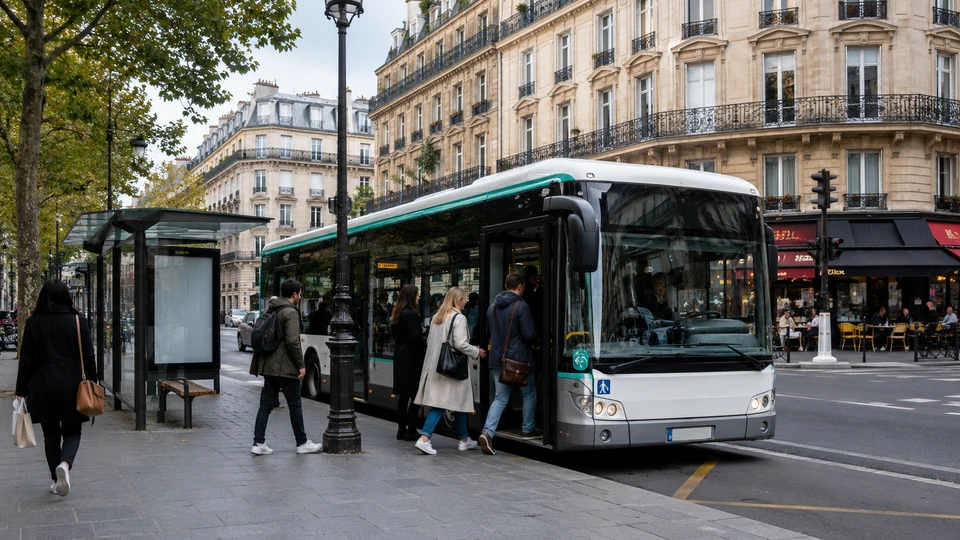
The Roissybus leaves from the Opéra (on rue Scribe, adjacent to the Paris Opera House) and goes directly to all CDG terminals in about 60 to 75 minutes, depending on traffic, since it uses the road instead of rail. It is a good value-for-money option—but only if your hotel is close to the Opéra; otherwise, you'll just be adding a trip by metro or taxi to get to the departure point.
The price level is € and is comparable to that of the RER B, with the price charged on a per-person basis.
Pros:
- Direct to all terminals, no interchange
- Reasonably frequent departures
- No stairs at the CDG end — drops right at arrivals level
Cons:
- Only useful if you're already near Opéra
- Subject to road traffic, less predictable timing than RER B
- Can get standing-room-only during peak season
Private Transfer
Verdict: The one that you book once and then stop worrying about it.

A private transfer will collect you from your hotel or apartment and take you straight to the terminal, where your name is displayed on a board, and someone monitors your flight in case of delays. This is generally the least stressful option for groups, families, or anyone who has more than one suitcase each.
The price level is €€, the amount being charged on a per-vehicle basis, which alters the calculations for anyone travelling with a group.
Pros:
- Fixed price agreed before you travel, no surge, no meter
- Driver meets you at arrivals with a name board, tracks your flight
- One vehicle for the whole group, luggage space included
Cons:
- Costs more than RER B for a solo traveller
- Needs booking in advance rather than hailed on the spot
- Overkill if you're travelling light and solo
Side-by-Side Comparison
| Option | Door-to-door time | Price level | Luggage | Transfers needed | Best for |
|---|---|---|---|---|---|
| RER B | ~50–70 min | € | Awkward with stairs | None from central stations | Solo, light packers |
| Taxi | ~30–50 min | €€ | Good, boot space | None | Odd hours, small groups |
| Ride-hailing | ~30–50 min | €–€€€ | Good, boot space | None | Flexible, tech-savvy travellers |
| Roissybus | ~60–75 min | € | Fair, under-bus storage | None (from Opéra only) | Travellers staying near Opéra |
| Private transfer | ~25–40 min | €€ | Excellent, dedicated space | None | Families, groups, early flights |
Which of the options is right for you??
For families who have young children: with a private transfer you'll have a child seat ready for you and a calm car, instead of having to navigate a stroller down the stairs of the RER B.
For people on a tight budget: take the RER B, since it takes fifty minutes, only requires one ticket and involves no complications—this really is the sensible option if you're travelling light.
When four or more people are travelling, the cost per person for a private transfer, on a per-vehicle basis, is usually less than that of four individual RER or taxi fares.
For business travellers, a pre-arranged transfer together with flight tracking ensures that a delayed connection does not result in a missed pickup.
For people having a lot of luggage: just skip the stairs at the RER platform — in this case a taxi or private transfer with boot space is well worth the extra cost.
For arrivals after midnight or before dawn: the RER B service does not operate all night, so you will have to arrange a taxi or use a pre-booked private transfer if you are getting there before 5 a.m. or after midnight.
For those visiting Paris for the first time, a private transfer eliminates one aspect of a journey in which you're already having to get used to a new city—another person takes care of the terminal, the traffic, and the timing.
The Case for Booking a Private Transfer with Top Paris Transfer
For a family of four, the cost of four individual RER B or Roissybus tickets can add up quickly — and a private transfer, which is charged per vehicle rather than per person, usually ends up being cheaper per person when the cost is shared among the group, not to mention much less stressful when travelling with luggage.
With Top Paris Transfer, your driver will monitor your flight, so if you arrive late or land early, you won't be left stranded or have to pay for a missed connection. They'll be waiting for you at your terminal—for example, at arrivals at Terminal 2E—with your name displayed, so that they can help you with your luggage and get it straight to the car.
The price is set at the time of booking, agreed in advance, so that there are no unexpected charges based on distance travelled and no surge pricing if you happen to be leaving just as a Stade de France event comes to an end; child seats, additional luggage space, and 24/7 availability are included from the start, not something you have to arrange as an extra.
A recent example of this was a family of five who had booked a transfer the night before rather than risk having to wait on an empty RER platform at 4:30am as they were flying out of Terminal 1 for a 6:50am departure; the driver was exactly at 4:15am outside their apartment near Bastille, and they had plenty of time left when they got through security.
Book a private transfer from Paris to Charles de Gaulle with Top Paris Transfer — at a fixed price and with the driver waiting for you at the arrivals.
When to Travel: Traffic & Timing on This Route
At dawn (before 6 a.m.): the roads are clear and this is actually the quickest time to travel by car—usually very close to the theoretical 25-minute minimum.
In the morning peak hour (from 7.30 to 9.30 a.m.) the A1 close to Saint-Denis goes much more slowly, so add 20 to 30 minutes to any route that involves using the road.
Midday (11am–3pm): This is usually the most peaceful period of the day for both road and rail travel.
For the evening peak hour (from 4:30 to 7:30 p.m.): it is the most difficult period for road transport, whereas the RER B performs better in terms of timing because it is not affected by traffic.
At night: the RER B doesn't run during the early hours, which means a taxi or a pre-booked transfer is the only practical choice.
It's worth mentioning one factor that varies with the seasons: if the match or the concert is taking place at the Stade de France, which is situated right next to the A1 corridor that this route follows, this can cause substantial delays with very little notice – so if you're travelling by road around kick-off time, be sure to check the calendar.
What This Route Really Costs
RER B and Roissybus have a fare of € each person, making them the most economical choice for a single traveller but the cost becomes high when travelling in a group. Taxi or private transfer prices are about €€ per vehicle — a system that is more advantageous for people travelling in a group since the price does not increase with the number of passengers.
No one mentions the extra costs involved: a metered taxi from outside the flat-rate area can end up costing more than anticipated if your pickup is in a suburb rather than in central Paris. During rush hour or at a Stade de France event, ride-hailing services like Uber can cost much more than a fixed-price transfer. Although RER B tickets don't explicitly include a luggage allowance, the stairs at Gare du Nord do effectively cost you some time and effort that is easy to overlook.
When you take into account the time taken, the stress involved, and the way fares are charged on a per-vehicle basis, a private transfer is usually the better value for a group of three or four who have luggage—let alone if you also consider the advantage of not having to stand on a crowded platform at 6 a.m.
Mistakes to Avoid on the Paris → Charles de Gaulle Journey
- If you are confused about which terminal to use on the RER B, please note that the trains stop at both "CDG 1" (which serves Terminals 1 and 3) and "CDG 2" (which serves Terminal 2 together with its A to G sub-terminals) — check your boarding pass before you board, not after.
– When it comes to the walk in Terminal 2, the various sub-terminals are widely spaced, so if a taxi or transfer drops you off at the wrong sub-terminal door, this could result in a long walk with your luggage.
– If the Roissybus leaves near your hotel: it starts from Opéra — don’t find out this fact after you’ve already checked out.
– If you travel through the A1 corridor without first checking whether it's necessary on the night of a match or a concert, it can become heavily backed up with very little warning. - If you don't want to book in advance for a flight departing before 6 a.m., the RER B line won't be running and there may be few taxis available at that time, so it's better to book your transfer the night before.
- If you have more than one bag each, the RER stairs won't be able to accommodate all your luggage, so you should allow extra time or go ahead and skip the train altogether.
FAQ
Is there a direct train from Paris to Charles de Gaulle?
Yes, the RER B goes directly from central stations such as Gare du Nord and Châtelet–Les Halles to the CDG terminals without a change, taking about 50 minutes.
What is the fare for a taxi from Paris to CDG?
The fare for taxis going to and from CDG in Paris is flat and depends on whether the pickup is on the Right Bank or the Left Bank, the price therefore remaining the same no matter what the traffic conditions—being about at the €€ level and being charged per vehicle not per person.
What is the travel time from Paris to Charles de Gaulle?
In light traffic, it should take about 25 to 35 minutes, but during rush hour plan on nearly an hour. If you use the RER B, allow about 50 minutes from door to platform.
Is the RER B line safe when travelling with luggage?
For a single traveller carrying only a backpack, it is a viable option, but with several suitcases, the stairs at the main stations and the risk of being pickpocketed at Gare du Nord make it more difficult.
What CDG terminal should I tell my transfer about?
Aircraft carriers are divided by terminal — make sure to check your boarding pass. If a private transfer or taxi drops you off at the wrong terminal, especially within the extensive sub-terminals of Terminal 2, you may end up walking for a long time.
Is a private transfer worth it for a solo traveller?
For one person travelling light, the RER B is genuinely the more sensible choice — a private transfer earns its price mainly once you're two or more, or flying at an hour when trains aren't running.
Does traffic near the Stade de France affect this route?
Yes — the A1 corridor runs right alongside it, and match or concert nights can add significant, hard-to-predict delay to any road-based transfer.
Can I book a transfer for an early-morning flight?
Yes, and it's the recommended option before 6am, when RER B hasn't started running yet, and taxi ranks can be unpredictable.