Paris to Versailles: Every Transfer Option Compared (2026 Guide)
You have just got off a crowded RER train at Saint-Michel Notre-Dame, your suitcase positioned between your knees, and somebody is already informing you that the route to Versailles is disrupted this weekend. Such things occur more than tourists anticipate. Versailles is located some 20 kilometres to the southwest of central Paris, and regardless of the mode of transport you take, it takes anywhere from 35 minutes to well over an hour to get there. This guide is for people who want to enter the Cour d'Honneur without spending half their morning figuring out which train branch to take. If you prefer to avoid guessing, a pre-arranged private transfer will take you there directly — further details are below.
Quick Answer: The Best Way from Paris to Versailles
For most travellers, a private transfer is the quickest way to get from one place to another and eliminates the risk of the RER C frequently closing on weekends. Although the RER C is the cheapest option when it is running, driving yourself only makes sense if you are used to navigating traffic on Paris's ring road and can find parking at Versailles.
| Distance | Fastest option | Cheapest option | Most comfortable |
|---|---|---|---|
| ~20 km | Private transfer (door-to-door, no transfers) | RER C (when operating) | Private transfer |
Understanding the Paris → Versailles Route
Versailles is situated nearly due southwest of Paris, just beyond the border of the city's western suburbs. Most drivers leave central Paris via the Boulevard Périphérique, exit at Porte de Saint-Cloud, and then take the A13 motorway toward Rouen before joining the motorway at the Versailles exits. On the way, you will see Saint-Cloud and its wooded park — one of the very few genuinely scenic sections of what is otherwise a standard commuter road.
Although there is a direct rail connection, there is a caveat. The RER C goes directly to Versailles Château Rive Gauche, which is the station nearest to the palace gates. The problem is that this line shuts down each year for engineering work from mid-July to late August, so anyone planning to visit during the height of summer should have an alternative arrangement ready.
The A13 and the area around Porte de Saint-Cloud see the highest levels of traffic between 7:30 and 9:30 in the morning and once again from 17:00 onwards, especially on Fridays. This situation is by no means unique to this road, but given that Versailles has narrow streets near the château, with a high proportion of one-way roads, it is wise to allow extra time before and after rush hour.
Your Transfer Options, One by One
Here, comfort and price go in opposite directions: the cheaper choices require more patience and more luggage handling, while the more expensive ones require less.
Private Transfer
Honest opinion: the one that gets rid of the most variables, even though it costs the most.

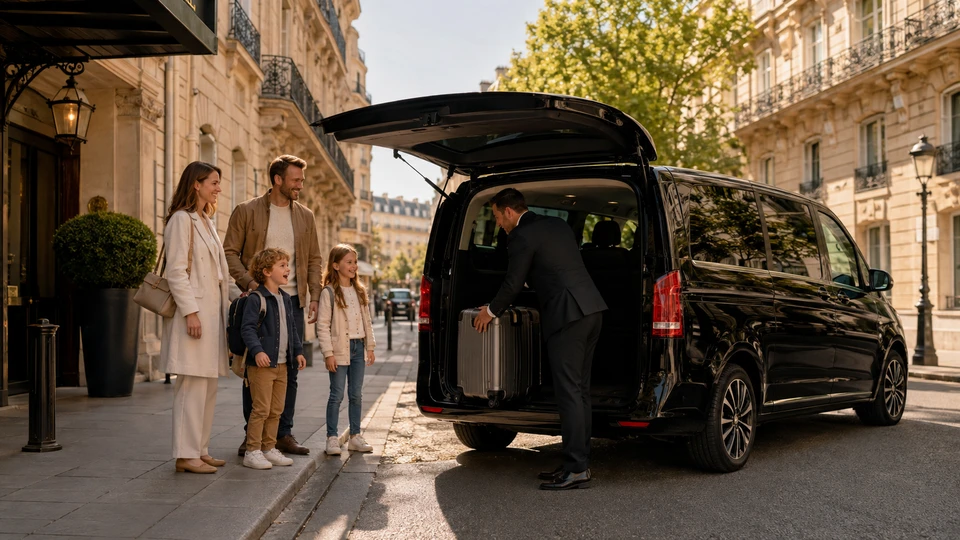
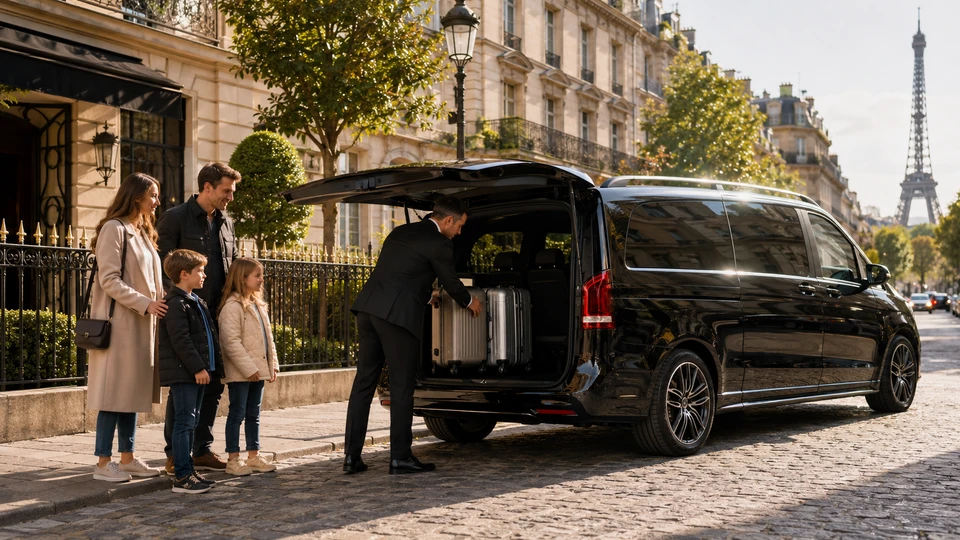
A driver booked in advance will pick you up from your hotel, apartment, or the airport arrival hall and take you straight to Place d'Armes, directly in front of the palace. You needn't look for a station; there is no branch line to verify, and there is no walk at the other end. The journey takes 35 to 50 minutes, door to door, depending on traffic.
- Price level: €€€, but priced per vehicle, not per person
- Luggage: unlimited practically speaking, no carrying it up station stairs
- Best for: families, groups, early starts, anyone visiting during the RER C summer closure
Advantages include no need for transfers, a fixed price agreed in advance, and the driver making real-time adjustments for traffic.
Cons: it costs more than using public transport on a per-person basis when travelling alone; it has to be booked in advance rather than being picked up at short notice.
RER C (When Running)
Honest opinion: it's really suitable for a single traveller carrying only a light suitcase — provided that the line is open.
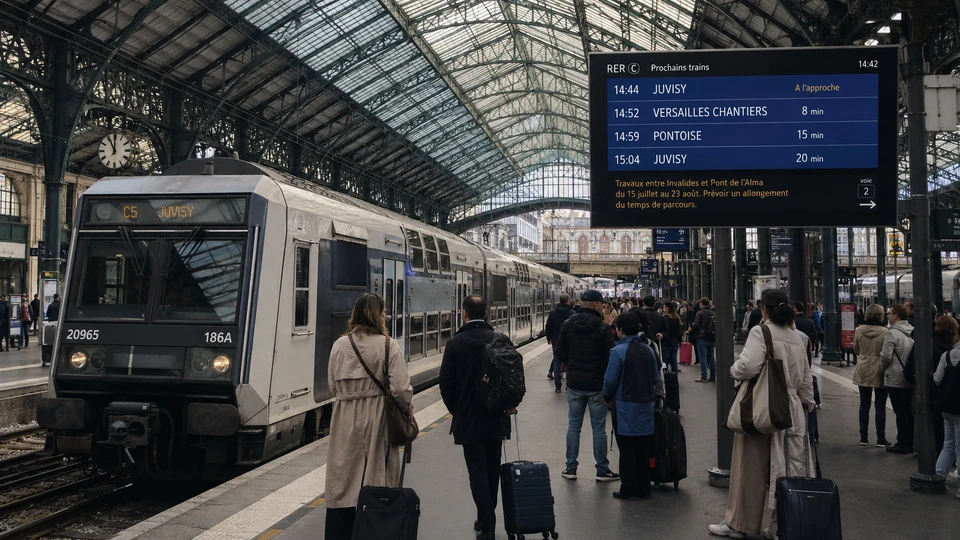
If you take a train that is marked for Versailles Château Rive Gauche from stations such as Saint-Michel Notre-Dame, Musée d'Orsay, Invalides, or Gare d'Austerlitz, the journey will take about 30 to 40 minutes and will get you to a point from which it is a 10-to-12-minute walk to the palace gates along Avenue de Paris. The line is closed each year from mid-July to late August for track work and also has reduced weekend service at other times of the year — be sure to check before making your plans.
- Price level: €, single ticket per person
- Luggage: manageable for a day bag, awkward with anything larger during peak hours
- Best for: solo travellers, budget-conscious visitors, anyone travelling outside the summer closure window
Pros: it is direct, requires no modifications, and gets closer to the palace than any of the other rail routes.
Drawbacks: it is closed from mid-July to late August most years and can become very crowded during the weekends of the Grandes Eaux Musicales.
SNCF Transilien Line N (Gare Montparnasse)
Honest opinion: it may appear to be faster when written down, but in reality it takes longer when you take the walk.
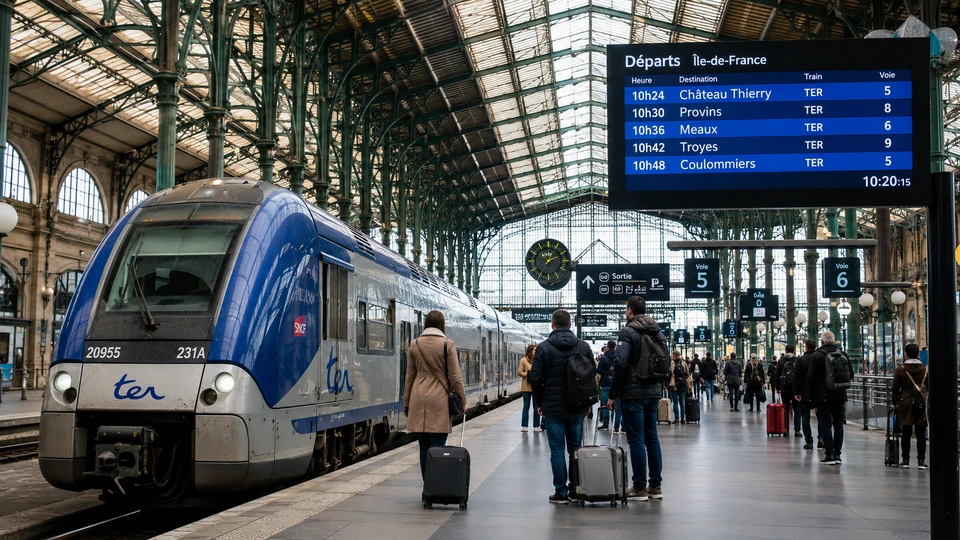
Transilien N trains departing from Gare Montparnasse take about 12 to 20 minutes to reach Versailles Chantiers—shorter than the RER C. The disadvantage is the station, since it is about 18 to 20 minutes' walk from the palace, or alternatively you can take a short local bus ride.
- Price level: €, per person
- Luggage: fine on the train, less fine on the walk afterwards
- Best for: travellers already staying near Montparnasse, or those avoiding the RER C entirely during its closure
Pros: faster ride. Frequent departures. Avoids RER C reliability issues.
Drawbacks include walking a longer distance or taking an extra bus journey at the Versailles end; moreover, Montparnasse is a large station to navigate when carrying bags.
You can check official train schedules and connections on the SNCF timetable page
Transilien Line L (Gare Saint-Lazare)
Honest verdict: This is a good Right Bank alternative that most guidebooks overlook.
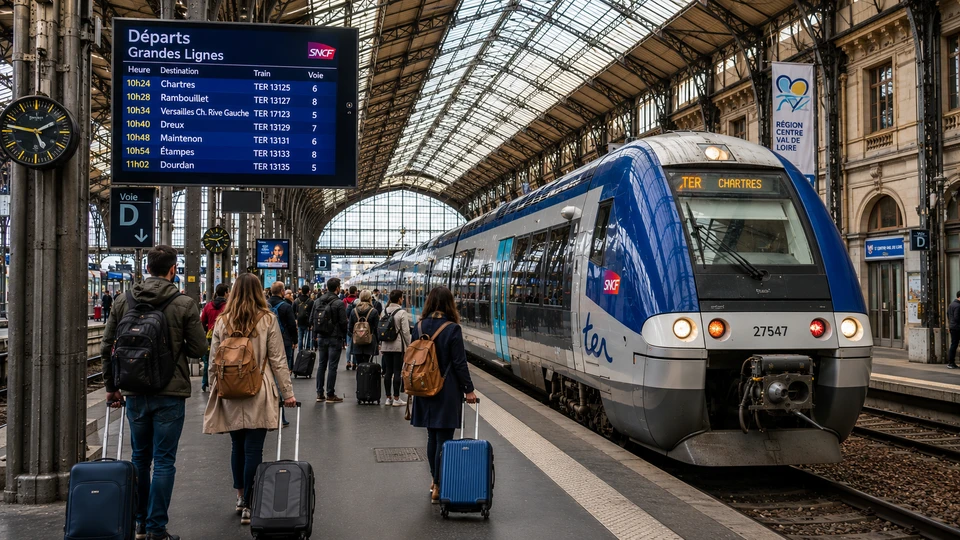
It takes about 25 to 35 minutes to get from Saint-Lazare to Versailles Rive Droite and then about 17 minutes' walk to the palace. This is a convenient option if you are staying near Opéra, Saint-Lazare, or in the western part of the Right Bank as opposed to the Left Bank stations, since the RER C serves those areas.
- Price level: €, per person
- Luggage: workable for a day trip, less so for anything bulky
- Best for: travellers based near Saint-Lazare or the 8th and 9th arrondissements
Advantages include avoiding the crowds on the RER C and being useful when that line is closed.
Cons: it still requires a walk to the far end; it is less frequent than the RER C during off-peak times.
Metro to Pont de Sèvres, then Bus 171
Honest opinion: it is possible, but you'll have to work for it through the transfers.
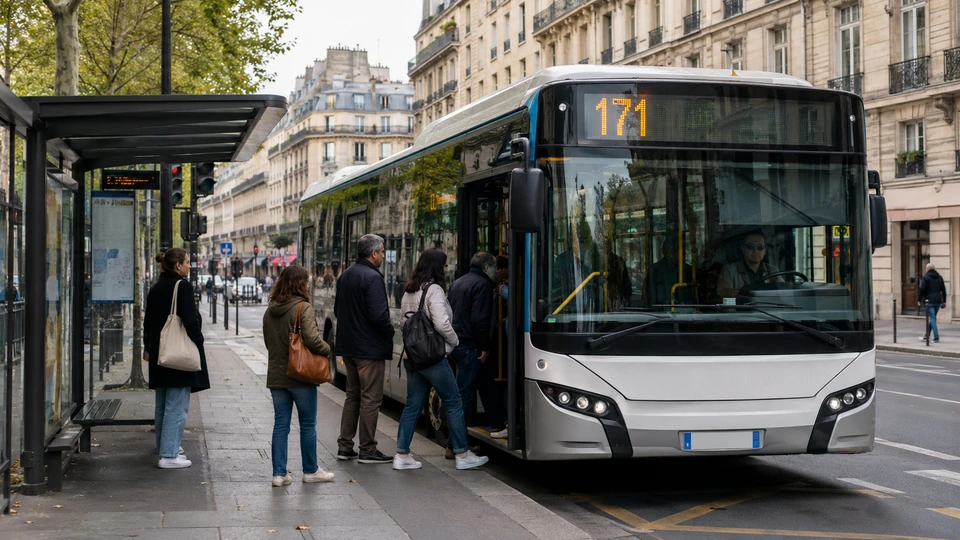
Go on to the western end of Metro Line 9 at Pont de Sèvres and then take Bus 171, as the bus actually arrives directly at the entrance to the château—there is no need to walk after getting off the bus. The total travel time is usually between 45 and 60 minutes, depending on road traffic, because the bus uses the same heavily trafficked approaches as taxis and private cars.
- Price level: €, standard transit fare
- Luggage: fine on the metro, cramped on a busy bus
- Best for: travellers staying along Line 9, or wanting to avoid RER C without switching to a mainline train
The advantage is that the bus stop is the nearest public transport point to the palace gates of all the available options.
Drawbacks include two changes, and on weekends at Grandes Eaux Musicales the 171 bus becomes very crowded.
Taxi / Ride-hailing
Final assessment: it's convenient, but the pricing involves a certain level of risk.
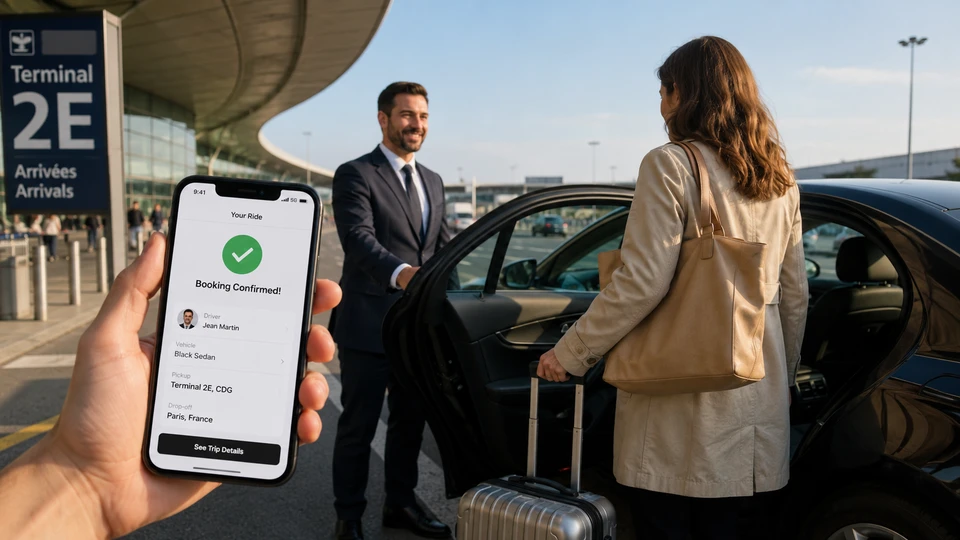
With airport routes, there is no flat-fare area extending from Paris to Versailles—if you use the service, you will be charged by the meter, or you will pay surge pricing when using a ride-hailing app during peak hours or in bad weather. The journey takes about the same time as driving yourself, taking between 35 and 55 minutes depending on traffic on the A13 and at Porte de Saint-Cloud.
- Price level: €€, per vehicle but with less price certainty than a pre-booked transfer
- Luggage: fine, boot space allowing
- Best for: spontaneous trips, travellers who didn't plan ahead
Pros: door to door. Available when you need it.
Drawbacks: no fixed price is agreed upon in advance; the availability may decrease around Versailles at the end of the day when everyone is trying to leave at the same time.
Self-Drive / Car Rental
Final assessment: The trouble it causes is more than worth it for just a day trip.

Take the Périphérique to Porte de Saint-Cloud. From there, get on the A13 and watch for the Versailles exits. Parking near the palace means using paid lots around Place d'Armes and along Avenue de Sceaux. Some garages have limited spaces and height restrictions.
- Price level: €€, plus parking on top
- Luggage: no constraints at all
- Best for: travellers combining Versailles with other stops outside Paris that day
Pros: There is complete flexibility regarding time and route.
Drawbacks include rush-hour traffic on the A13 and around Porte de Saint-Cloud; parking fills up quickly on weekends and on days when the Grandes Eaux Musicales are taking place.
Side-by-Side Comparison
| Option | Door-to-door time | Price level | Luggage | Transfers needed | Best for |
|---|---|---|---|---|---|
| Private transfer | ~35–50 min | €€€ | Unlimited | None | Families, groups, summer closure period |
| RER C | about 45 to 60 minutes (including the walk) | € | only light bags | none | individuals, budget trips (when open) |
| At Transilien N (Montparnasse) | approximately 45 to 60 minutes (including the walk) | € | only light bags allowed | none (by rail) | passengers staying on the Left Bank at Montparnasse |
| Transilien L (Saint-Lazare) | ~50–65 min | € | Light bags only | None (rail) | Right Bank stays |
| Metro + Bus 171 | ~45–60 min | € | Moderate | One change | Line 9 travellers, avoiding RER C |
| Taxi / ride-hailing | ~40–60 min | €€ | Flexible | None | Last-minute trips |
| Self-drive | ~40–60 min + parking | €€ | Flexible | None | Multi-stop day trips |
Which of the options is right for you?
For families with young children, the extra cost of a private transfer that includes an appropriate child seat and has no steps at the station is worth it, especially when you factor in naps and your patience levels.
When the RER C is running, it's a pleasant experience so take a window seat and watch the Seine go by before you've even gotten to Versailles.
When four or more people are travelling, a private transfer, calculated per vehicle, is usually cheaper per person than four individual rail tickets, and no one has to keep track of who is still on the platform.
For people travelling on a budget, either the RER C or the Montparnasse train will do; just remember that the service is closed during the summer.
If you have a lot of luggage, skip the stairs at the Versailles Château Rive Gauche and arrange a transfer instead – you'll appreciate it when you reach the palace gates.
For those visiting Paris for the first time, having a driver who has been预先 booked means you'll deal with one fewer unfamiliar transit system, since your day is already filled with passages in the châteaux and garden maps.
For those who visit Versailles in the late afternoon and take an evening flight, if your private transfer is arranged to match your actual flight time, you will avoid the stress of catching the last possible train back.
The Case for Booking a Private Transfer with Top Paris Transfer
If you do the maths for a family of four, the private transfer doesn't often seem such a luxury. The cost of four RER tickets adds up quickly, and that's not even counting the difficulty of handling a stroller on the steps at Rive Gauche. A private transfer that costs €€€ and is shared among four people usually ends up being about the same as what four separate train fares would cost — excluding the walking and avoiding the uncertainty of whether this weekend is the one on which the RER C is closed for work.
With the Top Paris Transfer, your driver will track your flight whenever you are arriving from the airport, wait for you in the arrivals hall having a name, and assist in loading your luggage into a vehicle that has been specially built for this purpose—so you don't have to rush to the taxi rank at Orly or CDG if you're going on a day trip to Versailles. The price is set at the time of booking, meaning there is no meter running while you are stuck on the A13 and no surge pricing because it started to rain.
A recent example was a family who arrived in Paris–Charles de Gaulle at 8 a.m. and were jet-lagged, wanting to get to Versailles before the crowds from the coach tours arrived. Taking a metered taxi or using public transport would have required making two changes and carrying three suitcases with an overtired toddler. Instead, their driver was already waiting for them at the arrivals hall and had them at Place d'Armes by mid-morning, allowing them to pass through the gates before the queue formed.
Book your private transfer Now.
When to Travel: Traffic & Timing on This Route
Leaving early, preferably before 9 a.m., will allow you to avoid not only the worst congestion on the A13 but also the large numbers of people who gather at the palace during mid-morning. The section near Porte de Saint-Cloud and then on to the A13 is the route's main bottleneck, most severe between 7:30 and 9:30 a.m. and again in the late afternoon.
From spring until autumn, there are musical fountain displays known as the Grandes Eaux Musicales, and these make the trains, buses, and car parks near the château considerably fuller. If your visit falls on one of these dates, add extra time to whatever option you choose, or choose a transfer that doesn't rely on fitting into a crowded RER carriage.
What This Route Really Costs (Including the Costs Nobody Mentions)
Public transport is at the € level and is charged on a per-person basis—although it is cheap for an individual, the total cost rises quickly when a family or a group is involved, and it does not cover the walking distance from Versailles Chantiers or Rive Droite if you're not taking the RER C. Taxis and driving yourself are in the €€ category, with the extra uncertainty of metered fares or surge pricing, along with parking charges for those who drive. A private transfer is in the €€€ range but is charged per vehicle, which is what makes the maths work in favour of groups.
There are some costs you should be aware of: parking close to Place d'Armes is not free, certain garages have height limitations which can affect taller vehicles, and if you're not already holding a Navigo pass that includes the appropriate zones, you'll need to buy a ticket for bus 171 or the local connecting buses. For an average family of four, when you total up the individual train fares, add in the possibility of a taxi at the Versailles end and remember that no one has taken the walk into account, it often turns out that a fixed-price transfer is the more reliable expense, even though it seems more expensive at first sight.
Mistakes to Avoid on the Paris → Versailles Journey
- If the RER C is assumed to operate continuously without any interruptions, it still closes from mid-July to late August for engineering work, and those visitors who do not book in advance end up having to look for an alternative on that day.
- You might get on the wrong RER C line. Since not all C trains end at Versailles Château Rive Gauche — some of the lines branch off at other places — it is necessary to check the destination indicated on the platform screen before getting on.
- When getting off at Versailles Chantiers with the intention of reaching the palace: it is a real station, but the walk from the gates takes between 18 and 20 minutes, not just two minutes.
- Underestimating the number of people using Bus 171 on weekends when the fountains are being shown. This is so because it is the nearest public transport stop to the château, which is the reason it becomes full quickly on weekends when the fountains are displaying.
– Driving without checking the parking height restrictions. In some garages near Place d'Armes, these restrictions can trap larger rental vehicles. - When leaving Versailles at closing time, there is no plan. Everyone rushes at the same time to the station or the taxi rank, and both the public transport and the number of taxis decrease quickly during that period.
FAQ
Does a direct train run from Paris to Versailles?
Yes, the RER C line goes directly to Versailles Château Rive Gauche, and you won't need to change trains; it is about a 10- to 12-minute walk from the palace. However, it is closed each year from mid-July to late August for engineering work, so it's advisable to check before using it in high summer.
What is the time taken to travel from Paris to Versailles?
When RER C is in operation, allow about 30 to 40 minutes on the train plus walking time; a private transfer usually takes about 35 to 50 minutes door to door, depending on A13 traffic.
How close is the nearest train station to the Palace of Versailles?
Versailles Château Rive Gauche, served by the RER C, is the closest, about a 10- to 12-minute walk from the gates; Versailles Chantiers and Versailles Rive Droite are both farther away.
Does Paris to Versailles have a flat taxi fare?
No; unlike certain airport routes, the journey from Paris to Versailles does not have a fixed taxi fare, so charges shown on meters or imposed by ride-hailing services can differ. The only option is to book a private transfer in advance, so you agree on a price before you travel.
Can I get to Versailles by bus?
Yes, via Metro Line 9 to Pont de Sèvres, then Bus 171, which stops right at the château forecourt. It's a solid option outside peak fountain-show weekends, when it can get crowded.
Is a private transfer worth it for a solo traveller?
Honestly, probably not — RER C or the Montparnasse train do the job well for one person with a light bag. Transfers earn their price with groups, families, heavy luggage, or when RER C is closed for its summer works.
What's the best time of day to travel to avoid crowds and traffic?
Aim to leave before 9am, ahead of both the A13's morning rush and the palace's own mid-morning crowds. Late afternoon departures back to Paris also hit the second daily traffic peak around Porte de Saint-Cloud.