Best Ways to Get from Gare du Nord to Charles de Gaulle Airport: Every Transfer Option Compared (2026 Guide)
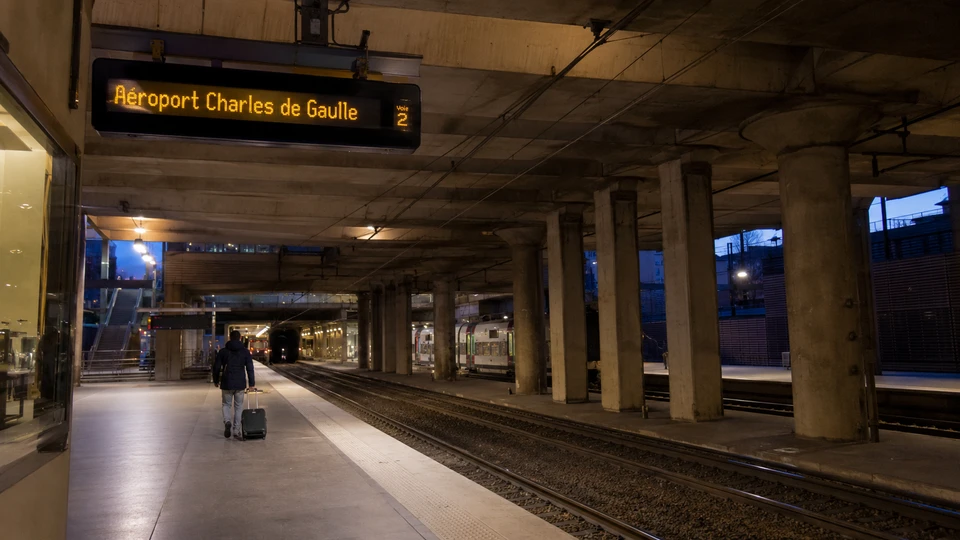
You've just got off a Eurostar or a regional train, you're standing under the departure boards at Gare du Nord, and yet you need to be at a terminal 25 km away within the next hour. While this is one of the more lenient routes for getting across Paris—there is a direct train, good road connections, and plenty of choices—it still tends to mislead people, usually because they haven't checked which train they're getting on.
The distance from Gare du Nord to Charles de Gaulle Airport is about 25 to 28 km, and the actual travel time ranges from around 35 minutes when taking the fast RER B train to more than an hour by car if you're travelling at the wrong time of day. This guide is for people flying out of CDG and based in central Paris—whether they are travelling alone, travelling with suitcases, or simply don't want to risk missing their flight because of a metro connection. Although booking a private transfer removes the need to make guesses, it's still useful to know what the alternative options really involve.
Quick Answer: The Best Way from Gare du Nord to Charles de Gaulle
For most travellers, the RER B is the quickest and cheapest way to get from Gare du Nord to CDG, as it is a direct service with no changes and takes about 30 to 40 minutes. For groups, families travelling with luggage, or those with early flights, a private transfer is the more comfortable option because it provides door-to-door service at a fixed price and avoids the need to descend stairs with suitcases. A flat-rate taxi falls somewhere in between on both comfort and price.
| Distance | Fastest option | Cheapest option | Most comfortable |
|---|---|---|---|
| ~25–28 km | RER B (direct train) | RER B (direct train) | Private transfer |
Understanding the Gare du Nord → CDG Route
Gare du Nord is located in the 10th arrondissement, in the north-central part of Paris. CDG lies due northeast of Paris, beyond the Périphérique and close to Roissy-en-France. All the roads and rail lines on this route follow approximately the same corridor — both the rail and road routes go northwards out of the city before bending eastwards towards the airport.
The standard road route is the A1 motorway, which you take off the Boulevard Périphérique at Porte de la Chapelle. As you drive, you go close to the Stade de France in Saint-Denis and then round Le Bourget——the former Paris airfield where Lindbergh landed in 1927 and which is now home to an aviation museum——before reaching the final section of CDG's terminal loops.
When travelling by rail, no arrangements are needed, since the RER B goes directly from Gare du Nord to the airport without requiring a change of train. It is one of the rare Paris stations at which the train to the airport leaves from the same building that you have just entered. The line does divide, however — some of the trains end their journey at CDG while others go on to Mitry-Claye, a completely different town — so it is more important than people realise to check the platform displays before getting on.
The main variable on this road is traffic; on weekday mornings and Friday afternoons, the A1 is most heavily congested, especially around the Le Bourget and Porte de la Chapelle junctions, which is why a journey that takes forty minutes at 11 a.m. can last over seventy-five minutes at 8 a.m.
Your Transfer Options, One by One
Here, the trade-off between price and comfort is clear, but what makes sense for you depends more on the type of luggage you have and the length of your flight than most guides admit.
RER B Train
Verdict: The default option, and generally the correct one.

The RER B departs from directly under Gare du Nord—keep going according to the signs until you reach the platforms, which are on a level below the main concourse. The trains going to the airport are clearly indicated as "Aéroport Charles de Gaulle" on the departure boards; if the board shows Mitry-Claye, then it is not your train. There are two stops at the airport: Aéroport CDG 1 serves Terminals 1 and 3, and Aéroport CDG 2 serves Terminal 2. If you get on the wrong one, you'll have to transfer by shuttle at the other end.
The journey takes about 30 to 40 minutes, depending on the number of suburban stops your specific train serves; trains run roughly every 10 to 15 minutes during the day. Prices are in the euro range—by a large margin the cheapest way to make the journey—and the fare is charged per person, not per group.
The problem is with the luggage. The platforms are down a flight of stairs and have limited lift access, and the lower levels of Gare du Nord are well known as a place where people watch bags to build up their reputation—keeping hold of all the luggage, particularly in the crowded areas near the ticket barriers.
Pros:
- Direct, no transfers, cheapest option by far
- Frequent departures, easy to catch the next one if you miss yours
- Runs early and late, useful for dawn flights
Cons:
- Stairs and turnstiles are hard work with big suitcases
- Two different airport stations — board the wrong branch, and you'll add time
- Priced per person, so a family of four pays four times over
You can check official train schedules and connections on the SNCF timetable page
Flat-Rate Taxi
The decision is predictable, pleasant, and offers no surprises regarding the fare.

Taxis officially based in Paris follow a fixed rate for trips to and from CDG, and since Gare du Nord is situated on the Right Bank of the Seine, the charge for transfers from there is the lower of the two zone fares rather than the one applicable to the Left Bank. This fare remains constant regardless of traffic, includes up to four passengers and their luggage, and a meter does not operate when you are waiting on the A1.
The journey takes between 45 and 75 minutes depending on when you travel, and can sometimes be longer during the Friday evening rush. The cost is €€, which is considerably higher than the train, but it's split between passengers rather than charged per person, so it works out for two or more people.
The problem is that you have to find a taxi outside the station at the precise moment when you need one. Although there is a taxi rank outside Gare du Nord, the queue can get very long during peak arrival times, and it's not always clear which cars are official.
Pros:
- Fixed price, no metered surprises
- Door-to-door, no stairs or platform changes
- Price is per car, so it splits well for two to four people
Cons:
- Rank queues can be unpredictable at busy times
- Journey time is at the mercy of A1 traffic
- No flight tracking if your gate changes or you're delayed getting to the rank
Private Transfer
The choice you make when you want to put all of this behind you.

A private transfer that has been pre-booked follows the same route as a taxi — via Le Bourget — but the difference becomes apparent before you leave. Since your driver monitors your flight, you won't be left with a booking you can't make; your departure is delayed; at the airport, they will be waiting for you at the designated terminal with a sign displaying your name, rather than you having to look for a taxi rank.
The price varies from €€ to €€€ depending on the size of the vehicle and is charged per vehicle rather than per person – a point that is more important than it may seem. When divided among a family of four, the cost of a private transfer is usually about the same as four separate RER B tickets, without having to climb stairs, deal with platform confusion, or risk missing a connection before an international flight.
That's also when child seats, extra luggage space, and a driver who will really help you to load your bags are useful — aspects which the train or a standard taxi rank does not guarantee.
Pros:
- Fixed price agreed at booking, no rank queues
- Flight tracking absorbs delays automatically
- Per-vehicle pricing, genuinely competitive for groups
Cons:
- Costs more than the RER B for a solo traveller with one bag
- Needs booking ahead — not a spontaneous option
- Overkill if you're young, unencumbered, and don't mind stairs
Ride-Hailing (Uber, Bolt, and similar)
Verdict: It's suitable to use as a backup and is less predictable than it appears.

Ride-hailing services operate throughout central Paris and out to CDG, taking the same A1 route as taxis. Their main attraction is the convenience of being able to place an order from your phone and then watching the car come towards you, but since the prices are dynamic, this becomes important on this route because the demand in the early morning and on Friday evenings can raise the fares well above the fixed taxi rate, in some cases by a large amount.
The price varies between € and €€€ depending on demand at the moment you book, making it the least predictable option in terms of price. With a flight that has a fixed early booking, that level of unpredictability is precisely what you would not want.
Pros:
- Booked from your phone, easy if you're already used to the app
- Can undercut the flat taxi fare during quiet periods
- Real-time driver tracking to your pickup point
Cons:
- Surge pricing can make it the most expensive option, not the cheapest
- No guaranteed meeting point at a specific terminal exit
- Driver may not know CDG's terminal layout as well as a dedicated airport transfer service
Keolis CIF Bus
Verdict: It does exist, but there is seldom a good reason to prefer it over the train.
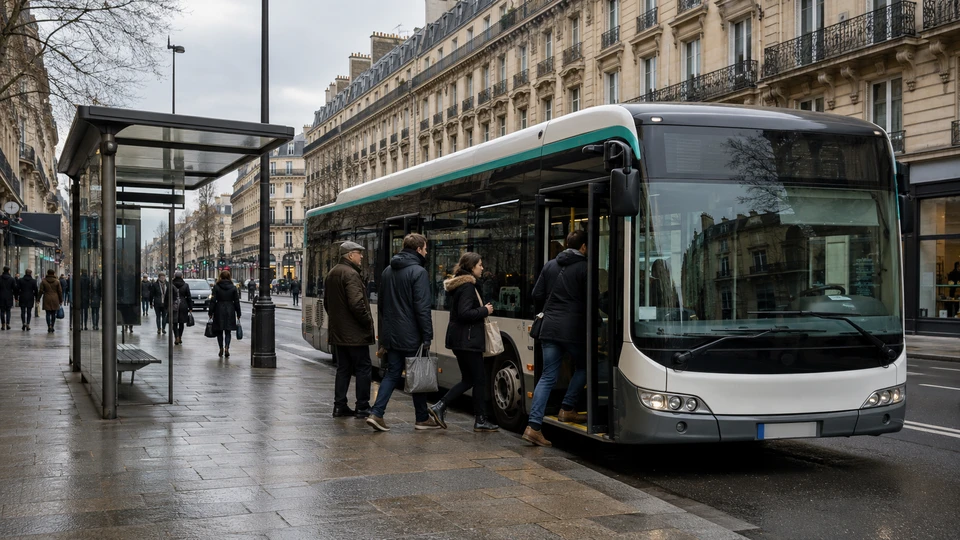
Keolis CIF runs a bus service directly from Gare du Nord to CDG Terminal 2, with about one bus departing each hour. It does provide a real alternative and can be a useful substitute in the event that the RER B is disrupted, but since it takes about 40 minutes and has a similar cost to the train—along with being much less frequent and not serving Terminals 1 or 3—it seldom outperforms the RER B when compared on its own terms.
Pros:
- Direct, no transfer needed
- Useful fallback if RER B is suspended
- Similar price bracket to the train
Cons:
- Only serves Terminal 2, not 1 or 3
- Hourly departures mean a missed bus costs real time
- No real advantage over RER B when both are running normally
Side-by-Side Comparison
| Option | Door-to-door time | Price level | Luggage | Transfers needed | Best for |
|---|---|---|---|---|---|
| RER B | ~30–40 min + walk | € | Tight, stairs | None | Solo travellers, light packers |
| Flat-rate taxi | 45–75 min | €€ | Easy, boot space | None | Pairs, no advance planning |
| Private transfer | 45–75 min | €€–€€€ | Easy, dedicated space | None | Families, groups, early flights |
| Ride-hailing | 45–75 min | €–€€€ | Easy, boot space | None | Backup option, flexible budgets |
| Keolis CIF bus | ~40 min + walk | € | Moderate | None (T2 only) | Terminal 2 flyers with light bags |
Which of the options is right for you??
For families who have young children: the stairs at the RER platforms of Gare du Nord when using a stroller and two suitcases are actually not enjoyable at all. Having a private transfer with a child seat already fitted eliminates all that trouble.
For couples who have only a few bags: the RER B is difficult to surpass since it's quick, cheap, and two people can cope with the stairs between them without too much hassle.
When there are four or more people, a private transfer or a flat-rate taxi will usually get you close to the price of four RER tickets — without having to worry about which platform to go to.
For people travelling on a tight budget: take the train, since it is the cheapest way to get from this station to CDG, no doubt about it, and you can do it with just one backpack.
For business travellers with a tight connection, a private transfer coupled with flight tracking ensures that if the Eurostar is delayed or the meeting is postponed, your arrival time at the airport will not be affected.
For early-morning or late-night journeys: the RER B operates from about 5 a.m., but if you're half-awake you're more likely to have problems when trying to walk to the platform and deciding which line to take. This difficulty is completely eliminated if you have a pre-booked transfer.
For those who are visiting Paris for the first time, Gare du Nord is a large and busy station, and first-time visitors often get confused by the split of the RER B lines (those going to CDG and those going to Mitry-Claye). If you're new to the city, it's one less thing to worry about: having a driver waiting for you.
The Case for Booking a Private Transfer with Top Paris Transfer
If you look at the figures objectively, the case becomes clear for anyone travelling with two or more people. Although a pair of RER B tickets looks cheap in print, when the number reaches four the figures change – a €€ private transfer, which is charged per vehicle, often ends up being about as cheap or even cheaper per person than four individual € train fares, and that's not even taking into account the stairs, the ticket queue, and the stress of taking the wrong branch.
Using Top Paris Transfer, your driver will track your flight and automatically adjust the pickup time—there's no extra charge if your departure is delayed, and you won't have to rush to find a taxi if your Eurostar arrives late at Gare du Nord. When you reach CDG, you'll be met at the designated terminal with a sign, your bags will be loaded, and you'll be on your way to the car immediately. There's no need to join a queue, and the fare won't increase as you sit stuck in A1 traffic.
If you ask for them, child seats are available; there is always enough room for your luggage, and the service operates around the clock, which is useful since many flights departing from CDG are scheduled at either end of the day.
A good example of this was a family of five who had booked a transfer the day before because the RER B platforms at Gare du Nord were found to be too crowded for their luggage when they were leaving early on a Tuesday and who went straight to the driver as soon as they came down from the Eurostar platform, reaching the A1 within ten minutes—there being no stairs, no need to use a ticket machine, and no second thoughts about missing the check-in window.
👉 Book a private transfer from Gare du Nord to Charles de Gaulle Airport with Top Paris Transfer: the price is fixed, and the driver will be waiting at the arrivals hall.
When to Travel: Traffic & Timing on This Route
The A1 gets very busy early in the morning, especially on weekdays before 9 am, as commuter traffic travels in the opposite direction through the area around Porte de la Chapelle and Le Bourget. Midday is generally the quietest period for a road transfer, although it is still the closest you will get to the range's 45-minute limit.
The worst-kept secret on the route is Friday afternoons – from about 4 p.m. onwards, Parisians leaving the city for the weekend make the northbound A1 very busy, and a journey that usually takes fifty minutes can end up taking over ninety.
A noteworthy seasonal feature is that Paris Nord Villepinte, the large exhibition centre, is located right next to CDG. When there are major trade fairs in the area, there is a noticeable increase in A1 traffic near the airport—so if your visit falls during a week when a big salon is taking place, it's advisable to build in extra time.
What This Route Really Costs (Including the Costs Nobody Mentions)
Since RER B charges per person, it isn't ideal for groups because four tickets add up quickly, even if they are only a few euros. In contrast, taxis and private transfers are priced per vehicle, which is why the maths works in favour of groups even though the overall price appears higher.
On this particular route, there are some hidden costs: if you take the wrong branch of the RER B, you'll have to backtrack, which could take between 20 and 30 minutes and, in the worst case, might cause you to miss your connection at the airport end. During peak hours, ride-hailing services can apply surge pricing, and a 'cheap' option can become the most expensive on this list. And if you're taking an ordinary taxi from the Right Bank rather than booking one in advance, remember that the fixed fare only applies within the city zones—outside central Paris you'll have to pay according to the meter again.
For a typical group of three or four, once you weigh ticket cost against the time and hassle saved, a private transfer usually comes out as the better-value option overall — not just the more comfortable one.
Mistakes to Avoid on the Gare du Nord → CDG Journey
- You've got on the wrong RER B line. Half of the trains departing from the platform at Gare du Nord go past CDG towards Mitry-Claye — check the screen, not just the platform number.
- You may alight at the incorrect airport terminal. Aéroport CDG 1 handles Terminals 1 and 3, while Aéroport CDG 2 serves Terminal 2. Verify which terminal you will use before boarding, not after.
– Underestimating the stairs. The step-free facilities at the RER B platforms at Gare du Nord are not complete, so you should plan your journey differently if you are travelling with a heavy suitcase or have reduced mobility. - Taking a flight on a Friday evening without leaving any extra time. The A1 experiences a slowdown in the Friday afternoons, a phenomenon that is foreseeable and which is seldom taken into account by visitors who are going there for the first time.
- Supposing that ride-hailing will be cheaper than a taxi — during peak demand it often isn't, so be sure to look at the app's estimate before making that assumption.
- If your travel dates fall during a major exhibition at Villepinte, allow yourself extra time to deal with the A1 congestion near the airport.
- If you don't book in advance for an early departure, this is because taxi ranks are often sparse at 4 or 5 am; booking in advance ensures that a taxi will be available.
FAQ
Is there a direct train running from Gare du Nord to Charles de Gaulle?
Yes, the RER B goes there directly without any need to change trains in about 30 to 40 minutes; just make certain that the train you take is going to the airport and not the Mitry-Claye service, as the line divides before CDG.
What is the fare for a taxi from Gare du Nord to CDG?
Official Paris taxis charge a fixed fare, regulated by the government, when travelling from CDG to the city; since Gare du Nord is on the Right Bank, the transfer fees at this station fall under the lower flat-rate category and are charged per vehicle rather than per person.
What is the time taken to travel from Gare du Nord to Charles de Gaulle?
It takes about 30 to 40 minutes by RER B. If you take the road—by taxi, private transfer, or ride-hailing—expect the journey to take 45 to 75 minutes under A1 traffic conditions, and longer during Friday evening peak hours.
What RER B station should I use for my terminal?
CDG Airport 1 serves Terminals 1 and 3, while CDG Airport 2 serves Terminal 2. Check your boarding pass before getting on the train, not after you arrive.
Is the RER B line safe when travelling with luggage?
It's manageable but not effortless — the platforms sit below Gare du Nord's main concourse with limited lift access, and the station has a reputation for pickpockets, so keep bags close, especially near the ticket barriers.
Is a private transfer worth it for a solo traveller?
Not usually. A solo traveller with one bag is well served by the RER B on price and speed. Private transfers earn their value with groups, families, heavy luggage, or early departures where flight tracking matters.
Does the Roissybus run from Gare du Nord?
No — Roissybus historically departed from Opéra, not Gare du Nord. From this station, your direct options are the RER B or the hourly Keolis CIF bus to Terminal 2 only.
What's the cheapest way from Gare du Nord to CDG for a family of four?
On paper, RER B tickets look cheapest, but priced per person, they add up fast for four. A private transfer, priced per vehicle, often comes out to about the same total—with none of the stairs or platform confusion.
For connecting journeys, see our CDG to Disneyland Paris transfer guide and check current Paris airport transfer prices before you book. If you're arriving via Gare de l'Est instead, our Gare de l'Est to CDG guide covers that route separately.