Best Ways to Get from Charles de Gaulle to Versailles: Every Transfer Option Compared (2026 Guide)
After flying for overnight you arrive at Charles de Gaulle, go through customs somewhere in Terminal 2E, and then realise that the Palace of Versailles is on the other side of Paris — not just a short detour, but actually the opposite side. Since CDG is situated to the northeast of the city and Versailles to the southwest, this geography is the entire point of the route, and that is the reason why the "best option" answer largely depends on the items you are carrying and on how much patience you have remaining.
The distance is about 50 kilometres and, under normal circumstances, the drive lasts between 45 minutes on a quiet Tuesday morning and more than 90 minutes on a Friday evening. There is no direct train service—you'll have to change lines at least once. This guide is aimed at people who are flying into CDG and planning to go directly to Versailles, such as a family travelling with a stroller and four suitcases or a single traveller using a backpack who is not minded about a little bit of navigating.
Booking a private transfer takes away a great deal of the uncertainty involved here — but it isn't the only reasonable choice, and we'll explain why it might not in fact be the best option for you.
Quick Answer: The Best Way from Charles de Gaulle to Versailles
For the majority of travellers, a private transfer (€€€) is the most comfortable and reliable method of covering this route across Paris, the journey taking about 45 to 60 minutes from door to door without having to change trains. Travellers on a budget who have only light luggage can handle the RER B/RER C combination (€) in around 75 to 90 minutes. If you drive yourself (€€) you will get there fastest when the traffic is good, though the journey becomes unpredictable during rush hour.
| Distance | Fastest option | Cheapest option | Most comfortable |
|---|---|---|---|
| ~50 km | Private transfer or self-drive (in light traffic) | RER B + RER C | Private transfer |
Understanding the CDG → Versailles Route
Charles de Gaulle is situated at a distance of about 25 km to the northeast of central Paris, while Versailles is roughly 17 km to the southwest of Charles de Gaulle. To get from one place to the other you have to cross — or go around — the whole city.
Usually, drivers go south on the A1 and then either take the Boulevard Périphérique and proceed on to the A13 or take the A86 first. When you're driving early on, you'll go through the Saint-Denis area, with the Stade de France visible to the side—this gives a good indication of how far along you are.
If you're driving there's a feature worth being aware of: the A86 has a toll tunnel close to Rueil-Malmaison called the Duplex A86, which reduces the distance for the westward journey but does so at a real expense and isn't always worthwhile. Going along the A86 in the other direction avoids the toll altogether, even though it means covering a bit more distance.
There is no direct rail connection, so you'll have to change trains at least once, and the traffic situation which most people find troublesome is the late-afternoon congestion feeding into the A13 as you near Versailles.
Your Transfer Options, One by One
All the options listed here involve a fairly predictable kind of trade-off whereby the cheaper one is, the more of your own work and time it will require.
Private Transfer
The best approach when taking this particular route is the least stressful one, and it's worthwhile if you're not travelling alone and with light equipment.

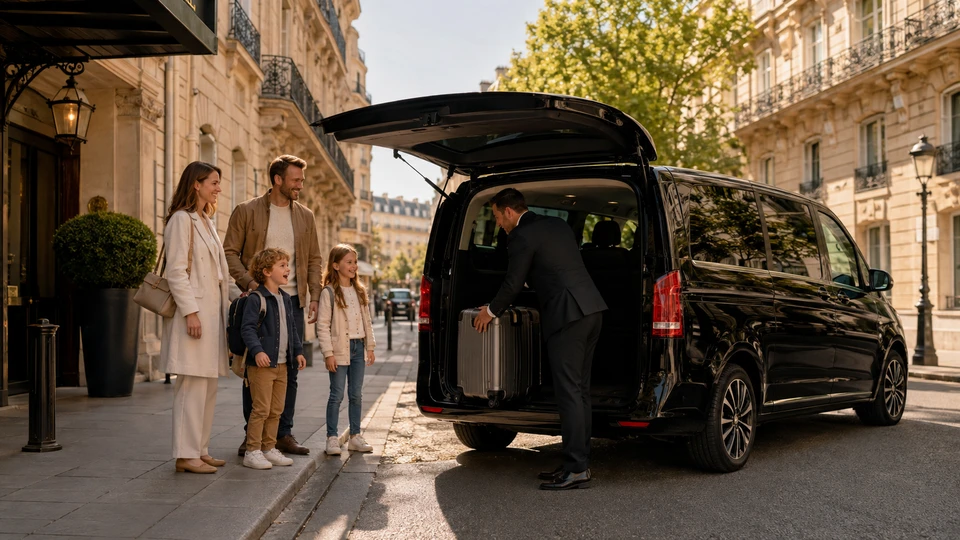
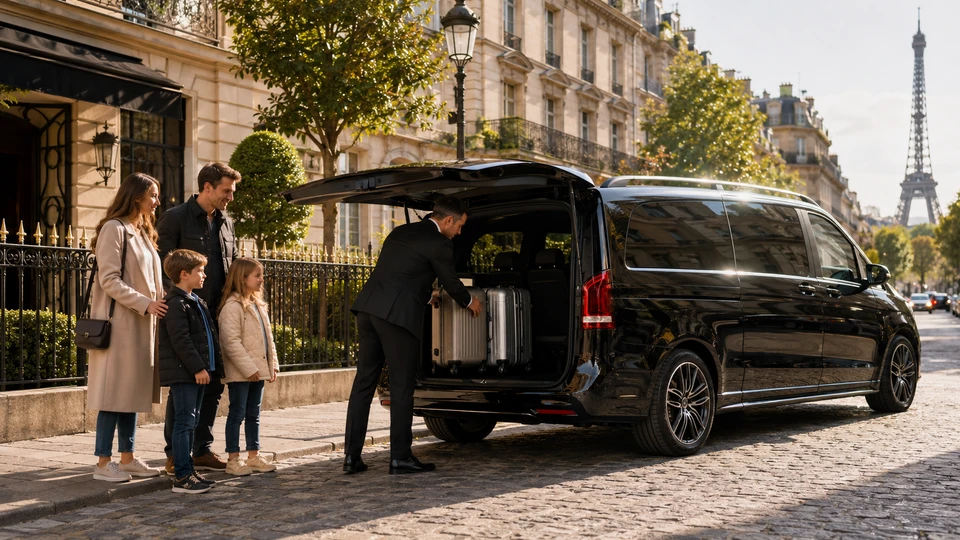
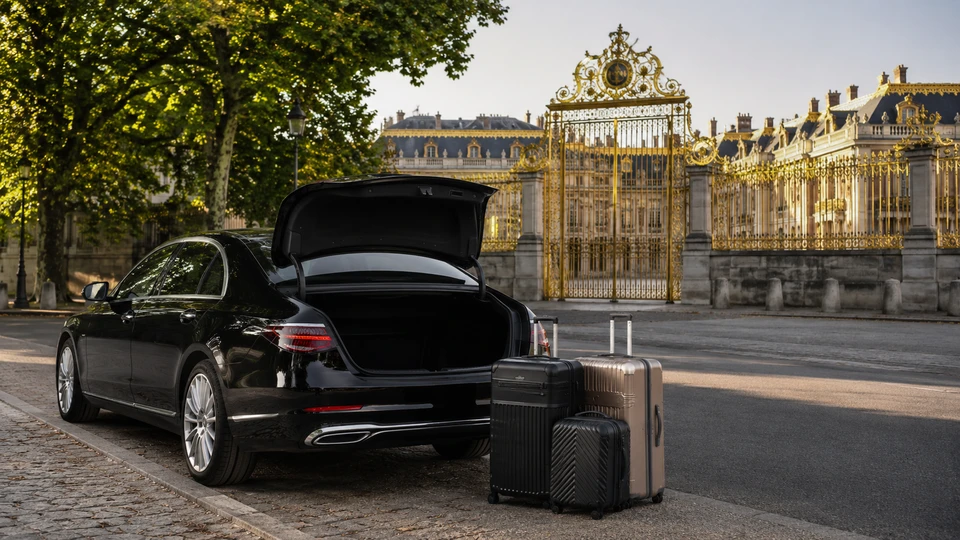
A private transfer that you have booked will come to collect you at the arrivals hall of your terminal; usually, the driver will be waiting near the exit with a name board, since he or she has monitored your flight in the event that it is delayed. You will be taken straight to either your hotel in Versailles or to the gates of the palace, with no alterations and without having to carry your suitcases down the escalators.
The journey takes between 45 and 60 minutes depending on traffic, and the cost is €€€ but on a per-vehicle basis, not per person — which makes a big difference when there are more than one of you (further details on this below).
Pros:
- Door-to-door, no transfers, no navigating stations with luggage
- Fixed price agreed before you land, no metered surprises
- Flight tracked, so a delayed landing doesn't strand you
Cons:
- Costs more than public transport for a solo traveller
- Still subject to the same road traffic as everyone else
- Needs booking ahead rather than arranged on the spot
RER B + RER C (Train)
The verdict is that it's really good when you're travelling on your own with a backpack but not so good if you're travelling with a family and have four cases.
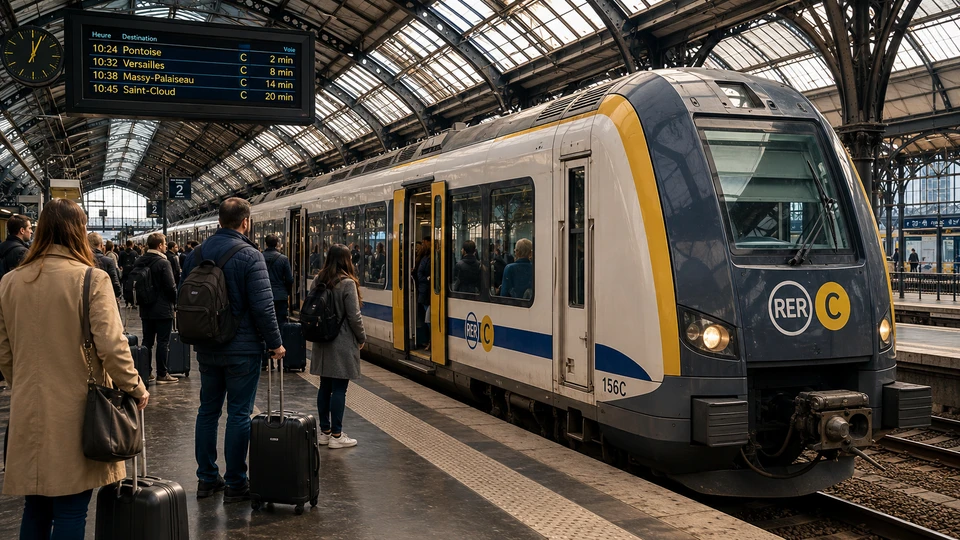
There is no one train that covers this route. From CDG2 you take the RER B into central Paris and then switch to the RER C, which has a branch extending to Versailles. The station at which you have to change depends on the service you catch, namely Châtelet–Les Halles or Saint-Michel Notre-Dame, and you should verify which Versailles station your train is heading for—some of them go to Versailles Château Rive Gauche, right next to the palace gates, while others end at Versailles Chantiers, the bigger interchange station a little way from the entrance.
The entire journey, including the change, generally takes 75 to 90 minutes and the price is €, which is by a long way the cheapest option; however, it is charged on a per-person basis, so it ceases to be a good deal when the group reaches four people.
Pros:
- Cheapest option by a wide margin
- Runs frequently, no need to pre-book
- Direct-ish, with just one change
Cons:
- Stations involve stairs and escalators — hard with heavy luggage
- One change required, and you need to know which branch you're on
- Not ideal at night or very early morning when trains run less often
You can check official train schedules and connections on the SNCF timetable page
Self-Drive (Rental Car)
Verdict: it is the quickest choice when traffic acts as it should, but becomes the worst option when it does not.

Should you be picking up a rental car at CDG, this is the fastest method of getting there—under 45 minutes by way of the A1 and A13 roads provided that there is light traffic. The drawback is that you'll then be driving in unfamiliar areas, will be jet-lagged, and will have to make on the spot the decision as to whether the Duplex A86 toll tunnel is worth the cost, together with having to find a parking spot when you get there (the streets around the château in Versailles become very busy, particularly on weekends when the Grandes Eaux Musicales fountain attraction draws large numbers of people).
The price is €€ and includes the rental together with tolls and fuel—once again, the rate is given per vehicle not per person.
Pros:
- Fastest option in good conditions
- Flexible — no waiting on schedules
- Useful if you're continuing on to other Île-de-France stops afterwards
Cons:
- Rush-hour traffic on the A13 approach can double your travel time
- Parking near the palace is limited and gets busy on fountain-show weekends
- Not worth it if you're only in the Paris region a short while
Ride-Hailing
The decision is a reasonable compromise, with the exception that surge pricing on this particular route can have an effect.

At CDG, ride-hailing services operate by picking up passengers from a specific zone rather than from outside the arrival terminals. The journey is no different from that of a taxi or a private car, taking about 45 to 60 minutes depending on traffic conditions. The problem is that since the trip from CDG to Versailles is long, the surge multipliers that apply during busy arrival periods can raise the price up to or even beyond what a fixed-price private transfer would have cost, with the final amount only becoming clear when you've already started to book the service.
The cost is €€ and can reach €€€ per vehicle during busy periods.
Pros:
- Available on demand, no advance booking needed
- Door-to-door like a private transfer
- Easy to track your driver's arrival
Cons:
- Surge pricing during busy hours can be unpredictable
- Pickup point isn't always right outside arrivals
- Price isn't fixed until the moment you book
Taxi
The decision is that it does work, but you're paying the fares that apply to central Paris for a route which is not in central Paris.
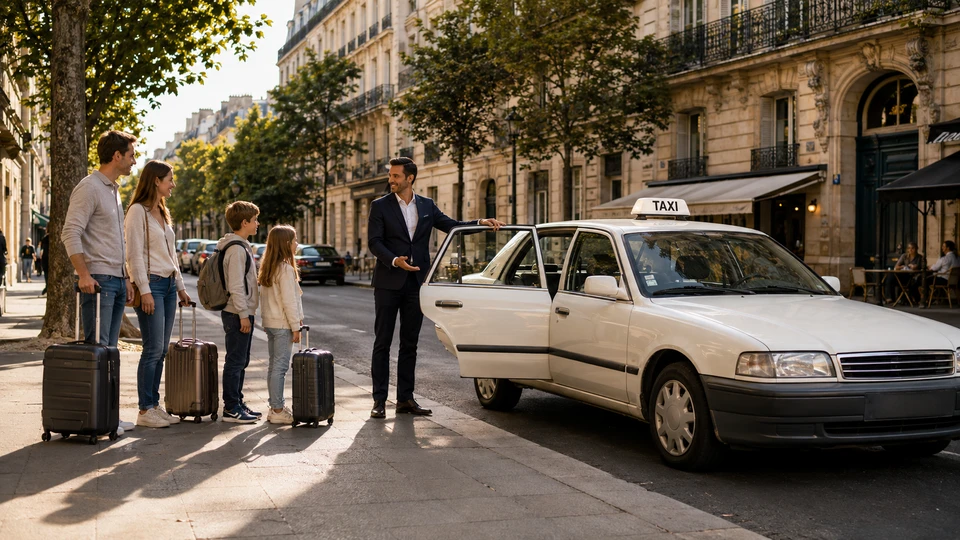
Outside each terminal there is a queue of official taxis. For a journey of this length – one that covers the whole city – the total charge from the meter becomes substantial, and, unlike with ride-hailing services, you won't know the final amount until you have arrived. It's a reliable option if you arrive with no plans, but it is not the most economical one for this particular trip.
The price is three euros per vehicle and is charged on a per metre basis.
Pros:
- No booking needed, available on arrival
- Regulated fares, official ranks at each terminal
- Familiar option for most travellers
Cons:
- Metered fare makes total cost unpredictable
- Queue length at the taxi rank varies a lot by time of day
- No flight tracking if you're delayed
Bus (Line 171 + connections)
Verdict: it is technically possible but would be a poor idea if you have luggage.
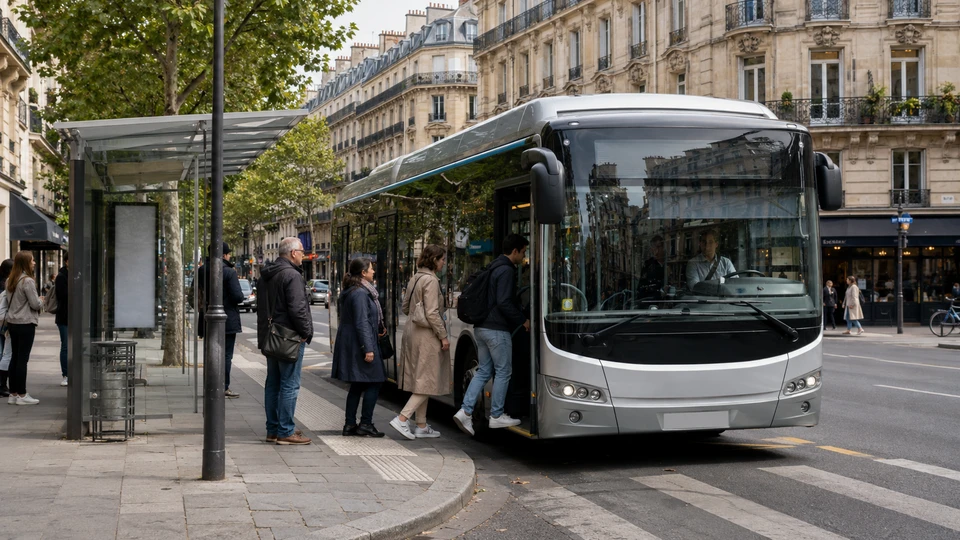
Although there is a bus route that takes you towards Versailles, it requires several stops and a transfer of its own and the total travel time exceeds two hours. The route is available, and if all you have is a daypack and no time constraints, it is the cheapest one on this list. However, for anyone travelling with a suitcase, the journey is not worth the trouble.
The price is given in euros, per person.
Pros:
- Cheapest way to make the journey
- No booking required
Cons:
- Well over two hours door-to-door
- Multiple changes, not well suited to luggage
- Infrequent service outside peak hours
Side-by-Side Comparison
| Option | Door-to-door time | Price level | Luggage | Transfers needed | Best for |
|---|---|---|---|---|---|
| Private transfer | 45–60 min | €€€ | Easy | None | Families, groups, first-timers |
| RER B + RER C | 75–90 min | € | Difficult | 1 | Solo travellers, budget trips |
| Self-drive rental | 40–90+ min (traffic-dependent) | €€ | Easy | None | Those continuing beyond Versailles |
| Ride-hailing | 45–60 min | €€–€€€ | Easy | None | Spontaneous, no pre-booking |
| Taxi | 45–60 min | €€€ | Easy | None | Landing without a plan |
| Bus | 2 hrs+ | € | Difficult | 1–2 | Backpackers, zero time pressure |
Which of the options is right for you? (Select according to your type of traveller)
For families who have young children: the need to change trains on the RER involves using the stairs, leads to tired children, and results in having to keep asking 'how much further' — if you arrange a private transfer with a child seat in advance then everyone's nerves are saved.
When four or more people are travelling, split the four RER tickets and the per-person train fare no longer seems so cheap when compared to a €€€ vehicle which seats everyone at a single price.
For solo travellers on a budget: if you have just one backpack and are willing to make a change of trains, taking the RER combination is truly the best option — there's no embarrassment in doing so.
For those visiting Paris for the first time, the effects of jet lag combined with a confusing RER branch system is a tough mix. On your first day, a driver available in the arrivals hall takes away an entire stage of decision-making.
People who have a lot of luggage: although escalators are available at most interchanges, they are not available at all places, so it isn't a pleasant way to begin a trip to drag four suitcases through Châtelet–Les Halles during rush hour.
For arrivals after late at night or early in the morning: the RER services become less frequent overnight, so it is more practical to arrange a private transfer or to take a taxi outside the normal operating hours.
For travelers with very short connections (such as those going directly to a hotel in Versailles before an evening event): it is better to have a flight with a scheduled arrival time than to hope that the next RER C train bound for Versailles Château Rive Gauche will turn up on time.
The Case for Booking a Private Transfer with Top Paris Transfer
If you work out the figures honestly, it starts to look as though four RER tickets at € each begin to come close in cost to a €€ private transfer charged on a per-vehicle basis; and when you take into account the need to change trains, the stairs, and the risk of boarding a train intended for Versailles Chantiers when you actually meant Versailles Château Rive Gauche, the RER option begins to appear as the better deal, not just the more comfortable one.
Using Top Paris Transfer, your driver will track your flight and wait for you in the arrivals hall of your terminal—no need to guess which exit to take or stand in a taxi queue after a long-haul flight. The price is fixed before you land and agreed in advance, so there are no meter surprises and no surge multiplier because you landed during a busy period. Child seats are available on request, and there is ample luggage space, so four suitcases won't be a problem.
Last spring a family coming from the United States arrived at Terminal 2E after a night flight, was severely jet-lagged and consisted of two young children together with a large amount of luggage. Instead of having to work out which branch of the RER served which Versailles station, their driver was already there with a board showing names, and they were checked into their hotel in Versailles within an hour—there were no stairs, no changes, and no disagreements about the direction to the platform.
👉 Book a private transfer from Charles de Gaulle to Versailles with Top Paris Transfer: the price is fixed and the driver will be waiting for you at the arrivals.
When to Travel: Traffic & Timing on This Route
Leaves at early morning hours – those that leave before 7:30am – tend to get along well on the A1 and then on to the A13, as you're ahead of the main rush of commuters going into and around Paris. The traffic between 11am and 2pm is generally the most predictable period if you have some flexibility.
The afternoon hours should be avoided; from about 4:30 p.m. onwards, the traffic joining the A13 heading towards Versailles slows down considerably and a journey which should take forty-five minutes can last well past ninety. On weekends there is a different issue: the fountain shows at the Grandes Eaux Musicales at the palace take place from April to October, and the additional number of visitors around the château gates causes the final part of the journey into central Versailles to be noticeably slower, particularly in the early afternoon.
What This Route Really Costs (Including the Costs Nobody Mentions)
Although the train appears to be the cheapest option on paper since the price is given per person, when you take into account a family of four it ceases to be the clear choice once you compare it with a €€ or €€€ vehicle which charges on a per-trip basis rather than on a per-head basis.
There are some hidden costs worth being aware of: the toll for the Duplex A86 tunnel when taking the westward route around Paris, parking charges if you're driving yourself and staying near the palace (as there are limited spaces and the parking area gets more crowded on weekends when the fountain show is happening), and the straightforward cost of time if you end up having to navigate the late-afternoon congestion on the A13.
When you take into account the cost of luggage, the need to climb the stairs, and the risk of taking the wrong branch of the RER train, the actual cost comparison for an average family or group generally supports choosing a fixed-price private transfer.
Mistakes to Avoid on the Charles de Gaulle → Versailles Journey
- You might end up on the wrong RER C line. Since not all RER C trains bound for Versailles stop at Château Rive Gauche, some terminate at Versailles Chantiers, which is farther from the palace gates.
- A miscalculation regarding the change from the RER B to the RER C. This is not a same-platform transfer, so you should allow extra time for it, particularly if you have luggage.
— If you take the Duplex A86 route without checking the toll, it may seem to be the faster option in theory, but the charge surprises new drivers. - If you're leaving CDG at 4:30pm or later, note that it is at this time that the A13 heading towards Versailles slows down the most — consider changing your departure time if possible.
- If there is a direct train — there isn't — so make arrangements for having to change trains rather than finding out on arrival at the platform.
— If you don't book in advance during the weekends when the fountain show is taking place. On the Grandes Eaux Musicales weekends (from April to October) there is a lot of extra traffic in the area you're going to, so you should book your transport in advance rather than trying to catch a taxi when you get there. - Don't forget that the palace is closed on Mondays. If your schedule depends on visiting the château on a Monday, check your itinerary first.
FAQ
Is there a direct train running from Charles de Gaulle to Versailles?
By no means—you have to take the RER B into central Paris and then switch to the RER C, the line which has a branch extending to Versailles. The entire journey, including the change, takes about 75 to 90 minutes.
How long does the drive take from CDG to Versailles?
When there is light traffic it takes about 45 minutes by means of the A1 and A13, but in heavy traffic, especially in the late afternoon, it can last well over 90 minutes.
What is the nearest RER C station to the Palace of Versailles?
Versailles Château Rive Gauche is located right next to the palace gates. In the case of some RER C services, the train terminates at Versailles Chantiers, which requires a longer walk—so be sure to check which station your train is destined for before getting on.
Should one get a private transfer for this route?
The RER is adequate for single travellers who have only light luggage, whereas for families, groups or anyone having heavy luggage a fixed-price private transfer, which is charged on a per-vehicle basis, usually ends up being either comparable to or cheaper than a number of separate train tickets, together with much less trouble.
Should I avoid the Duplex A86 toll tunnel when driving?
It is optional since, although it cuts down the distance of the route going west around Paris, it does so at a real cost in terms of tolls. If you take the A86 in the other direction, you avoid having to pay the toll even though it means travelling a few extra kilometres.
Is there a bus from Charles de Gaulle to Versailles?
Technically, yes, via connecting services, but the total journey runs well over two hours with multiple changes — not realistic if you're carrying luggage.
What's the best time to travel this route to avoid traffic?
Early morning, before roughly 7:30am, or midday between 11am and 2pm. Avoid departing CDG after 4:30pm, when traffic onto the A13 toward Versailles is at its worst.
Does traffic get worse near Versailles on weekends?
Yes, particularly April through October, when the Grandes Eaux Musicales fountain shows draw extra visitors and slow the final stretch of road near the château gates.
Other Popular Blog You Might Need
- Best Ways to Get from Charles de Gaulle to the Eiffel Tower: Every Transfer Option Compared (2026 Guide)
- How to Get from Charles de Gaulle to Beauvais: Every Transfer Option Compared (2026 Guide)
- Best Ways to Get From Charles de Gaulle to Residence Du Parc: Every Transfer Option Compared (2026 Guide)
- Best Ways to Get from Charles de Gaulle to Davy Crockett Ranch: Every Transfer Option Compared (2026 Guide)