Best Ways to Get from Charles de Gaulle to the Eiffel Tower: Every Transfer Option Compared (2026 Guide)
You have just arrived at Charles de Gaulle, your suitcase is making that wobbly-wheel noise as you move around the arrival hall, and across the city the Eiffel Tower stands on the Left Bank of the Seine. The distance is roughly 35 km, and depending on the mode of transport you choose and the state of the Périphérique at that particular time, the journey will take anywhere from 45 minutes to more than an hour and a half. This guide is for people who have landed at CDG and are staying at a hotel close to the tower—such as families managing car seats, couples on a long weekend, and single travellers with only a backpack. While a pre-booked private transfer removes the need to decide on transport, it isn't the only reasonable choice, so let's look at what actually works.
Quick Answer: The Best Way from Charles de Gaulle to the Eiffel Tower
For most travellers,, a private transfer (€€) is the best compromise between cost, comfort, and simplicity, since there is no direct train link to the Eiffel Tower area. Budgeting solo travellers can arrange the RER B plus metro (€) combination. Taxis (€€€) are the quickest way of getting from one place to another but have the higher flat rate typical of the Left Bank.
| Distance | Fastest option | Cheapest option | Most comfortable |
|---|---|---|---|
| ~35 km | Taxi or private transfer | RER B + Line 6 or RER C | Private transfer |
Understanding the Charles de Gaulle → Eiffel Tower Routee
CDG is located northeast of Paris and the Eiffel Tower is in the 7th arrondissement, on the Left Bank, southwest of the city centre. This is a diagonal journey across the whole capital, which is one reason there are no shortcuts along this route.
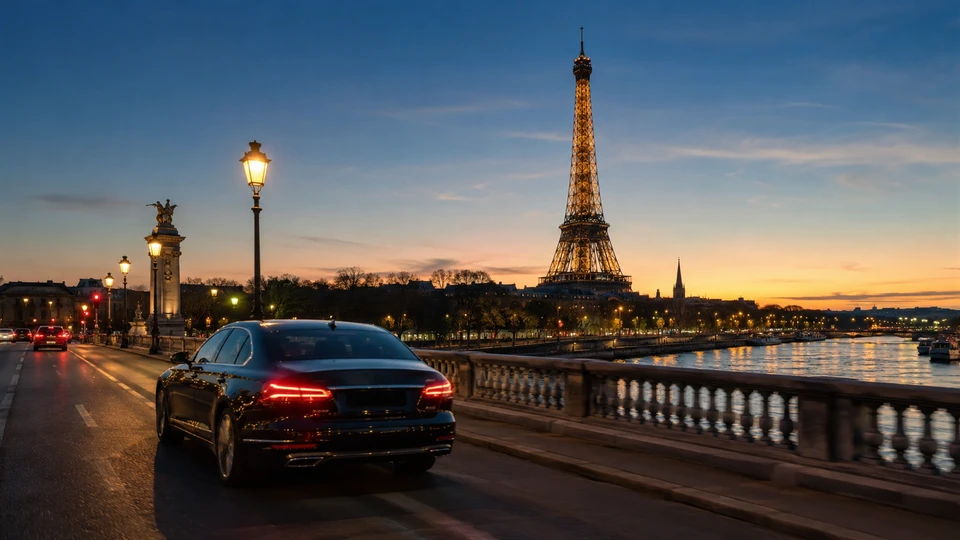
Those who leave CDG head south on the A1 motorway towards the Périphérique, then generally follow the ring road west before leaving it near Porte Maillot or proceeding on towards the Pont de l'Alma, crossing the Seine just in view of the tower – a pleasant sight if you're awake to see it. There is no direct motorway to reach the destination; all the routes have to go through the Périphérique, and Porte Maillot is the bottleneck that residents fear between 7:30 and 9:30 AM on weekdays, occasionally adding 20 to 30 minutes merely by passing through it.
There is also no direct rail line. The RER B, which serves CDG, does not go through the 7th arrondissement, so you have to change trains at least once—typically either to metro Line 6 at Bir-Hakeim or to the RER C, which does go to a station named Champ de Mars–Tour Eiffel, situated right next to the base of the tower. Although the second option involves a longer journey and a change, it is probably the most direct rail route to this destination.
Your Transfer Options, One by One
All the modes listed actually work via this method — although some are simply better ideas than others when you take into account your luggage and the time at which you actually arrive.
Private Transfer
Verdict: this option was specifically designed to cope with the difficult geography of this route.

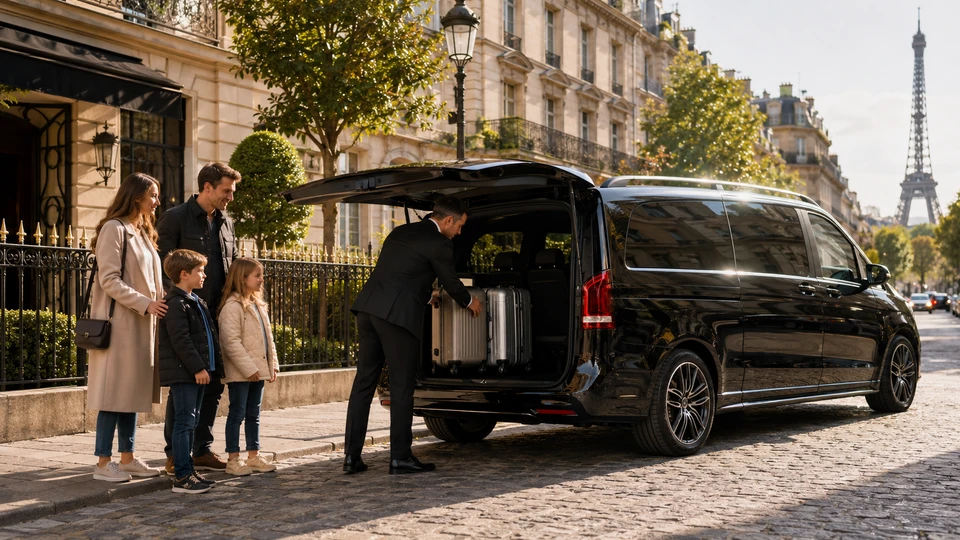
A private transfer that has been booked in advance comes to collect you at the airport — the driver is waiting there with a name plate and the flight is monitored so that if there is a delay you won't be left behind — and takes you straight to the door of your hotel, close to the tower, with no alterations and no need to go through the station stairs. The prices are €€ and are given on a per-vehicle basis rather than per person, a fact which is very important in this case since there is no cheap direct train to offset the cost.
- Pros: door-to-door, no Left Bank taxi-rank uncertainty, fixed price agreed before you land
- Pros: child seats and extra luggage space arranged in advance
- Cons: costs more than public transport for a solo traveler with a light bag
This is the version of the journey where nothing goes wrong when you have to change stations at 6 AM after an overnight flight.
Taxi
Verdict: it's fast, but you'll have to pay the Left Bank premium.

Outside each exit door in the CDG terminals, official taxis wait and are supervised by the airport authority. Since the Eiffel Tower is located on the Left Bank, this route is included in the higher of the two flat-rate zones – a point that often surprises people, as most believe that all addresses in central Paris have the same fare from the airport. The price is fixed no matter the traffic conditions; it includes up to four passengers and their luggage, and the journey takes about 45 to 75 minutes depending on the Périphérique.
- Pros: no queue-jumping needed, price is fixed and known before you leave the rank
- Pros: fastest walk-up option if you land without a booking
- Cons: costs more than the Right Bank flat rate, and evening taxi ranks at CDG can run long
RER B + Metro/RER C Combo
Verdict: doable, and really fine if you're traveling light. Just accept you'll change trains.
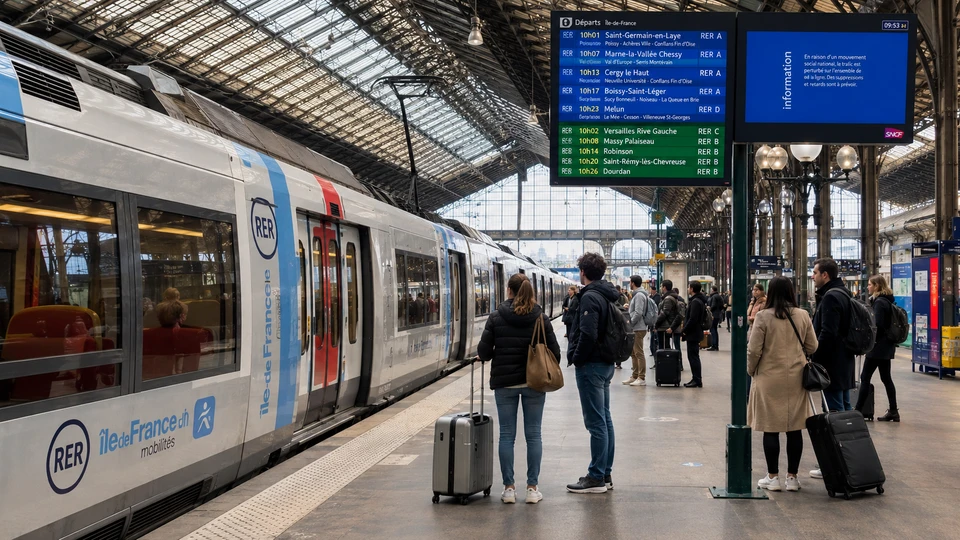
The RER B takes between 35 and 50 minutes to get from either CDG terminal to central Paris with a € ticket, but it doesn't stop anywhere near the tower. If you go from Châtelet–Les Halles or Gare du Nord, you must change onto metro Line 6 and get off at Bir-Hakeim — this station is located on an elevated section of track from which you can see the tower through the windows of the carriage, a view which almost compensates for having to take the stairs. Alternatively, if you change onto the RER C, you will reach Champ de Mars–Tour Eiffel station, which is right at the base of the tower, making it one change rather than two.
- Pros: by far the cheapest option, and reasonably quick outside peak hours
- Cons: at least one change, sometimes two, with luggage on station stairs
- Cons: Line 6's older stations aren't step-free everywhere
Actually, for a single traveller carrying a backpack who isn't particular about navigating, this is a completely reasonable option.
You can check official train schedules and connections on the SNCF timetable page
Roissybus
Verdict: it's best to avoid this particular destination — it's a trap.
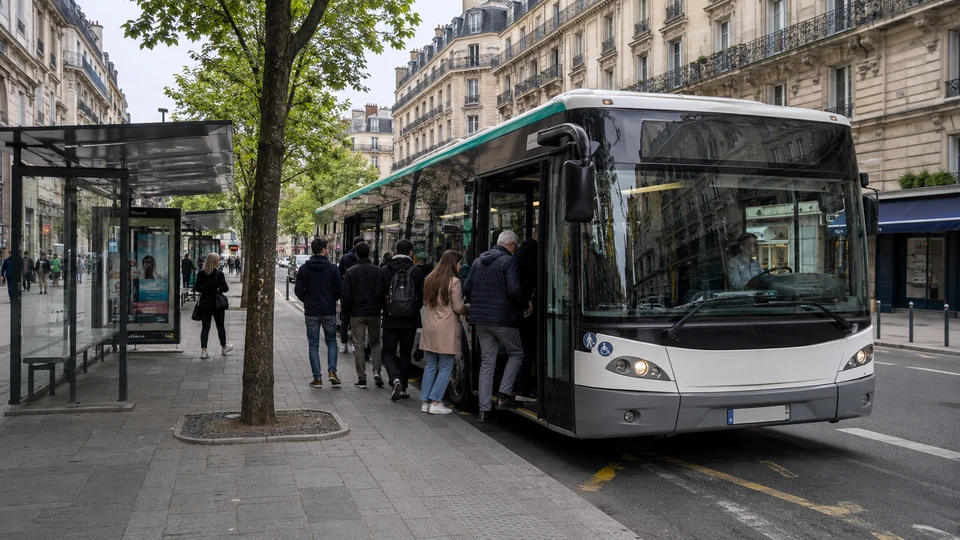
The Roissybus goes directly from CDG to the Opéra on the Right Bank and takes about 60 to 75 minutes for a medium-priced ticket; it's a good choice if your hotel is close to the Opéra. However, if you're going to the Eiffel Tower, the service drops you off on the wrong side of the city, meaning you have to make another metro change (usually from Line 3 to Line 9 or Line 6) – this adds both time and more stairs, with no real advantage over simply taking the combination of the RER B.
- Pros: direct from terminal to a well-known central landmark
- Cons: wrong side of the city for the Eiffel Tower — adds a transfer, not saves one
Ride-Hailing App
The decision is convenient, but the prices fluctuate greatly on this route.

The apps operate from specific CDG pickup points and are about as expensive as a taxi during off-peak hours, but during rush hour on the Périphérique or in bad weather, surge pricing can raise the fare above a taxi's flat rate—with no cap.
- Pros: easy to book from the terminal, no queue
- Cons: price uncertainty during surge periods, unlike the fixed taxi fare
Side-by-Side Comparison
| Option | Door-to-door time | Price level | Luggage | Transfers needed | Best for |
|---|---|---|---|---|---|
| Private transfer | 45–75 min | €€ | Easy, arranged in advance | None | Families, groups, tight schedules |
| Taxi | 45–75 min | €€€ | Included, no surcharge | None | Solo/couples wanting speed and simplicity |
| RER B + Line 6/RER C | 60–90 min | € | Manageable if packing light | 1–2 | Budget solo travelers |
| Roissybus + metro | 75–100 min | € | Awkward with 2 changes | 2 | Not recommended for this destination |
| Ride-hailing app | 45–80 min | €€–€€€ | Depends on vehicle booked | None | Travelers comfortable with surge risk |
Which of the options is right for you??
For families who have small children, the Left Bank taxi rank isn't a good match when it's 8 PM – you can avoid this by arranging a private transfer with a child seat that is already fitted.
When couples go on a city trip, they can take a taxi or a private transfer to reach the hotel close to the tower and thus not have to spend the first evening making connections.
When travelling in groups of four, the €€ private transfer or the flat-rate taxi generally proves to be cheaper per person than taking four individual RER tickets together with a metro change for the bags.
Solo budget travelers: the RER B to Bir-Hakeim is genuinely fine — just build in extra time for the change.
First-timers in Paris: the Bir-Hakeim view is a nice welcome, but if it's your first hour in the country, a private transfer avoids the "which platform" panic entirely.
For arrivals in the late night or early morning: the taxi ranks become scarce overnight and the RER B is not operated around the clock — that is why a pre-booked transfer proves most useful in this situation.
Travelers with lots of luggage: the elevated Line 6 stairs at Bir-Hakeim are the single worst part of this route with bags — avoid them by choosing a transfer or taxi.
The Case for Booking a Private Transfer with Top Paris Transfer
When a family or group of four is going to a hotel close to the tower, the calculation usually suggests taking a transfer: instead of buying four separate € train tickets, a single €€ fixed fare for the vehicle works out better when you take into account the need to change trains and the difficulty of looking after the children and their bags. Since your driver keeps track of your flight, you won't have to worry about a delayed arrival meaning that a sign for the arrivals hall will disappear — they'll just be there when you finish going through customs.
Since the Eiffel Tower is situated in the more expensive taxi area of the Left Bank, the difference in price between taking a taxi and having a private transfer is smaller on this route than it is on many others — that is another reason why getting a private transfer is a good idea: the cost will be similar, but it is booked in advance and includes child seats and extra luggage space, with a fixed price agreed upon before you even arrive.
The precise situation is that of a family of four who have come in by plane after an overnight delay, with three suitcases and a toddler who is tired of airports — in this case, a driver waiting at the arrivals hall with a car seat already in the car makes what would have been a bad morning into one that is at least manageable.
Book your private transfer from Charles de Gaulle to the Eiffel Tower with Top Paris Transfer — fixed price, driver waiting at arrivals.
When to Travel: Traffic & Timing on This Route
The worst time to go is on weekday mornings from 7:30 to 9:30 AM, since both Porte Maillot and the western Périphérique become congested as commuters head into the city. On Friday afternoons, a similar situation occurs in reverse, as Parisians head out for the weekend. If you have some flexibility about your pickup time, late evenings and Sunday mornings are the times you should prefer.
Throughout the year, you should watch out for Roland-Garros (from late May through June), since this causes a surge in traffic in the 16th arrondissement close to the tower, and on Bastille Day (14 July) when the roads around the Champ de Mars are completely closed in the evening for the fireworks — in the case of a private transfer that takes into account the closures, the route will be arranged to go around the closed areas; a regular taxi, on the other hand, might end up being stuck.
What This Route Really Costs (Including the Costs Nobody Mentions)
The prices for the taxi and private transfer services are €€–€€€ per vehicle, whereas the RER B package is € per person—for a single traveller this price difference is noticeable, but for a group of four the cost on a per-person basis grows quickly when you also add on a metro ticket for the connection.
The route does involve some additional expenses, such as the metro/RER C ticket which has to be paid in addition to your RER B fare (since it is not included in a single ticket), any night surcharge if the taxi goes into the small hours, and the real cost of your own time and patience as you navigate the Bir-Hakeim stairs with your bags. When you factor in extra tickets and the difficulty of using the stroller on the stairs, the cost savings of taking the RER are much smaller than a simple private transfer.
Mistakes to Avoid on the Charles de Gaulle → Eiffel Tower Journey
- If you assume that the fare for a taxi in central Paris is the same, you should allow for a higher flat rate since the Eiffel Tower is on the Left Bank.
- When taking the Roissybus hoping it would take you close to the tower, it instead goes to Opéra, which is on the wrong side of town for this destination.
- Underestimating the connection between the RER B and the tower. Since there is no direct train, make provision for at least one change, preferably by switching to the RER C for the most direct final section.
– If you book a taxi return without having previously arranged it. The number of taxis available at the left bank taxi rank near the tower may be low in the evening, so it is advisable to schedule a pickup to avoid waiting a long time. - We don't check the dates for Bastille Day or Roland-Garros. If you aren't using a driver who knows how to route around them, you could be caught unaware by road closures and increased traffic near the Champ de Mars.
- If you choose Line 6 and are carrying a lot of luggage, you'll find that while the elevated section of Bir-Hakeim has stairs instead of lifts, this is acceptable when travelling with a backpack but becomes very uncomfortable when you have two large suitcases.
FAQ
Is there a direct train available from CDG to the Eiffel Tower?
No; the RER B goes to CDG but doesn't extend to the 7th arrondissement, so you'll have to change to metro line 6 at Bir-Hakeim or take the RER C to Champ de Mars–Tour Eiffel station.
What is the fare for a taxi from CDG to the Eiffel Tower?
It operates in the Left Bank flat-rate area, which has a higher price than the Right Bank area; however, the exact fare is determined and communicated to you before you start your journey, regardless of traffic conditions.
What is the time taken to make the transfer from CDG to the Eiffel Tower?
The journey usually takes 45 to 75 minutes by road, though it is longer during the weekday rush hour around Porte Maillot; the RER B line, combined with the connection, generally takes 60 to 90 minutes from door to door.
Is Roissybus a good choice when one is going to the Eiffel Tower?
Not really — it terminates at Opéra on the Right Bank, meaning an extra metro change to reach the tower, which usually erases any time saved.
Which metro station is closest to the Eiffel Tower?
Bir-Hakeim (Line 6) and Champ de Mars–Tour Eiffel (RER C) are both within easy walking distance, with the RER C stop landing you closest to the base.
Are private transfers worth it for this route?
For families, groups, or anyone with heavy luggage, yes — the Left Bank's higher taxi zone narrows the price gap with a private transfer, while removing the need for any station changes.
Does traffic get worse near the Eiffel Tower during certain events?
Yes — Bastille Day fireworks close roads around the Champ de Mars entirely, and Roland-Garros in late May and June adds extra traffic through the surrounding 16th arrondissement.