Charles de Gaulle Airport to Fontainebleau: Every Transfer Option Compared (2026 Guide)
When you arrive at CDG, go through customs and then get out a map — only to find that Fontainebleau isn't on the same side of Paris at all. The town is about 90 km south-southeast of the airport, located on the other side of the region, and there is no one train that links the two places together. The time it takes to make the journey will vary according to the mode of transport you choose, ranging from just over an hour by car to nearly two and a half hours if you have to change trains twice in central Paris. This guide is aimed at people who are flying into CDG and planning to go directly to Fontainebleau — whether it's for the château, INSEAD, the forest, or just to spend a few nights away from the city — and who would like to know what actually works before they land. Although a pre-booked private transfer eliminates most of the decisions outlined below, it's still worth understanding the reasons behind them.
Quick Answer: The Best Way from Charles de Gaulle Airport to Fontainebleau
There is no direct train running from CDG to Fontainebleau and the driving route completely avoids the Paris ring road. If you take a private transfer (€€€) it will be the quickest way to get from one place to the other and it is the only option that does not require you to carry your luggage through a Paris interchange. The train (€€) can be used by people with only a light amount of luggage who are prepared to change trains twice. Taxis (€€€) offer the same level of convenience as the private transfer but with the drawback of an uncertain fare.
| Distance | Fastest option | Cheapest option | Most comfortable |
|---|---|---|---|
| ~90 km (56 miles) by road | Private transfer / taxi | Train + bus combo | Private transfer |
Understanding the CDG → Fontainebleau Route
Fontainebleau is situated south-southeast of Paris in the department of Seine-et-Marne, whereas CDG lies to the north of the city—thus this route covers the whole of the Paris region rather than going around it. When driving south from the airport, motorists take the A1 motorway before joining the A104 ("la Francilienne") to loop around Paris to the east and then move onto the southbound A6, which goes more or less directly to Fontainebleau. This is a purposeful decision since taking the central part of Paris or going onto the Boulevard Périphérique would add time and an element of unpredictability that the outer ring road escapes.
No direct rail service goes from CDG to Fontainebleau, a fact that comes as a surprise to many first-time visitors. All the train options have to go through central Paris—more precisely, Gare de Lyon, the station that INSEAD's own travel advice directs new arrivals to, since it is also the point from which staff and students who don't have a car depart. From there, a regional Transilien service (with destinations indicated as Montargis, Montereau or Sens, not "Fontainebleau"—the name of the terminus is the one that appears on the departure board) takes about 40 minutes to complete the last part of the journey.
Your Transfer Options, One by One
Price and comfort are in fact opposite on this route – the most inexpensive choices require the most from you and your luggage. Here is how each option works out on this particular route.
Private Transfer
The most predictable method of making this journey with luggage.
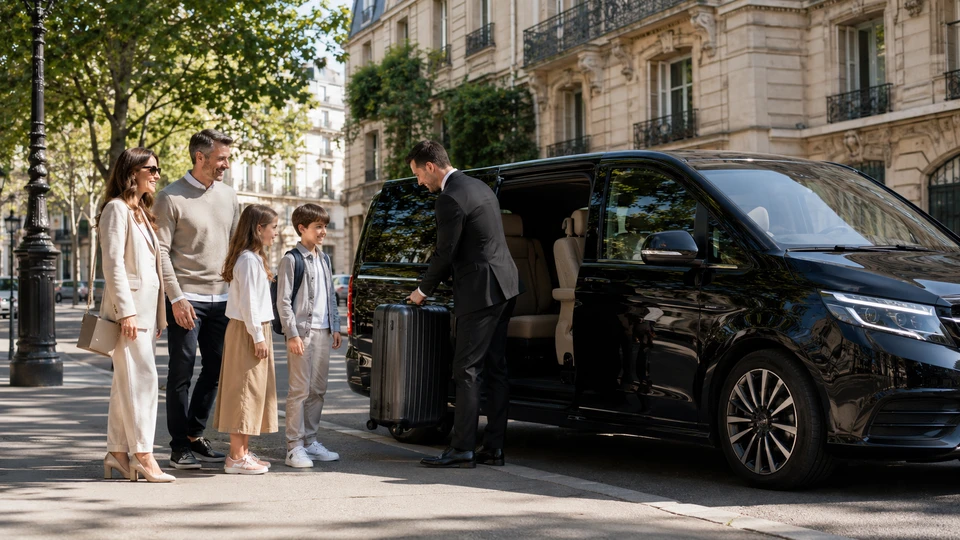
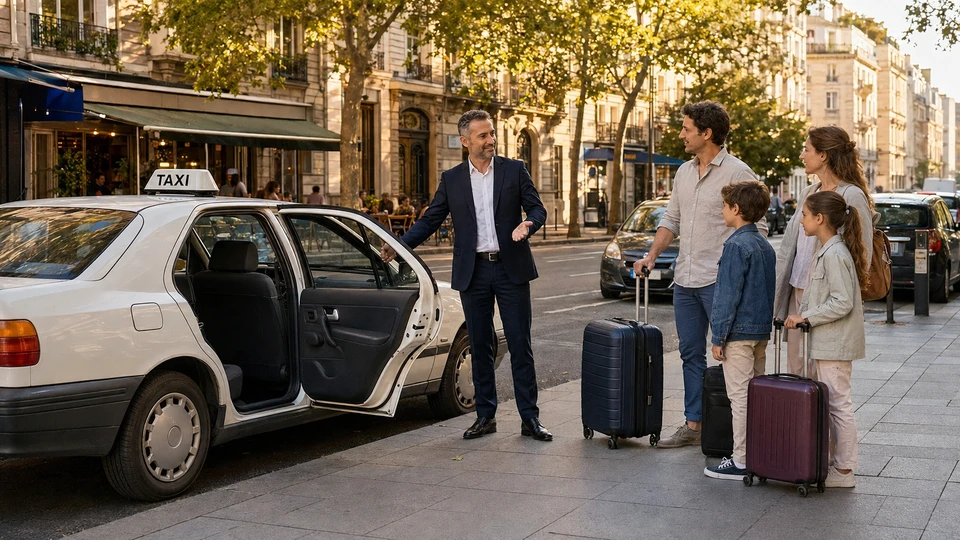
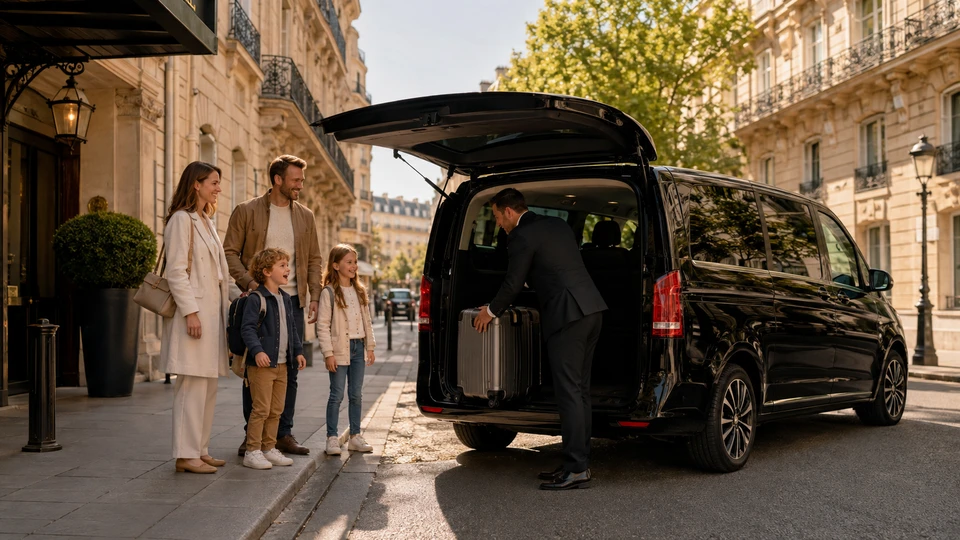
A private transfer will collect you at the arrival terminal, check your flight for any delays, and take you directly from the A1 along the A104 to the A6 road to your destination at the Fontainebleau—whether this be the hotel, the château gates or an INSEAD residence. There are no changes of train, no need to find the platform, and no second vehicle for the last part of the journey into town.
The actual travel time is about 1 hour 15 to 1 hour 45 minutes, depending on the traffic situation on the A104 loop; the price level is €€€ and is charged on a per-vehicle basis rather than per person.
Pros:
- One vehicle, door to door, no Paris interchange
- Fixed price agreed before you fly, regardless of traffic
- Meets you at the terminal with a name board, even for red-eye arrivals
Cons:
- Costs more than public transport for a single traveller
- Needs booking ahead rather than hailing on arrival
When one car is shared among four people, this option usually comes in at about the same cost as four separate train tickets — without having to make changes.
Taxi
It can be arranged when needed, but you have to wait according to the meter and the queue at the taxi rank.
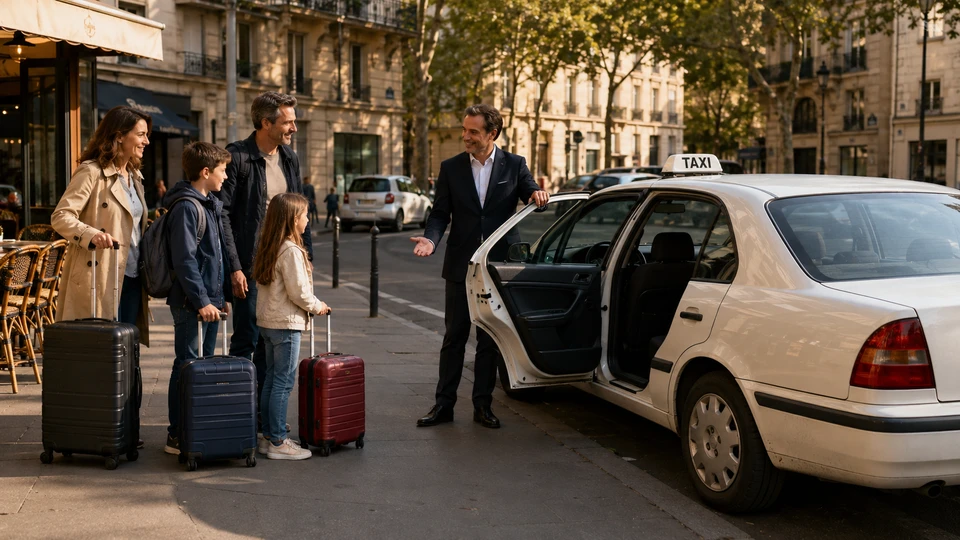
Taxis that are licensed and come from CDG will take you to Fontainebleau by roughly following the same A1/A104/A6 route as a private transfer. The only difference is in the prices: since the route is so long the fare charged by the meter can increase more quickly than a fixed price, and there is no guarantee that a taxi will be available free of charge as soon as you arrive, particularly outside of daytime hours.
Real time: just like a private transfer, about 1 hour 15 minutes to 1 hour 45 minutes. Price category: €€€, per vehicle and on a metered basis.
Pros:
- Available without pre-booking, if the rank isn't empty
- Same direct road route as a private transfer
Cons:
- Metered fare can spike with traffic on the A104
- No flight tracking if your arrival is delayed
Train (RER + Transilien)
It's easy when one person is carrying a backpack but more difficult when you have suitcases and a toddler.
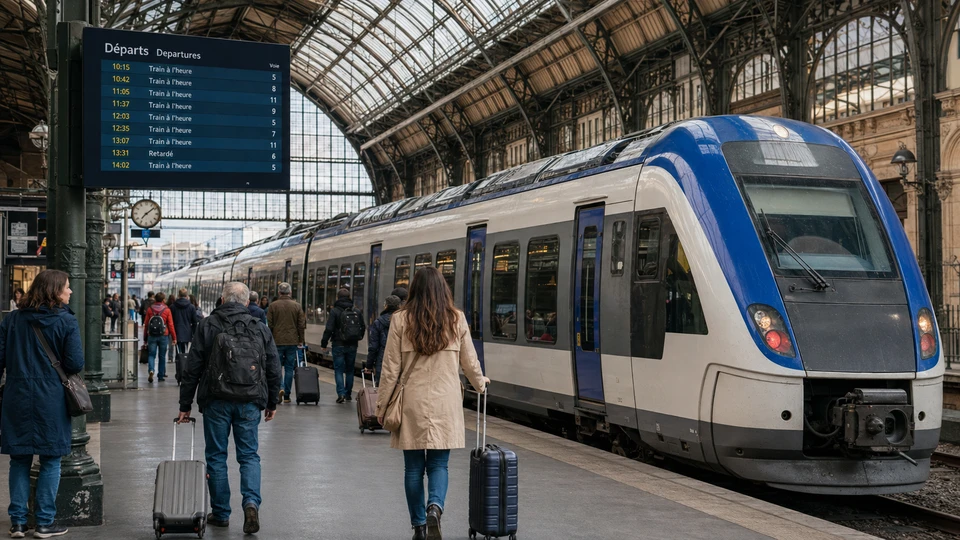
The multi-leg journey involves taking the RER B from the airport to central Paris, then changing at Châtelet–Les Halles for the RER A heading towards Gare de Lyon, before boarding the Transilien regional train—the one going to Montargis, Montereau or Sens—to Fontainebleau-Avon station. The regional train for that final leg runs every 30 minutes and takes around 40 minutes. It should be noted that Fontainebleau-Avon is not actually located in Fontainebleau; it is in the adjacent town of Avon, so you will have to take bus line 1, which is nicknamed "Aerial", or take a short taxi ride in order to get to the château or the town centre.
Real time: approximately 1 hour 45 to 2 hours 15 for the journey to the station, plus the last bus or taxi portion. Cost level: €€ per person.
Pros:
- Cheapest way to travel solo, by a wide margin
- Trains run frequently once you're on the Transilien line
Cons:
- Three separate legs, two of them through busy Paris interchanges
- Fontainebleau-Avon station requires a further bus or taxi into town
- Stairs and platform changes at Châtelet–Les Halles are genuinely rough with a large suitcase
You can check official train schedules and connections on the SNCF timetable page
Bus + Train Combo
It does exist, but this is the slowest method of covering that route.
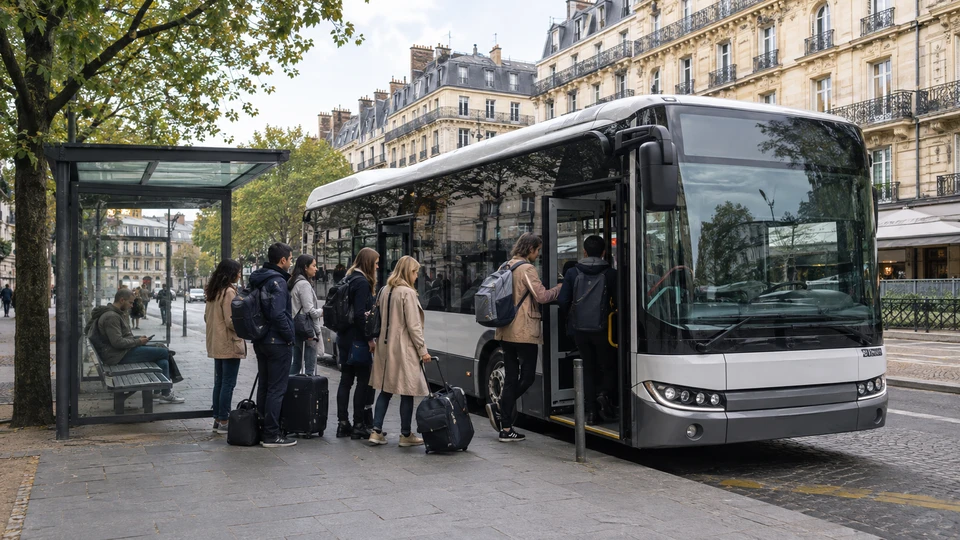
A few coach and shuttle services go from CDG to towns near Melun or Torcy, when you then have to take another train or bus to reach Fontainebleau; this option is seldom quicker than the usual route by RER to Transilien and in fact requires more changes, not fewer.
Real time: usually between 2 hours 30 minutes and 3 hours or longer. The price is given in euros per person.
Pros:
- Occasionally the cheapest ticket price available
Cons:
- Multiple changes with unpredictable connection timing
- Not designed as a through-route — you're stitching together separate services
Car Rental
It makes sense seeing that Fontainebleau is being used as a base for exploring the wider area rather than as a standalone visit.

Taking a car from CDG and driving yourself is equivalent to taking a taxi or a transfer in terms of following the A1/A104/A6 route. It is only worthwhile if you plan to use the car after you have arrived—for day trips into the forest or to the nearby villages—since although parking in central Fontainebleau isn't hard it isn't free either.
In real terms, the journey will take about one hour ten to one hour thirty in light traffic; the cost is €€, together with fuel, tolls and parking at the destination.
Pros:
- Useful if you're touring the region afterwards
- No dependence on train schedules
Cons:
- Unfamiliar tolls and airport rental-return procedures add friction
- Extra cost if you only need the car for one journey
Side-by-Side Comparison
| Option | Door-to-door time | Price level | Luggage | Transfers needed | Best for |
|---|---|---|---|---|---|
| Private transfer | 1h15–1h45 | €€€ | Easy | 0 | Families, business travellers, late arrivals |
| Taxi | 1h15–1h45 | €€€ | Easy | 0 | On-demand, no pre-booking |
| Train (RER + Transilien) | 1h45–2h15+ | €€ | Manageable, one bag | 2–3 | Solo budget travellers |
| Bus + train combo | 2h30–3h+ | € | Manageable | 3+ | Rarely the best pick |
| Car rental | 1h10–1h30 | €€ + fuel/tolls | Easy | 0 | Multi-day regional trips |
Which of the options is right for you?
For families with small children: making two changes on the RER while travelling with a stroller and carrying cases is a difficult way to begin a journey – having to transfer with the child seat waiting for you upon arrival eliminates that problem completely.
For business travellers going to INSEAD there is a fixed-price transfer which keeps pace with your flight so that it's one less factor to worry about before a meeting or an evening session.
For budget travellers who have only a backpack: the train does in fact work. Although three legs may seem like a lot, it is manageable with just one bag and is by far the cheapest way to go.
When four or more people are travelling, the cost per person can be calculated by dividing the total fare over four train tickets or Transilien fares, in most cases favouring one of the €€€ vehicles.
For arrivals in the late night or early morning, the RER does not operate continuously and the number of taxis on the ranks decreases during the night — in this case, the only option that will be available is one that has been previously booked.
People who have climbing or hiking equipment: the Fontainebleau forest attracts boulderers and hikers who carry bulky kit bags which do not suit a crowded RER platform.
The Case for Booking a Private Transfer with Top Paris Transfer
The cost of four individual train tickets and travelling through two Paris changes for a family of four is nearly equal to that of one vehicle which costs €€€, the vehicle also omitting the platform-to-platform transfer at Châtelet–Les Halles altogether. That is the practical reason, not a sales one.
Thanks to Top Paris Transfer, your driver will keep track of your flight, meaning that if your flight to CDG is delayed you won't miss your connection or end up being stranded. Upon your arrival you will be greeted by a name board rather than having to locate your rank. The price is settled with you before you board the plane — there are therefore no surprise charges on the A104 should traffic increase — and features such as child seats, additional luggage space, and 24-hour availability are included as standard, not as extra charges.
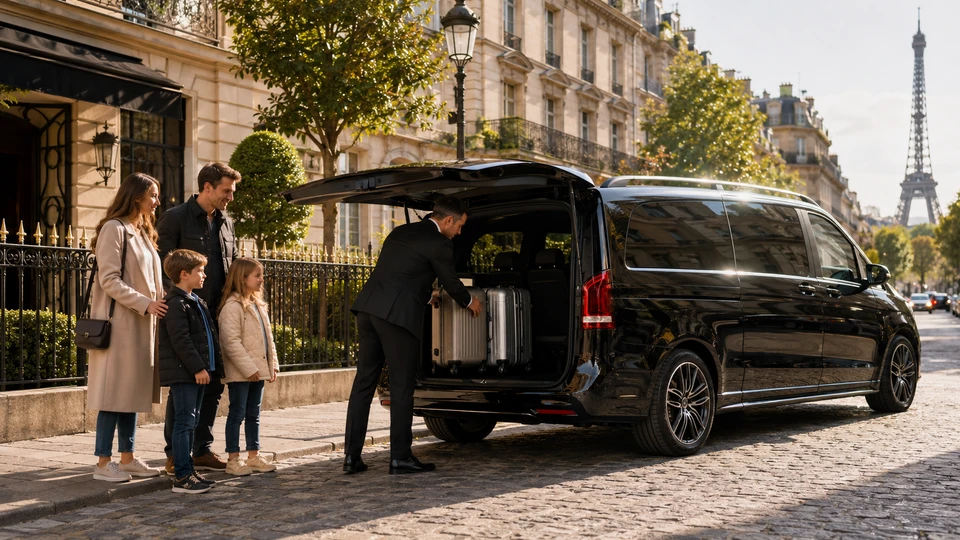
A recent case was a family who had flown in from Boston and arrived at Terminal 2E on a delayed evening flight, consisting of two young children and a large amount of luggage, with the intention of spending a week near the château. Rather than having to go down two flights of interchange stairs with their stroller at 9 pm via the RER, the driver waited for them at the arrivals hall, checked the delay, and got them to their Fontainebleau hotel just over an hour after touchdown.
👉 Book a private transfer from Charles de Gaulle Airport to Fontainebleau with Top Paris Transfer at a fixed price and have the driver waiting for you at the arrivals hall.
When to Travel: Traffic & Timing on This Route
For departures from CDG in the morning (about 7 to 9:30 am), you may encounter commuter traffic joining the A104 as people head towards the eastern suburbs—be sure to add 15 to 20 minutes to your estimated drive time. The midday and early afternoon periods are generally the busiest on the A1/A104/A6 section. During the evening rush hour (from 5 to 7:30 pm) the A6 becomes slower as it approaches the southern part of Paris, although the slowdown is not as noticeable further out towards Fontainebleau.
On weekends the situation is different: when Parisians go into the forest to hike or do bouldering, they can cause heavy traffic on the southbound A6 from late Friday afternoon through to Saturday morning, and once more on Sunday evenings as they return. If your flight arrives on a Friday afternoon, leaving extra time is not being overcautious – it's realistic.
What This Route Really Costs (Including the Costs Nobody Mentions)
It appears to be the € option at first sight when you take into account the full journey: this involves an RER ticket into Paris, possibly an additional fare for the Transilien part, and then either bus line 1 or a short taxi from Fontainebleau-Avon into the town, as the station isn't really in Fontainebleau. When you add all these costs per person, the difference between the price and that of a €€ or €€€ transfer becomes smaller, particularly when two or more people are travelling.
The cost of driving includes tolls on both the A6 and the A104, along with parking fees when you get to Fontainebleau—though these are modest by themselves, they are easy to overlook when compared with the all-in fixed price of a transfer. Taxis also include the cost of the roads in their meter charge, although there is the additional possibility of traffic surcharges if the A104 is moving slowly.
For an average family or small group the fixed price per vehicle for a private transfer is generally the most certain actual cost on this route since you know the total amount before you arrive, something that none of the other options can guarantee.
Mistakes to Avoid on the CDG → Fontainebleau Journey
– Supposing there is a direct train. However, there isn't; all the rail routes go through central Paris by way of Gare de Lyon, involving at least one change prior to arrival.
- If you get off at Fontainebleau-Avon and think that you'll be in Fontainebleau**, be aware that the station is actually located in Avon; in this case you'll have to take bus line 1 or arrange a short taxi journey for the last part.
- I check the departures board at Gare de Lyon for a train to Fontainebleau. The trains are listed according to their terminal station — either Montargis, Montereau or Sens — not by Fontainebleau.
- Instead taking the route around central Paris, take the A1–A104–A6 loop. There is a valid reason for avoiding the Périphérique, since going through the heart of the city increases both travel time and stress.
- If you book a weekend arrival with no buffer time, be aware that weekend traffic along the A6 through the forest area is a well-known phenomenon that residents take into account when making their plans.
- Underestimating the amount of luggage on the RER. The stairs and the interchange platforms at Châtelet–Les Halles are not suitable for suitcases, especially when you have children with you.
FAQ
Does a direct train run from CDG to Fontainebleau?
By no means—you'll have to take the RER into central Paris, change onto the RER A or walk to Gare de Lyon, and then travel by Transilien regional train (heading towards Montargis, Montereau or Sens) to Fontainebleau-Avon, which involves about two changes before the last one.
How long does it take to get from Charles de Gaulle Airport to Fontainebleau?
By road it will take about 1 hour 15 minutes to 1 hour 45 minutes depending on traffic; by train you should plan on about 1 hour 45 minutes to 2 hours 15 minutes including the connection in central Paris, and then another bus or taxi from the station into the city.
What is the price of a taxi going from CDG to Fontainebleau?
Taxis fall into the more expensive category (€€€) since the charge is based on a long distance and is calculated per vehicle for the entire A1/A104/A6 route; an equivalent private transfer on the other hand has a fixed rate which is agreed in advance.
Does the train station provide a direct service to the town of Fontainebleau?
Not at all — Fontainebleau-Avon station is located in Avon, which is a short journey by bus (line 1, "Aerial") or taxi from the château and the town centre, not something that most visitors with luggage can manage on foot.
Is a private transfer worth it for a solo traveller?
Honestly, not always. A solo traveller with one backpack can manage the train comfortably and save money. The case for a transfer strengthens with luggage, kids, late arrivals, or multiple travellers splitting the cost.
What's the best way to reach INSEAD from CDG?
The same route applies — INSEAD's own travel guidance points arrivals toward Gare de Lyon for the train option, or a direct road transfer via the A1/A104/A6 for anyone who wants to skip the Paris interchange.
Is traffic worse at a particular time of day on this route?
Weekday evening rush slows the A6 near Paris, and weekends see forest-bound traffic build from Friday afternoon. Midday departures tend to be the smoothest.