Best Ways to Get from Orly Airport to the Eiffel Tower: Every Transfer Option Compared (2026 Guide)
When you arrive at Orly 4, the doors open and a crowd gathers at the taxi rank, causing your suitcase wheel to get stuck on the curb. This happens every day, and it is at this point that most travellers start to wonder whether they should have booked in advance.
The distance from Orly Airport to the Eiffel Tower is about 18 kilometres, and the journey can take 20 minutes to more than an hour, depending on the route and time of day. This guide is aimed at people arriving at Orly who would like to see the Eiffel Tower today—whether they are families who are dealing with suitcases, couples on a brief visit, solo travellers willing to take the metro, or anyone who just wants a clear answer rather than having to open ten browser tabs. While a privately booked transfer removes all uncertainty, it's not the only option, so let's look at what actually works.
Quick Answer: The Best Way from Orly Airport to the Eiffel Tower
For most tourists, a private transfer (€€) is the best way to get from Orly to the Eiffel Tower since it provides door-to-door service at a fixed price with a driver waiting upon arrival. A taxi (€€) is almost as quick but may involve waiting in a queue. If you are comfortable with taking the stairs and making a connection, the combination of the Orlybus and Metro Line 6 (€) is the cheapest genuine option.
| Distance | Fastest option | Cheapest option | Most comfortable |
|---|---|---|---|
| ~18 km | Private transfer / taxi (20–40 min) | Orlybus + Metro (€, ~50–60 min) | Private transfer |
Understanding the Orly Airport → Eiffel Tower Route
Orly is south of central Paris, in the Val-de-Marne department, and the Eiffel Tower is on the Left Bank in the 7th arrondissement—so the entire journey goes north-northwest. By road, drivers generally use the A106, which joins the Boulevard Périphérique (or the A6a, according to which terminal you are departing) and then enters the city near Porte de Gentilly or Porte d'Orléans.
There is in fact no direct train service from Orly to the Eiffel Tower — a point that is often left out of many guidebooks. The option you do have is the RER C, which can be reached by taking a short shuttle bus from the terminals to Aéroport d'Orly station at Pont de Rungis, and this line runs into Paris with stops at Javel or at Champ de Mars – Tour Eiffel. Although it's not a fast journey, it provides direct rail access, which the more frequently suggested Orlybus route does not.
A notable feature along the road route is Parc Montsouris and the Cité Universitaire campus, located just before the road becomes the more crowded streets of the Left Bank near Denfert-Rochereau — generally the point at which a driver will say that the worst of the traffic is behind them.
Your Transfer Options, One by One
Here there is a fairly predictable trade-off between price and comfort — the faster and more private the option, the higher the cost per person, although not always on a per-group basis.
Private Transfer
The best method in terms of reducing stress and one that proves to be suitable for anyone travelling with more than one bag.

If you have booked a private transfer, your driver will be waiting for you in the arrivals hall at Orly 1-2-3 or Orly 4, holding a name card and tracking your flight so you won't be charged if there is a delay. You will then travel directly there via the A106 and the Périphérique; the journey takes about 25 to 40 minutes depending on traffic conditions, and you will be dropped off at your hotel or as near the Eiffel Tower as road closures permit.
- Pros: fixed price agreed before you land, no queue, luggage handled, child seats available on request
- Cons: costs more than public transport for a solo traveler, needs booking ahead of arrival
The price level is €€ and is charged per vehicle not per person — a point that turns out to be more important than one might expect when you're travelling with three or four people.
Taxi
The verdict is that it is about as fast as a private transfer, provided that you are willing to take your chances at the rank.

Taxis officially operating in Paris from Orly to destinations on the Left Bank—the area where the Eiffel Tower is located—have a fixed rate determined by the city, so you won't have to watch the meter go up as you move through traffic. The rank is clearly indicated at both terminal areas, and the journey usually takes between 25 and 40 minutes on a typical day.
- Pros: available 24/7, no advance booking needed, fixed Left Bank fare removes pricing surprises
- Cons: queue length is unpredictable at peak arrival times, driver may not speak much English, no flight tracking if you're delayed
The price is €€ per vehicle, comparable to that of a private transfer but without the guarantee of a meet-and-greet.
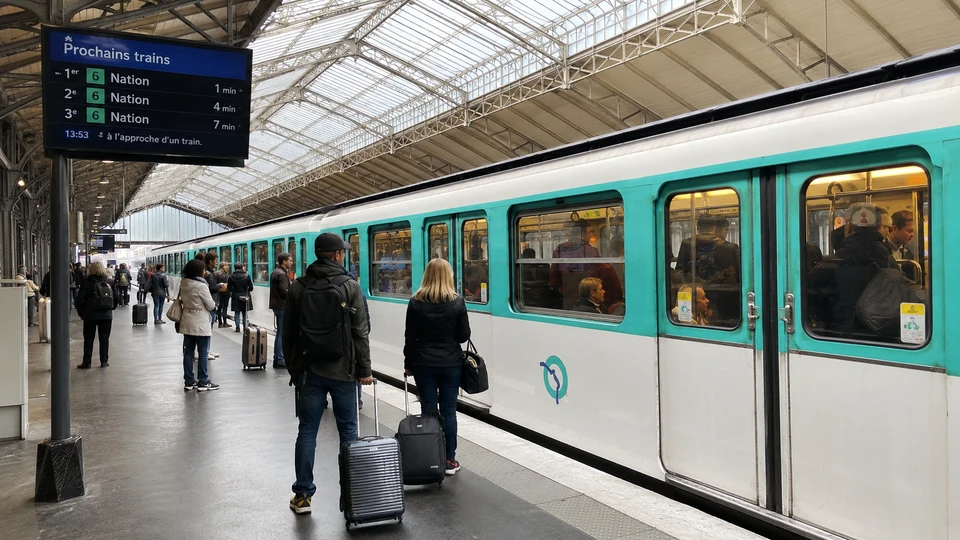
Orlybus + Metro Line 6
The verdict is that it's quite good for a single traveller using a backpack but not so good if they have a large suitcase and have to use the stairs.
The Orlybus goes directly from both terminal areas to Denfert-Rochereau in the 14th arrondissement and takes approximately 30 minutes when running well. You can then transfer to Metro Line 6, one of the more scenic lines in Paris, and travel towards either Bir-Hakeim or Trocadéro, since both are only a short walk from the Tower. The total journey usually takes about 50 to 60 minutes door to door.
- Pros: cheapest genuine option on this route, frequent departures, no traffic dependency once you're on the metro
- Cons: several flights of stairs at the metro interchange, standing room only at peak times, not ideal after a red-eye
The price per person is € — a figure which makes this the clear choice for a single budget traveler but a rather poor option for a family of four.
You can check official train schedules and connections on theSNCF timetable page
RER C via Pont de Rungis
Verdict: a good option that most tourists don't know about.
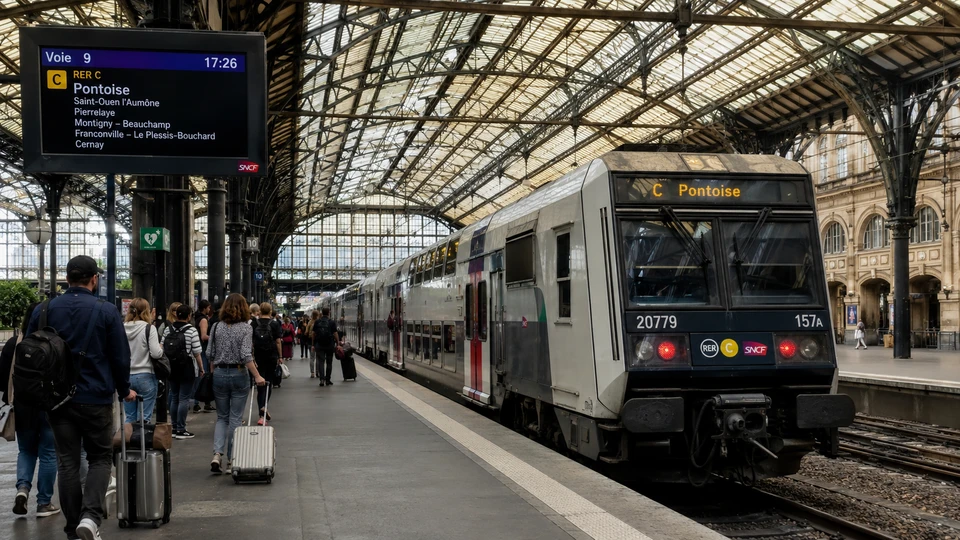
There is a free shuttle bus that is free and connects the terminals with the RER C station called Pont de Rungis – Aéroport d'Orly, from which you can take a direct trip to Champ de Mars – Tour Eiffel and thus arrive right at the foot of the landmark without having to change trains. The total journey time is between 40 and 50 minutes; this duration includes the time you have to wait for the shuttle, which may vary.
- Pros: direct to a station literally named after the Eiffel Tower, avoids road traffic entirely
- Cons: RER C service can be irregular on weekends, shuttle bus timing adds unpredictability, fewer departures late at night
Price level: €, per person.
Ride-hailing (Uber, Bolt, Kapten)
The verdict is that it works adequately outside of peak hours, but becomes less predictable when all the rest of people have the same idea.

Each of the three apps has designated pickup areas at Orly, usually only a short walk from the arrival doors. Since the prices are dynamic, the apps can offer cheaper fares than taxis when demand is low and can easily beat taxi prices during a surge.
- Pros: no cash needed, can be cheaper than a taxi off-peak, easy for one or two travelers
- Cons: surge pricing during busy arrival banks, pickup point can be a longer walk than the taxi rank, driver cancellations do happen
Price level: €–€€, varies by demand.
Side-by-Side Comparison
| Option | Door-to-door time | Price level | Luggage | Transfers needed | Best for |
|---|---|---|---|---|---|
| Private transfer | 25–40 min | €€ | Full space, handled | None | Families, groups, tight schedules |
| Taxi | 25–40 min | €€ | Trunk space | None | Anyone wanting a quick decision |
| Orlybus + Metro 6 | 50–60 min | € | Manageable, stairs involved | 1 | Solo, budget-conscious travelers |
| RER C via shuttle | 40–50 min | € | Manageable | 1 (shuttle + train) | Travelers avoiding road traffic |
| Ride-hailing | 25–45 min | €–€€ | Trunk space | None | Solo/pairs, off-peak arrivals |
Which of the options is right for you??
For families with young children, dealing with the stairs at Denfert-Rochereau with a stroller and two suitcases isn't worth the trouble; a private transfer with a child seat solves this problem before it arises.
If you are in Paris for only a few days, a taxi or private transfer will save you time you would otherwise spend figuring out the RER C shuttle timetable.
For groups of four or more: in this case, the per-vehicle rate for a private transfer works out to be cheaper than four individual metro or taxi fares.
As for people on a budget: honestly, the Orlybus plus Metro Line 6 is a good option, since you'll save money and the metro journey offers some nice views.
For those visiting Paris for the first time, the journey on the RER C to Champ de Mars – Tour Eiffel is rather satisfying since the train platform is at roughly the same level as the Tower.
For arrivals after late night or early in the morning: since both the Orlybus and the RER C stop running over night, you have the taxi or a private transfer as your only truly reliable choice outside of daytime hours.
For people with a lot of luggage, avoid any situation that involves stairs—whether it's a private transfer or a taxi.
The Case for Booking a Private Transfer with Top Paris Transfer
When travelling with a family or a group of four, the calculations generally favour the transfer option: a private transfer that is charged on a per-vehicle basis usually ends up being cheaper per person than four individual € metro fares, together with the difficulty of dealing with an interchange that has a lot of stairs and your luggage. Since your driver is monitoring your flight and waiting for you at the arrival exit of the terminal you actually use—either Orly 1-2-3 or Orly 4—there is never a situation in which you have to stand in a queue unsure about how long the wait will be.
All arrangements are settled before you arrive, with no unexpected charges and no surge pricing if your flight is delayed and you end up landing during rush hour on the Périphérique. Facilities such as child seats, additional luggage space, and 24-hour availability are included by default, not optional features you have to look for.
A traveller recently arrived at Orly 4 just before midnight following a delayed flight, carrying the luggage of a family of four who had stayed awake for far too long. Since no Orlybus was operating at that time and they had no intention of joining a taxi queue, their pre-booked driver had been monitoring the flight and waited through the delay; they arrived at their hotel near the Tower within 35 minutes.
👉 Book a private transfer from Orly Airport to the Eiffel Tower with Top Paris Transfer: the price is fixed and the driver will be waiting for you at the arrivals hall.
When to Travel: Traffic & Timing on This Route
During the morning peak hour, from about 7.30 to 9.30 a.m., the Boulevard Périphérique becomes congested between Porte de Gentilly and Porte d'Orléans, and the journey can take 25 minutes or more. During the evening peak, between 5.00 and 7.30 p.m., the same section experiences congestion in the opposite direction. Midday and late evening are generally the most unproblematic times for a road transfer.
A noteworthy seasonal point is that between late May and early June, traffic becomes considerably more congested around the southern and western parts of Paris, as the tournament is situated near the roads leading into the 7th and 16th arrondissements — therefore it's advisable to book your travel a bit earlier in the day if your journey occurs during that period.
What This Route Really Costs (Including the Costs Nobody Mentions)
A taxi or private transfer costs €€, with the fee charged per vehicle, so note this if you are travelling in a group rather than on your own. Although the public transport option is €, it's per person, and the Orlybus fare does not cover your ticket for the next stage by metro, so you should plan both parts of the journey separately.
If you're using the RER C, you'll have to wait for the shuttle bus, and if you take a taxi, you may need to pay overnight surcharges after 10 p.m. or before 7 a.m., not to mention the cost of your time during rush hour on the Périphérique. For an average family of four, when you take into account the individual public transport tickets and the trouble of moving their luggage through a metro change, hiring a private transfer usually turns out to be the more reasonable choice rather than the indulgent one.
Mistakes to Avoid on the Orly → Eiffel Tower Journey
- If there is a direct train — there isn't; all the rail options require at least one shuttle or transfer, so you should plan on having to make such a connection rather than finding out at the terminal.
- Going to the wrong terminal area. Orly is divided into Orly 1-2-3 and Orly 4 — make sure you check which terminal area your pickup or drop-off is organized for, as they aren't next to each other.
- Underestimating the Denfert-Rochereau stairs. When you are travelling with a large suitcase, the link between the Orlybus and the metro involves more physical effort than it appears on paper.
-If you book a transfer on the morning of a Roland-Garros match, be aware that traffic near the 7th and 16th areas becomes much heavier during the tournament, so it's advisable to include extra time or to book earlier.
-When I got to the taxi rank, I was expecting to pay a fare that was metered. For destinations on the Left Bank such as the Eiffel Tower, the fare is fixed, which is a positive point but only if you anticipate this rather than doubting it. - Choosing to leave the free shuttle bus that goes to the RER C. It's not clear that you need it—many first-time visitors make the mistake of walking past it.
FAQ
Is there a direct train available which goes from Orly Airport to the Eiffel Tower?
No; the nearest option is the RER C, which you can reach by taking a short shuttle bus from the terminals to Pont de Rungis station, then taking the RER C directly to Champ de Mars – Tour Eiffel.
What is the fare for a taxi from Orly to the Eiffel Tower?
The fare for taxis departing from Paris airport and going to destinations in the Left Bank, such as the Eiffel Tower, is set at a fixed amount by the city (€€), so the price remains the same regardless of traffic conditions.
How can I get from Orly to the Eiffel Tower the quickest?
A private transfer or taxi takes about 25 to 40 minutes via the A106 and Boulevard Périphérique if you avoid rush hour.
Does the Orlybus provide a direct service to the Eiffel Tower?
No — it terminates at Denfert-Rochereau, from where you'll need Metro Line 6 to reach Bir-Hakeim or Trocadéro, both a short walk from the Tower.
Is it worth booking a private transfer in advance?
For families, groups, or anyone with more than a carry-on, yes — the per-vehicle pricing tends to beat multiple public transport tickets, and you skip the taxi rank entirely.
Which Orly terminal should I look for my transfer at?
Orly is now split into two zones: Orly 1-2-3 and Orly 4. Confirm which one applies to your flight before booking, since pickup points differ.
Is the RER C a good option with luggage?
It's manageable but involves a shuttle bus connection first, so it suits travellers with one manageable bag more than those with a full set of suitcases.