Orly to Montmartre: Every Transfer Option Compared (2026 Guide)
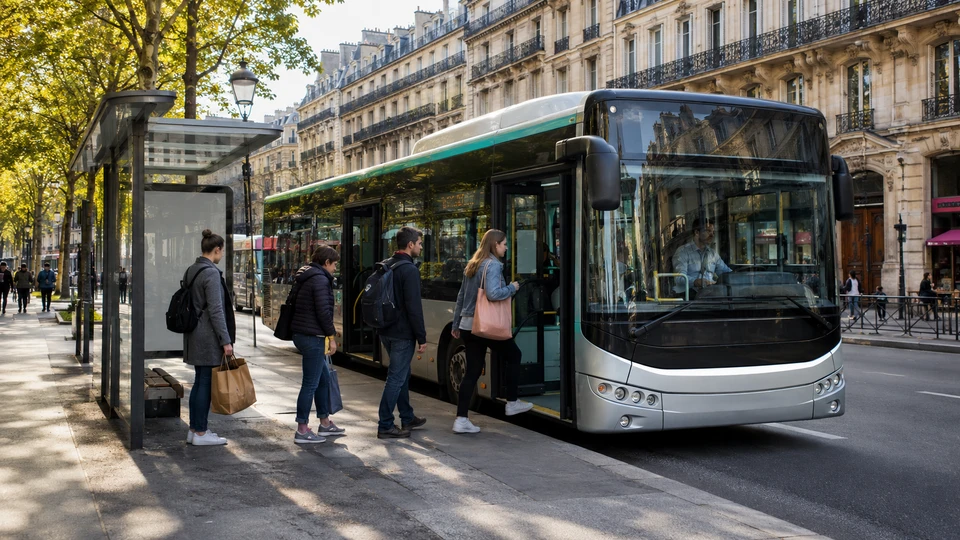
When you arrive at Orly, you go over the baggage carousel and get out a map; on it Montmartre is right at the top — that is, it is the point farthest from where you are standing in Paris. The first thing to realise about this route is that on your very first ride you are covering the whole city, going from south to north.
The distance by road is about 18 to 20 km and, in clear traffic, the journey takes approximately 35 to 45 minutes. When using public transport, with all the necessary changes, the trip usually takes around one hour. This guide is aimed at people who are flying into Orly and planning to go directly to the cobbled streets beneath Sacré-Cœur – whether you're a first-time visitor, travelling with your family, or simply don't want to have to worry about the connections after a long flight. Booking in advance a private transfer eliminates most of that concern; we'll explain why later.
Quick Answer: The Best Way from Orly to Montmartre
For the average traveller, taking a private transfer is the best option when going from Orly to Montmartre since it provides door-to-door service, requires no changes and has a price that is agreed upon before you arrive. A taxi is almost as quick but operates on a meter. Public transport is by a long way the cheapest choice but does involve at least two changes and takes about an hour with your luggage.
| Distance | Fastest option | Cheapest option | Most comfortable |
|---|---|---|---|
| ~18–20km by road | Taxi / private transfer (~35–50 min) | Orlyval + RER B + Metro (€) | Private transfer (€€–€€€) |
Understanding the Orly to Montmartre Route
Orly is located to the south of the Paris ring road and Montmartre is on a hill at the north end of the ring road. There is no direct route between the two places since all forms of transport have to go through all of central Paris.
To get there by road, drivers leave the A106 off the airport and take the A6a before joining the Boulevard Périphérique and driving along it to the northern part of the city. Then they take an exit at either Porte de Clignancourt or Porte de la Chapelle and proceed slowly up through the residential streets towards the Butte. The Périphérique is the main bottleneck, in particular in the area where the A6a joins it — during both the morning and the evening rush hours it is likely to come to a near standstill.
There is no direct rail connection either. The train which belongs to Orly, the Orlyval, does not go all the way to Montmartre; it only goes as far as Antony, where you have to change onto the RER B. Even then, you are still at least one further change away. Now, regarding this, set your expectations: no matter which way you go, it is not a journey that can be completed in a single trip.
Your Transfer Options, One by One
On this route, price and convenience go in directions that are roughly opposite to each other since the cheaper the option the more changes and walking it requires. That's how each one turns out.
Train (Orlyval + RER B + Metro)
The verdict is that it's cheap and reliable, but the job will require two changes and a set of stairs.
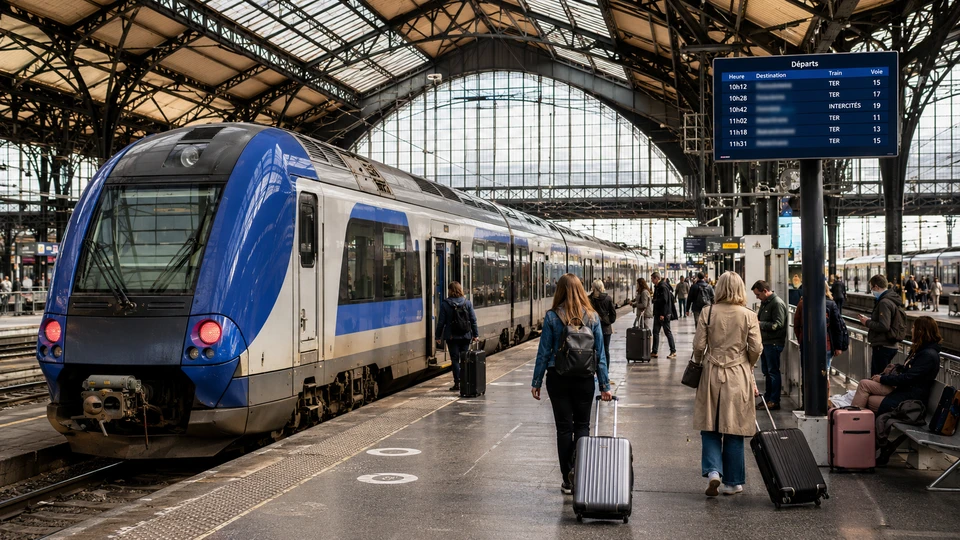
Orly has two Orlyval stations—Orly 1, 2 and 3 (which serve the previous Orly-Ouest terminals) and Orly 4 (the former Orly-Sud)—and there is a free shuttle service between them, so you should check which of the stations your terminal in fact uses. From either station, the Orlyval goes directly to Antony station, where you then transfer onto the RER B.
You can take two practical routes from Antony. Take the RER B as far as Denfert-Rochereau and then switch to the Metro 4 heading towards Château Rouge, after which walk the final 10 to 15 minutes up into Montmartre from the north, close to the streets of the Goutte d'Or market. Alternatively, continue on the RER B to Gare du Nord and board the Metro 2 to Anvers, which brings you directly to the bottom of the steps and escalators leading up to Sacré-Cœur—this is the more touristy and more frequently photographed route. A third option is to replace Anvers with a journey on the Metro 12 to Abbesses, which puts you near the funicular that takes you up the steepest part of the hill.
No matter which option you take, allow yourself about one hour for the journey door to door, since with suitcases it will not seem quick – there are actual stairs at the Antony and metro interchange places.
- Pros: Cheapest option on this route; trains run every 5–10 minutes; no traffic risk
- Cons: At least two changes; premium airport fare applies at Antony; awkward with suitcases or kids
We do not advise taking this route if you are traveling with children, older relatives, or have more than one large suitcase each since the extra changes accumulate quickly.
Taxi
Verdict: It is possible to do and will actually be very fast if the traffic cooperates.

Official Paris taxis take passengers from the designated stands outside each terminal and follow the same Périphérique route mentioned above. When travelling to the Right Bank, where Montmartre is located, fares are generally charged at a fixed rate rather than by the meter, at least eliminating the uncertainty upon arrival. A standard taxi ride should cost about €€.
The ring road is actually quick either late at night or early in the morning – that is when taxis are around. However, during the evening peak, the journey which would normally take forty minutes can extend to more than an hour, and your patience can be worn down by the meter (in the cases where it applies) or by waiting in the queue.
- Pros: Direct from terminal to hotel door; fixed Right Bank rate on many routes; fast outside rush hour
- Cons: Rank queues can be long at busy arrival times; price uncertainty if not on a flat-rate zone; no advance booking guarantee
Private Transfer
Verdict: This is the closest approach to a trouble-free landing on that route.

A private transfer — for example, the one provided by Top Paris Transfer — follows the same route as a taxi, that is, via the A106 to the A6a and then onto the Périphérique, with the driver waiting for you near either Clignancourt or La Chapelle, having already been tracking your flight and with a fare having been agreed upon before you board the plane.
Since Montmartre is so far from Orly, the advantage of not making any changes is obvious in this case: there's no need to go through Antony, no stairs at Gare du Nord, and no need to decide whether Château Rouge or Anvers will get you nearer to your real destination. This is generally the most practical option for a family of four or for anyone who has more luggage than free hands.
- Pros: Door-to-door, one price agreed in advance, driver waits regardless of flight delay
- Cons: Costs more upfront than the train; needs booking ahead rather than hailing on the spot
Ride-hailing Apps
Verdict: Handy if you have service and can deal with higher prices during busy times.

Uber and Bolt are both based at Orly, and the points where you pick them up are only a short walk from the arrival doors (they are well signed, though it does involve a bit of walking when you're carrying bags). The route followed is the same as that of a taxi. Since the prices vary according to demand, a trip booked at 6 p.m. on a Friday will cost considerably more than the same journey at 11 a.m. on a Tuesday.
- Pros: Easy to book from your phone; often cheaper than a taxi off-peak
- Cons: Surge pricing at busy times; designated pickup point adds a short walk; driver cancellations happen
Bus + Metro Combo
Verdict: It does exist, but is generally not worth the trouble for this place.
There is no bus that goes directly to Montmartre; the most practical thing to do is to take the Direct 1 coach from the terminal to Gare Montparnasse and then continue by metro—either on Metro 12 to Abbesses or on Metro 10 to Place de Clichy and then transfer to Metro 2 at Anvers. In both cases, you end up with an additional coach journey alongside the same number of changes as with the train option, and the total travel time is usually about the same.
- Pros: An alternative if RER B is disrupted
- Cons: No time saving over the train; still two-plus changes; less frequent departures
Side-by-Side Comparison
| Option | Door-to-door time | Price level | Luggage | Transfers needed | Best for |
|---|---|---|---|---|---|
| Train (Orlyval + RER B + Metro) | ~1 hour | € | Awkward on stairs | 2 | Solo travelers, light packers |
| Taxi | 35–60 min (traffic-dependent) | €€ | Fine | 0 | Speed, no advance planning |
| Private Transfer | 35–50 min | €€–€€€ | Easy, space for extra bags | 0 | Families, groups, first-timers |
| Ride-hailing | 35–60 min | €€ (variable) | Fine | 0 | Budget-conscious solo/couples |
| Bus + Metro | ~1h 5min+ | € | Awkward | 2–3 | Backup option only |
Which Option Is Right For You? (Matching Based on Traveler Type)
For families who have small children the best option is to have a private transfer with a child seat installed since it's better than trying to push a stroller up Antony's stairs.
When there are four or more people, divide four train tickets among one vehicle fare and the private transfer will usually prove to be cheaper per person, not to mention saving everyone the need to change trains.
If you are travelling on a tight budget and have only got a light luggage load, the train is actually a good choice since that's the one we would take ourselves provided all we had was a backpack.
For people having a lot of luggage: instead of using the metro connections altogether, take a taxi or arrange a private transfer so that you will skip all the sets of stairs between Antony and Château Rouge.
For those visiting Paris for the first time, the steep, cobblestone streets of Montmartre are complicated enough to add to the difficulty of going through an airport rail interchange when you're not sleeping at all — having door-to-door transport takes away one source of stress.
For arrivals after late night or early in the morning: since Orlyval and the RER B service do not operate around the clock, you usually have the taxi or a transfer that has been booked in advance as your only practical choice outside of their working hours.
The Case for Booking a Private Transfer with Top Paris Transfer
When a family or a group of four are going to Montmartre, the trouble of having to change trains twice and paying four separate train fares is rarely better than splitting a single vehicle fare among all of them—nor does this take into account the time that can be saved.
We keep an eye on your flight, which means that if your arrival at Orly 4 is delayed the driver won't have given up and gone back home. When you arrive there will be a sign with your name on it, and the fare will be set before you land — there will be no meter charging you while you're stuck in the traffic on the Périphérique near Porte de Clignancourt, and there will be no surge multiplier since it's a Friday evening. Child seats can be obtained on request, there is adequate space for luggage, and service is available around the clock, a feature that is important considering the train and the Orlyval.
A recent case was that a family of five arrived at Orly in the late evening after their flight had been delayed, bringing with them two young children and four suitcases, and had booked a small hotel close to Abbesses. Taking the train would have required a change of train, another change, and then a walk up a hill in the dark with the bags. Instead, their driver was there, picked up the fact that the flight was late, and got them to the hotel door within 50 minutes.
👉 Book a private transfer from Orly to Montmartre with Top Paris Transfer: the price is fixed and the driver will be waiting for you when you arrive.
When to Travel: Traffic & Timing on This Route
During the morning rush hour, between about 7:30 and 9:30 am, the Périphérique gets congested when travelling in a northward direction, especially in the area of the merge off the A6a south of the city. Similarly, in the evening peak period, from about 5 pm to 7:30 pm, congestion occurs in reverse as the commuters go home past the same junctions that you use to get to Montmartre. The fastest times for a road transfer are consistently midday and in the late evening.
You should watch out for Montmartre's own schedule throughout the year. The Montmartre Grape Harvest Festival, which takes place in early October, shuts down the streets all around the Butte and causes an increase in foot traffic that slows down the final section of any drop-off. Additionally, Nuit Blanche, the city-wide all-night arts event held in late September or October, also brings extra traffic and pedestrians into the area after dark.
What This Route Really Costs (Including the Costs Nobody Mentions)
Although the train is the cheapest option in total, it does not have a single fixed price—you have to pay for the Orlyval section (a premium airport fare comes into effect when you go towards Antony), plus a separate RER B ticket, and then a standard metro fare for the last part. When more than one person is travelling, the savings compared to taking a taxi disappear quickly when you add up all these charges.
The fares for taxis and private transfers are based on the vehicle rather than on the number of passengers, which is the reason that a group of three or four can nearly eliminate the € gap when using public transport. There are no tolls on this particular route – all of the A106, A6a and Périphérique roads are toll-free within the city boundaries. However, the situation changes when it comes to parking near Montmartre if you're driving your own car or picking up a rental: parking spaces are both scarce and expensive, and that is another reason why most visitors decide not to use their cars at all.
When you take into account the four individual train tickets, the changes and the time involved, a private transfer is generally the cheaper option for an average family of four.
Mistakes to Avoid on the Orly to Montmartre Journey
- Assuming that one ticket is enough to cover the entire journey. You need to pay an additional premium fare for the Orlyval section in addition to your RER B and metro tickets — most standard transport passes do not include this.
- If there is a direct train, there isn't; all rail journeys from Orly to Montmartre require at least a change at Antony and usually involve a further change thereafter.
- If you choose Château Rouge when you intended Anvers, or the other way around, you'll end up on the opposite side of the hill—make sure to check which one is actually nearer to your address before you board.
— Taking the road journey during the evening peak time without allowing for delays. A 40-minute journey by road can easily take longer than an hour if the Périphérique becomes congested near La Chapelle.
— If you don't book in advance for arriving late at night or early in the morning. Both the Orlyval and the RER B stop running well before midnight, which can leave you stranded at the airport.
– Underestimating the final part of the journey on foot. Once you have left the metro, the cobbled, steep streets of Montmartre are really difficult to navigate if you're carrying a wheeled suitcase.
FAQ
Excuse me, is there a direct train running from Orly to Montmartre?
By no means will you take the Orlyval to Antony, transfer to the RER B, and then make another change onto a metro line—either the Metro 4, 2, or 12 depending on where you want to go on the hill.
What is the journey time by taxi from Orly to Montmartre?
Outside the rush hour period, take the Périphérique north, which will take you about 35 to 50 minutes; during peak traffic, particularly in the evening, it can last well over an hour.
What is the better metro station for Montmartre, Château Rouge or Anvers?
Château Rouge is located on the northern side, close to the Goutte d'Or market area, whereas Anvers places you directly at the steps and the escalators leading up to Sacré-Cœur. Neither of the two hotels is objectively better since it all depends on which side of the Butte your hotel is situated on.
Can public transportation work when you're travelling with a suitcase?
It may be done but it's not pleasant. For most travelers who have more than a small bag, the route between the Antony interchange and the hills and stairs of Montmartre is such that hiring a taxi or arranging a private transfer is the easier option.
Does the private transfer pick up at both Orly terminals?
Yes — drivers track your flight and meet you at arrivals, regardless of whether you land at Orly 1, 2, 3, or
Is a private transfer worth it for a solo traveler?
Honestly, if you're traveling light and don't mind two changes, the train does the job fine for one person. The value of a private transfer grows sharply with group size and luggage.
Do Orlyval and RER B run all night?
No — both stop running well before midnight and don't restart until early morning, so late or early flights generally need a taxi or a pre-booked transfer.