Best Ways to Get from Charles de Gaulle to La Défense: Every Transfer Option Compared (2026 Guide)
When you arrive at CDG, go through passport control and then your phone displays a meeting invitation for a building on the Esplanade in three hours—then it strikes most business travellers that La Défense isn't 'Paris' as the airport transfer signs imply; it is located on the western edge and there is no direct route to it.
The distance is about 30 to 35 km, and the journey takes between around 35 minutes and more than an hour, depending on the mode of transport and the time of day. This guide is aimed at people who are travelling directly from CDG into the business district—whether they are corporate visitors, conference attendees, or those staying at a hotel close to the towers—who want a realistic idea before making their decision.
Even if you book a private transfer in advance, you won't necessarily eliminate the uncertainty altogether, since there are other alternatives and this option isn't the right one for every individual. Let's look at what does in fact work.
Quick Answer: The Best Way from Charles de Gaulle to La Défense
For most travellers, a private transfer (€€) is the best option when getting from Charles de Gaulle to La Défense — there are no changes of train and you don't have to push your luggage through Châtelet, with a price having been agreed upon before you arrive. The RER train (€) is the cheapest and is actually suitable for those with only light luggage. A metered taxi (€€€) is the quickest door-to-door option but is the least predictable on price, since La Défense is outside CDG's flat-fare area.
| Distance | Fastest option | Cheapest option | Most comfortable |
|---|---|---|---|
| ~30–35 km | Taxi / private transfer (traffic-dependent) | RER B + RER A (or Metro Line 1) | Private transfer |
Understanding the Charles de Gaulle → La Défense Route
La Défense is located west of central Paris and is on the side of the city opposite CDG, which is in the northeast. All that matters here is the geography – instead of entering the city, you have to cross it.
By road, motorists usually enter from CDG via the A1 motorway towards Porte de la Chapelle, then take the Boulevard Périphérique (or switch onto the A86 if the ring road is congested) in order to get to the access roads in the Puteaux and Courbevoie area. When the road is clear, the journey takes about 32 to 45 minutes, but during the Monday-morning or Friday-evening peak hours it can last over 75 minutes.
There is no direct train service; all the rail routes require at least one change in central Paris so you should be made aware of that from the start, as it often catches people who are visiting for the first time. The two feasible rail routes are to take the RER B as far as Châtelet–Les Halles and then change to the RER A, or to go on the RER B as far as Gare du Nord/Magenta and then change to the RER E, in each case the journey ending at La Défense.
Your Transfer Options, One by One
Here there is a fairly predictable compromise between price and comfort — the more hands-off the option is, the more it costs, and the difference between 'cheap' and 'comfortable' is greater on this route than it is on a direct journey from CDG to central Paris, simply because of the extra connection.
Private Transfer
Decision: visiting homes with no connections and at a price known in advance.

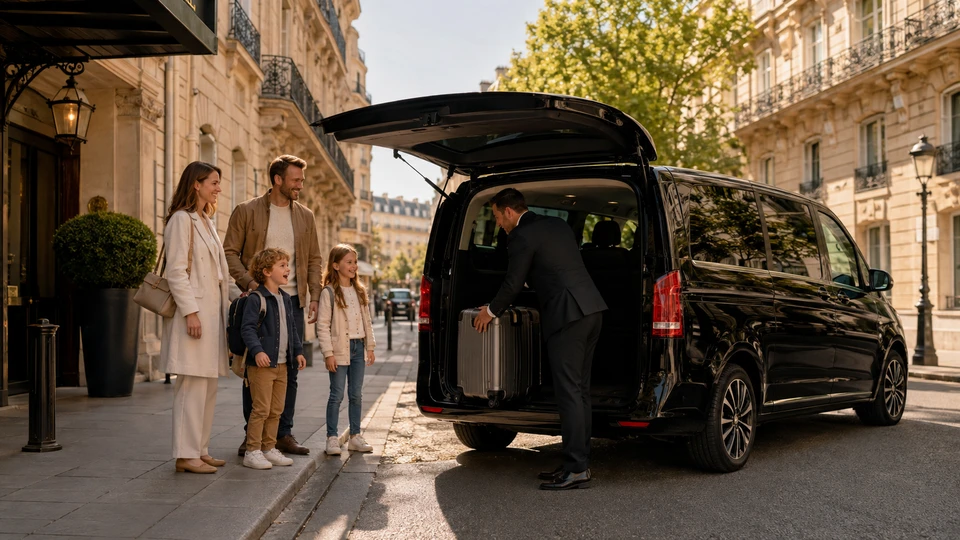
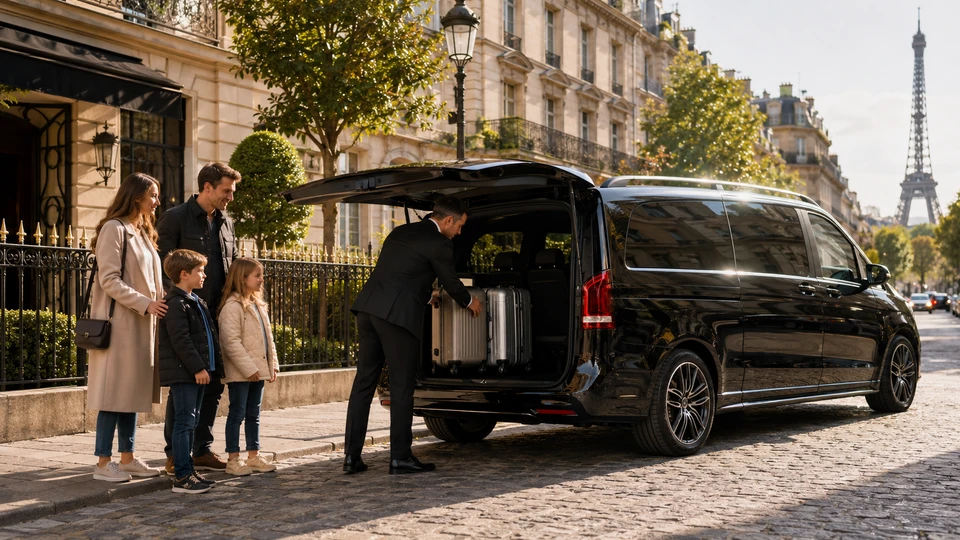
The driver who has booked in advance will meet you in the arrival hall—at CDG Terminal 2, this is the hall having a nameboard—which will track your flight and take the motorway route using the A1 and the Périphérique or the A86 directly to your office block, hotel, or the Grande Arche; there's no need to change at Châtelet with your suitcase or to figure out which exit will take you to the Esplanade de la Défense.
The journey takes between 45 and 75 minutes, depending on traffic and the exact place where you are dropped off (addresses around the Esplanade may add a few minutes compared to a hotel nearer to the station). Prices are classified as €€ and are given on a per-vehicle basis rather than per person, which is important for groups.
Pros:
- No connections, no luggage on stairs
- Fixed price agreed before pickup — traffic doesn't change what you pay
- Flight tracking means a delayed landing doesn't strand you
Cons:
- Costs more than the train for a solo traveler
- Still subject to road traffic, even if the price isn't
- Needs booking ahead rather than turning up and queuing
Taxi
The verdict is that it's fast provided you get lucky with the route, but the cost isn't fixed as it is in central Paris.
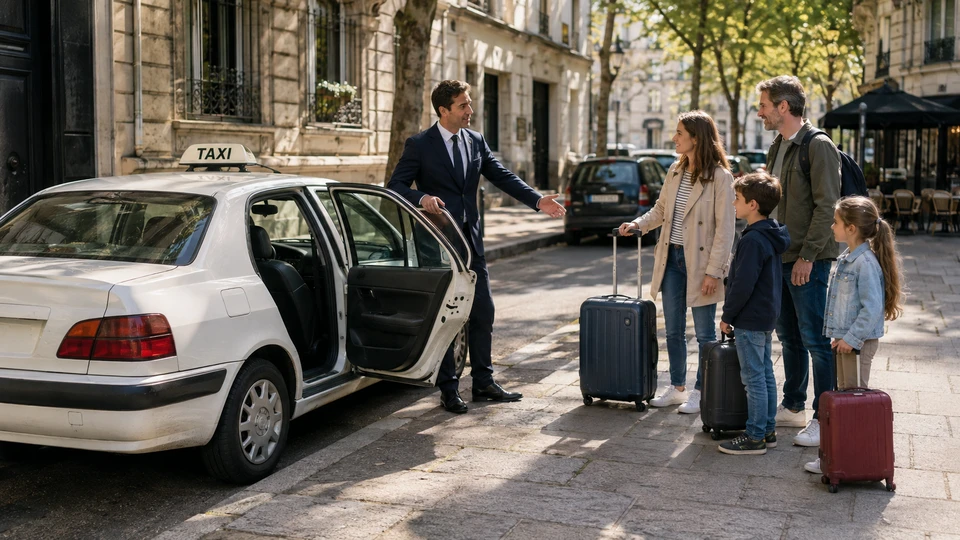
Official taxi ranks are located outside the arrival area of each terminal at CDG. The odd point that most travel guides fail to mention is that the fixed fares set by the government (the ones you'll see listed for trips into Paris) apply only to addresses located within Paris—that is, on the Rive Droite or the Rive Gauche. Since La Défense is in Puteaux and Courbevoie, just outside the city boundaries, these fixed rates don't apply, and your fare will be charged by the meter.
In light traffic you can expect the journey to take about 35 to 50 minutes, though it will be longer during peak hours, and the cost will be between €€ and €€€ depending on the meter and the time of day (just as with any Paris meter, night and Sunday surcharges apply).
Pros:
- No booking required, taxis queue at every terminal
- Fastest option when roads are clear
- Driver handles luggage directly into the boot
Cons:
- Price isn't fixed, unlike CDG-to-Paris fixed fares
- Rush hour on the A1 and Périphérique can double the trip time
- Queue length at the rank varies with flight bunching
RER B + RER A (or RER B + RER E)
Verdict: it's really good as long as you're carrying only light luggage and are willing to make one alteration.
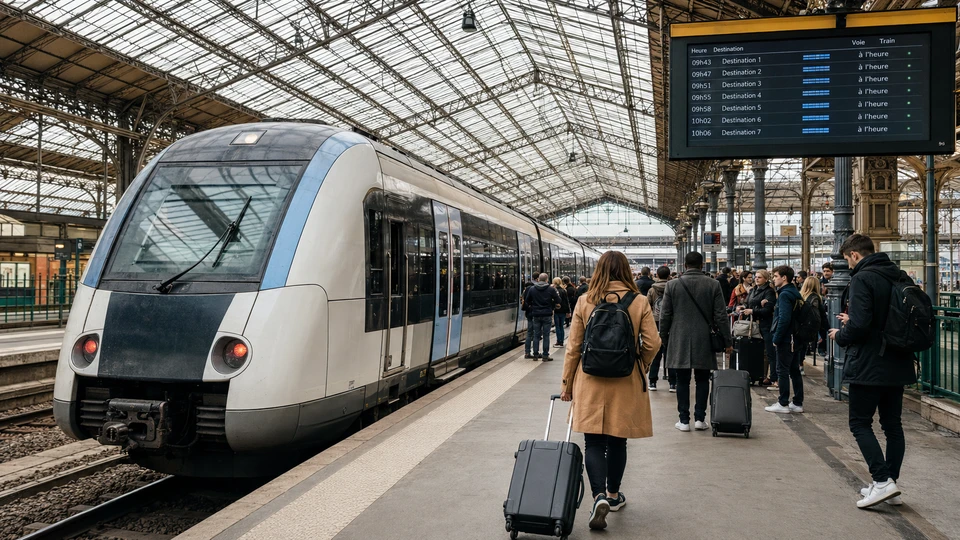
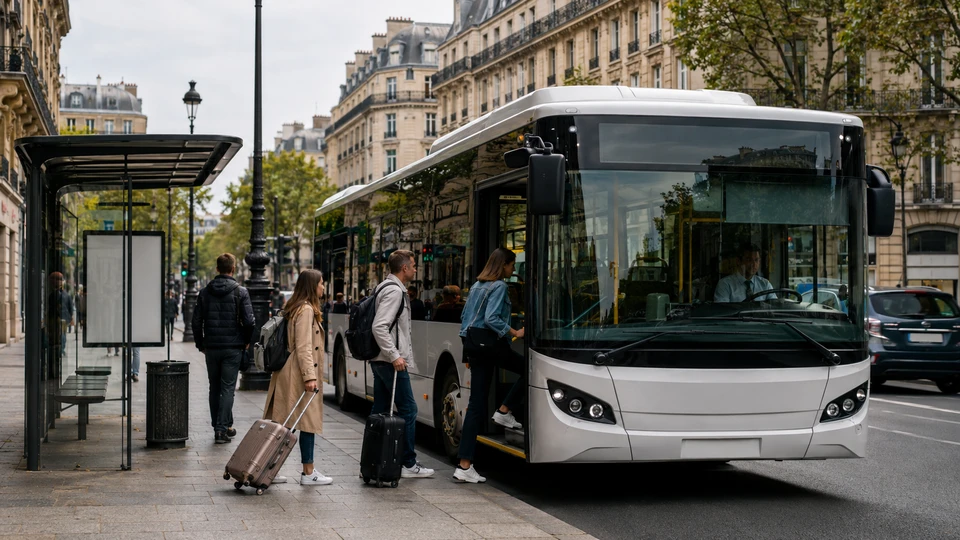
To take the RER B at the Aéroport Charles de Gaulle 2 (Terminal 2) station—trains are spaced 10 to 20 minutes apart all day—and travel towards central Paris, change over to the RER A bound for La Défense at Châtelet–Les Halles; or else go as far as Gare du Nord and switch to the RER E at the adjacent Magenta station, which also ends at La Défense. In either case, you will arrive at Paris La Défense-Grande Arche station, directly beneath the district.
The total travel time is roughly between 50 and 55 minutes including the change, and to be honest, for a single traveler carrying only a backpack and having a reasonable level of confidence when navigating the stations in French, it's a perfectly acceptable choice—no less good than the similar journey into central Paris. The fare is €, which is the lowest of all the options available here.
Pros:
- By far the cheapest way to make this trip
- Trains run frequently, so a missed connection isn't costly in time
- Avoids road traffic entirely
Cons:
- At least one change with luggage, sometimes down escalators at Châtelet
- Not ideal with more than a carry-on per person, or with small children
- Peak-hour trains into central Paris get genuinely crowded
You can check official train schedules and connections on the SNCF timetable page
Metro Line 1 via Porte Maillot
Verdict: it's a good option when you've already taken a bus or made a transfer part of the way into the city.
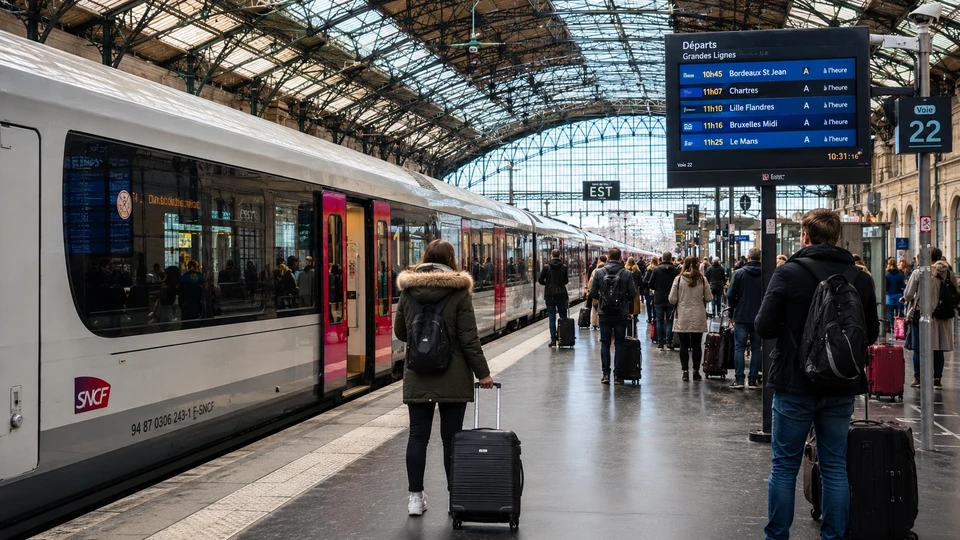
A few travelers take an airport bus—such as the former Le Bus Direct type, now replaced by RATP services—all the way to Porte Maillot and then board Metro Line 1, which goes directly to La Défense without having to change lines. This route is more of a secondary option than a main one since most people traveling directly from the airport will find the RER to be faster overall; however, it's still worthwhile to be aware of it if your first part of the journey ends close to Porte Maillot.
The price is €, just like that of ordinary metro/RER tickets, and the first section of line 1 is both quick and frequently served.
Pros:
- Direct run once you're on Line 1, no further changes
- Line 1 trains are frequent, several per minute at peak times
- Straightforward interchange at the Porte Maillot end
Cons:
- Only useful if your first leg already routes through Porte Maillot
- Involves two separate legs of a journey, not one clean connection
- Not a practical first choice straight off a CDG flight
Direct Bus
The verdict is that it technically does exist, but the schedule makes it impractical for the majority of passengers arriving at CDG.
A few of the coach services (such as BlaBlaCar Bus and other similar operators) provide direct links between CDG and the Jules Verne terminal at La Défense, without the need to change, the journey lasting about 45 minutes to just over an hour. The drawback is that they are not very frequent — they only operate a few times a day, sometimes with as few as three departures — so if your arrival time doesn't coincide with one of these services, you'll have to wait a lot longer than the actual journey takes.
Pros:
- No changes required, one seat the whole way
- Comfortable, coach-style seating with luggage space
- Cheapest single-ticket option after the train
Cons:
- Very limited departures per day
- Not viable if your flight lands outside the scheduled windows
- Journey time is unpredictable if it hits road traffic
Side-by-Side Comparison
| Option | Door-to-door time | Price level | Luggage | Transfers needed | Best for |
|---|---|---|---|---|---|
| Private transfer | 45–75 min | €€ | Easy, driver-handled | None | Business travelers, groups, families |
| Taxi | 35–50 min | €€–€€€ | Easy, driver-handled | None | Solo travelers wanting speed, no pre-booking |
| RER B + RER A/E | 50–55 min | € | One change with bags | 1 | Budget and solo travelers |
| Metro Line 1 (via Porte Maillot) | Varies by first leg | € | One change with bags | 1+ | Travelers already routed via Porte Maillot |
| Direct bus | 45–70 min (if timed right) | € | Onboard storage | 0 | Off-peak arrivals matching the schedule |
Which of the options is right for you?
For business travelers who are tight on time**, hiring a private transfer is the obvious choice since it offers a fixed pickup time, a fixed price, and avoids the risk of a delayed RER connection which could cause you to be late for a meeting on the Esplanade.
For families having young children the change of train at Châtelet using a stroller and cases is really stressful; arranging a private transfer with a child seat already fitted eliminates this problem entirely.
When four or more people are travelling, split one €€ transfer ticket into four RER tickets per vehicle and the private transfer will usually be the better value on a per-person basis, even though it involves much less hassle when luggage is shared.
For budget travelers who are going alone and have a backpack, the combination of the RER B and RER A is really acceptable; getting the change at Châtelet won't be very difficult.
If you have a lot of luggage, then try to avoid the train connection. Taking a taxi or arranging a private transfer means you don't have to carry your bags around the busy interchange station.
If you arrive late at night or early in the morning: although taxi ranks are open around the clock, a pre-booked transfer ensures that there will actually be a taxi waiting — something that comes in handy following a long-haul red-eye flight when the last thing you want to do is haggle over the fare at 5 am.
For first-time visitors to Paris, the fact that there is "no direct train" proves to be more confusing than any other aspect of this route. If you'd rather not worry about which RER line serves which area, book in advance.
The Case for Booking a Private Transfer with Top Paris Transfer
Work out the figures for a family of four. Even when you take the cheapest RER tickets, the total comes to something, and when you consider the difficulty of making the connection at Châtelet with two suitcases and a stroller, the €€ transfer—which is charged per vehicle rather than per person—usually ends up being cheaper on a per-person basis and much easier.
Since your driver keeps an eye on your flight, everyone will be at the pickup point even if your arrival at CDG is delayed. The meet-and-greet takes place directly at the arrival hall, where there is a name board rather than having to wait in a taxi queue whose length depends on the number of flights that have just landed. The fare is set before you leave home—there is no meter charging you while you're stuck in A1 traffic, and there is no surge pricing as some ride-hailing apps do when there are trade fairs at Paris Expo or during the Roland-Garros period when traffic in the city increases.
Child seats are provided free of charge, the luggage space is based on the vehicle you book not on the space under a train seat, and the service operates around the clock, which is important since your flight lands at 11 p.m. and your first meeting is at 9 a.m.
A recent example was a consultant who had arrived in Singapore the previous night, with a flight in at 7 a.m. and a client meeting scheduled for 9:30 a.m. at Tour First; he had booked a transfer in advance. The driver was already waiting and the flight tracking had taken into account a 40-minute delay, so the car arrived at the office tower with plenty of time to spare—there was no need to consult the RER timetable or to risk waiting in a taxi queue.
👉 Book a private transfer from Charles de Gaulle to La Défense with Top Paris Transfer: the price is fixed and the driver will be waiting for you at the arrivals.
When to Travel: Traffic & Timing on This Route
The worst time for road traffic on both the A1 and the Périphérique is during the morning rush, between 7:30 and 9:30 a.m., as commuters drive into La Défense itself — a rather ironic situation since you're going to the same area that everybody else is driving to. Similarly, in the evening rush, from about 5:30 to 7:30 p.m., the traffic in the opposite direction is almost as bad as people leave the towers.
In the midday and early afternoon hours the road transfer is generally the quietest, the journey taking somewhere between 35 and 45 minutes. Although late-night arrivals avoid all traffic they do so at the cost of having to wait in quieter and more spread out taxi queues at the airport.
A noteworthy seasonal feature is that, during the weeks when major trade fairs are taking place (since the La Défense Arena holds large-scale events and the nearby Paris Expo Porte de Versailles attracts extra traffic from other parts of the city during such shows), both the RER and the road route experience a significantly greater volume of traffic. When your journey falls during one of these times, it is worth the extra effort to book a transfer in advance rather than waiting in a taxi queue.
What This Route Really Costs (Including the Costs Nobody Mentions)
The RER is the € choice and the fare is charged on a per-person basis so that it increases quickly when you have a group. A private transfer costs €€ and the price is based on the vehicle, which is when the real value becomes apparent for anyone travelling with others. A taxi falls somewhere between €€ and €€€, since, unlike the fixed fares from CDG to Paris, your charge here is determined by a meter – traffic conditions and the time of day affect the amount.
The amount that people don't talk about until they've got to the ticket machine is that if you've bought a standard city ticket rather than one that includes the airport, your RER B ticket from the airport won't automatically cover the journey on the RER A to La Défense — you should check before getting on the train, or you'll have to pay more during the trip. Taxis have a surcharge for night journeys after 10 p.m., just like in other parts of Paris. And if you're driving, remember to allow for parking at your destination since office buildings and hotels in La Défense generally charge for on-site parking, something that a transfer completely avoids.
For an average family of four, when you take the individual RER fares and add in the inconvenience, the private transfer turns out to be the more sensible choice, not merely the more comfortable one.
Mistakes to Avoid on the Charles de Gaulle → La Défense Journey
If there is a direct train. There isn't; so allow for a connection and make sure you know which one you're taking when you arrive.
We expected the taxi fare to be flat at CDG. It isn't — the fixed price only applies to destinations within Paris itself. Since La Défense is metered, request an estimate before you start your journey if you're taking a taxi.
The Monday morning and Friday evening peaks in road traffic are often underestimated. The approaches to the A1 and the Périphérique become very busy at these times – if your meeting is set in advance, include a buffer time or arrange a transfer where at least the price is fixed.
Getting a ticket which does not include the entire journey from RER B to RER A. Although some airport tickets are priced for travel only within Paris, the trip to La Défense requires the appropriate ticket or zone coverage.
Not confirming your exact drop-off address before booking. La Défense has office towers, hotels, and the Grande Arche area. Each has a different entrance. Give your driver or transport the exact building name, not just "La Défense."
Going to the trade fair without having booked in advance. When there are large events at La Défense Arena or the nearby exhibition centers, both rail and road transport experience heavier traffic — particularly taxi queues on those days.
FAQ
Is there a direct train from Charles de Gaulle to La Défense?
Not at all; each rail route necessitates at least one change in central Paris—usually involving a transfer from the RER B to Châtelet–Les Halles and then to La Défense on the RER A, or a change from the RER B to Gare du Nord/Magenta and then to the RER E.
What is the travel time from CDG to La Défense?
By road it takes about 35 to 55 minutes (by taxi or private transfer, depending on traffic) or approximately 50 to 55 minutes by train, including the change of train. During rush hour road trips can exceed 75 minutes.
Does the CDG flat-rate taxi fare include La Défense?
The flat fares set by the government for CDG apply only to destinations within Paris; since La Défense is located in Puteaux and Courbevoie, which are situated just outside the city, taxi fares in that area are based on the meter.
How can you get from Charles de Gaulle to La Défense at the lowest cost?
The combination of the RER B and the RER A (or RER E) is the most economical choice, with a price per person at the lower end of the scale.
Is a private transfer worth it for this route?
For groups, families, or anyone with a fixed schedule, yes — the price is fixed per vehicle regardless of traffic, and you skip the RER connection entirely. Solo light-packers can reasonably stick with the train.
Which RER change should I use — Châtelet or Gare du Nord?
Both work. RER B to Châtelet–Les Halles, then RER A, is the more commonly used route; RER B to Gare du Nord, then RER E via Magenta, is a solid alternative if your platform timing favors it.
Can I take the metro from CDG to La Défense?
Not directly — Metro Line 1 runs straight to La Défense, but you'd need to be at Porte Maillot to use it, so it's more of a secondary route than a first choice from the airport.
Is there a bus that goes straight from CDG to La Défense?
A small number of coach services run directly, but departures are limited to just a few per day, so it only works if your arrival time happens to match the schedule.
Other Popular Blog You Might Need
- Charles de Gaulle to Aparthotel Adagio Paris Val d'Europe: Every Transfer Option Compared (2026 Guide)
- CDG to Sequoia Lodge: Every Transfer Option Compared (2026 Guide)
- Best Ways to Get from Charles de Gaulle to Newport Bay Club: Every Transfer Option Compared (2026 Guide)
- CDG to Relais Spa Val d'Europe: Every Transfer Option Compared (2026 Guide)