Best Ways to Get from Charles de Gaulle to Gare St Lazare: Every Transfer Option Compared (2026 Guide)
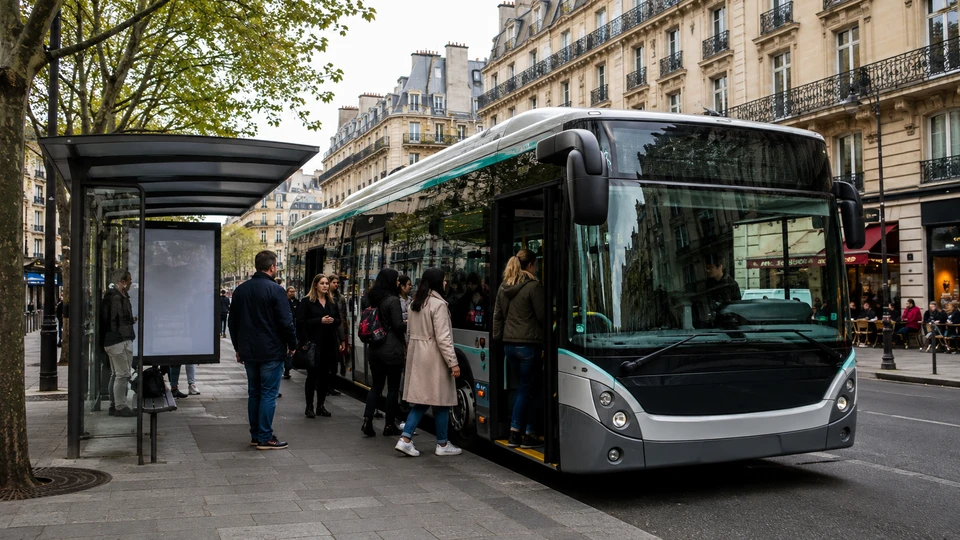
You have just arrived at Charles de Gaulle, are carrying a suitcase which at check-in appeared to be lighter, and at Gare St Lazare somewhere in the city a train bound for Rouen or Le Havre is waiting for you. This is one of the more complicated journeys in Paris from the airport to the station since there is no single train that goes there, and so each option requires at least one change.
The distance is about 30 km, and the time it takes to get from Charles de Gaulle to Gare St Lazare will vary according to the mode of transport, ranging from 40 minutes to more than an hour. This guide is aimed at people who are connecting to a train bound for Normandy, at those who are checking into a hotel in the 8th arrondissement, or simply at individuals who want to find the least stressful way to get across the city. Although booking a private transfer in advance removes all the uncertainty, it's still worthwhile to consider all the available options first.
Quick Answer: The Best Way from Charles de Gaulle to Gare St Lazare
There is no direct rail connection between CDG and Gare St Lazare since every form of public transport requires a change. The fastest train journey is that of the RER B together with the RER E (€€), while the simplest option when you have only light luggage is to take the Roissybus to Opéra and then walk a short distance (€), and the only door-to-door option which avoids the need to change is a private transfer (€€€, at a price per vehicle).
| Distance | Fastest option | Cheapest option | Most comfortable |
|---|---|---|---|
| ~30 km | RER B + RER E | RER B + Metro 14 | Private transfer |
Understanding the CDG → Gare St Lazare Route
Charles de Gaulle is located to the northeast of Paris; Gare St Lazare is in the heart of the city, on the Right Bank in the 8th arrondissement. By road, the route follows the A1 motorway before joining the Boulevard Périphérique and then cuts through the northern arrondissements — a route which goes right past the Gare du Nord area, one of the busiest sections of road in the city at nearly any time.
There is no direct train service. To get from the airport to central Paris you have to change from the RER B, either to the RER E for one stop or to Metro Line 14. People who frequently make this journey know that the two RER lines do not have a shared platform: at Gare du Nord the RER B arrives on one floor and you have to walk through the linking passage to the Magenta entrance in order to board the RER E, all while remaining within the paid area.
Gare St Lazare is the second busiest station in Paris, with more than 200,000 passengers passing through it each day, and it serves as the starting point for Transilien and intercity services heading towards Normandy. Because of the large number of passengers the station handles, the area in front of the station and the adjacent streets become genuinely crowded during the evening peak, a fact that is important if you intend to use a taxi rank at 6 PM.
Your Transfer Options, One by One
Here comfort and price go in opposite directions since the most inexpensive choices require the most from you and your luggage.
Private Transfer
Verdict: The sole choice that omits all the changes.

A private transfer that has been pre-booked will collect you at the arrival hall by means of a sign bearing your name, check your flight in the event that it is delayed, and drive you directly to the entrance of Gare St Lazare—therebeing no need for any RER platforms, no walking between stations, and no waiting at a taxi rank.
- Time: Roughly 40–60 minutes depending on traffic on the A1 and Périphérique
- Price level: €€€, but priced per vehicle, not per passenger
- Luggage: Full boot space, no carrying bags up and down escalators
Pros:
- Fixed price agreed before you land
- Driver waits and tracks your flight
- One vehicle for the whole group, luggage included
Cons:
- Costs more than public transport for a solo traveller
- Subject to the same road traffic as a taxi
This is the option for booking when you are taking a particular onward train and cannot afford to lose twenty minutes over a missed connection at Gare du Nord.
Taxi
The verdict is simple, but at that simplicity you have to pay a price.

Taxis officially authorised by CDG use flat fares based on zones rather than a meter, and Gare St Lazare is in the zone on the Right Bank, which makes it cheaper than a fare in the Left Bank for the same distance. Go to the official taxi rank outside the arrival hall and do not accept any offers of a ride from anyone coming up to you inside the terminal.
- Time: 40–60 minutes, traffic dependent
- Price level: €€, fixed flat rate, per vehicle
- Luggage: No problem, boot space for the whole group
Pros:
- Fixed fare, no metered surprises
- Available 24/7 with no pre-booking needed
- Door-to-door, same as a private transfer
Cons:
- Queues at the taxi rank can run long at peak arrival times
- No flight tracking if you're delayed and your onward plans depend on timing
RER B + RER E (via Gare du Nord / Magenta)
Verdict: The quickest train route, provided you are not minded about having to walk one mile underground.
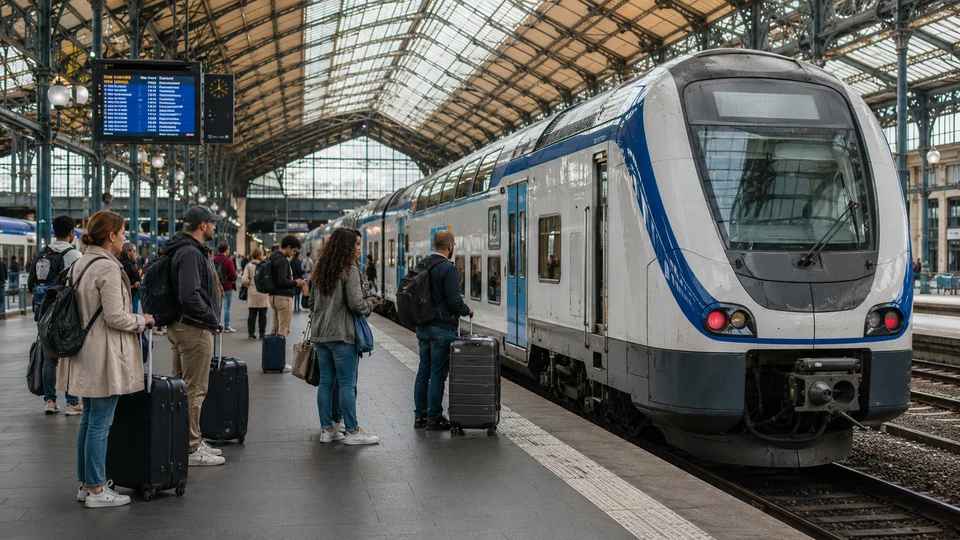
Take the RER B from the airport station (you can access it from the TGV/RER hub at Terminal 2 or by using the free CDGVAL shuttle if your arrival is at Terminal 1). Get off at Gare du Nord and then follow the signs through the passage to the Magenta entrance for the RER E, which has a single stop until Haussmann–St Lazare.
- Time: Around 45–65 minutes door to platform
- Price level: €, single combined ticket
- Luggage: Manageable with one bag each; harder with a full-size suitcase and a toddler
Pros:
- Cheapest realistic option after the bus
- Frequent departures, not weather-dependent
- Single ticket covers the whole journey, no need to exit and re-enter
Cons:
- The walk from RER B to Magenta involves stairs and can be confusing first time round
- Gare du Nord is enormous, and signage has been known to send first-timers the wrong way
You can check official train schedules and connections on the SNCF timetable page
RER B + Metro 14 (via Châtelet–Les Halles)
Decision: It's a good backup option when the RER E train departures are scarce.
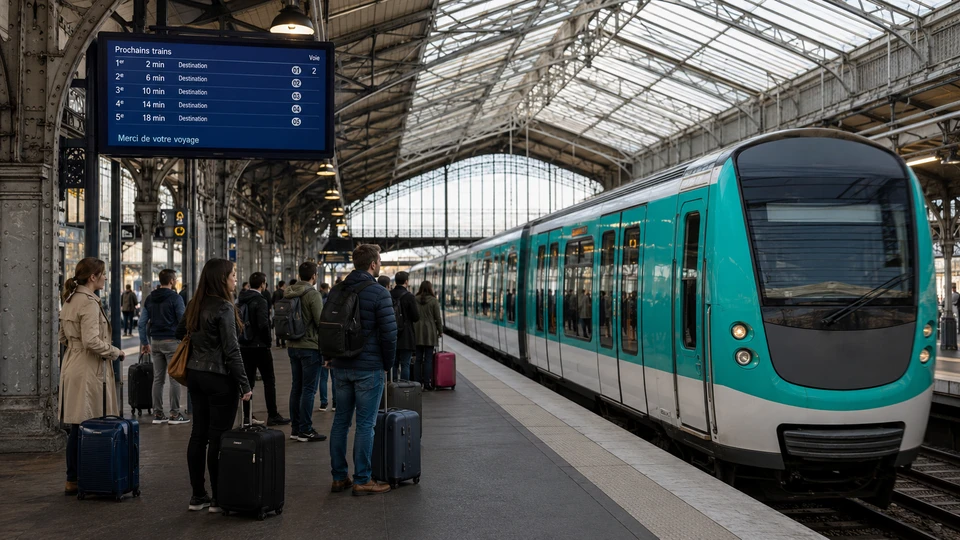
You travel on the RER B for one stop to Châtelet–Les Halles and then transfer to the driverless Metro Line 14, taking it all the way to Gare St Lazare. Although the journey is a bit longer, the connection is well signposted and there is a large lift, a feature which in fact some people who have mobility issues prefer to the walk to Gare du Nord.
- Time: Around 40–65 minutes
- Price level: €, similar cost to the RER B + RER E route
- Luggage: Same trade-offs as above; one flight of escalators at Châtelet
Pros:
- Reliable lift access at Châtelet–Les Halles
- Metro 14 runs frequently and isn't prone to the delays that hit RER lines
- Genuinely interchangeable with the RER E route if one is disrupted
Cons:
- Châtelet–Les Halles is one of the largest, busiest interchanges in the network
- Still involves carrying luggage through ticket barriers and onto a second train
Roissybus + Short Walk or Metro
Verdict: It's all right if you've got a backpack, but you'll get a headache if you've got heavy suitcases.
The Roissybus goes directly from the stops located at Terminal 2E/F to Opéra, its last destination, a place that is roughly a ten-minute walk from Gare St Lazare or two stops along Metro Line 3 (you board the metro right next to the Nespresso store on the corner). In either case, you have one more journey to take after getting off the bus.
- Time: About 50 minutes to Opéra, traffic dependent, plus the walk or metro leg
- Price level: €, cheapest ticket price of any option
- Luggage: Fine for a backpack; a struggle with wheeled suitcases on cobbled streets near Opéra
Pros:
- No change of train, just one bus
- Drops you in a central, walkable part of the city
- Doesn't rely on RER punctuality
Cons:
- Subject to surface traffic, particularly around the Périphérique
- Still leaves you ten minutes' walk (or another transfer) short of the actual station
Side-by-Side Comparison
| Option | Door-to-door time | Price level | Luggage | Transfers needed | Best for |
|---|---|---|---|---|---|
| Private transfer | 40–60 min | €€€ | Excellent | None | Groups, tight connections, families |
| Taxi | 40–60 min | €€ | Excellent | None | Solo or pairs wanting simplicity |
| RER B + RER E | 45–65 min | € | Fair | One | Budget travellers, light luggage |
| RER B + Metro 14 | 40–65 min | € | Fair | One | Those needing lift access |
| Roissybus + walk/metro | 50 min + walk | € | Poor–Fair | One (plus a walk) | Backpackers, solo budget travel |
Which of the options is right for you?
For families with small children, the journey from RER B to Magenta or using the escalators at Châtelet is difficult to handle when pushing a stroller and having a toddler along — simply having a private transfer with a child seat gets rid of that problem.
When there are four or more people, the cost per vehicle for a private transfer is usually about the same as the total cost of four individual train tickets, without having to worry about keeping everyone together through the two transfers.
As for people on a tight budget: honestly, the RER B and RER E really are quite acceptable if you're travelling with only a small amount of luggage. It's the cheapest option available, and once you've seen the walk at Gare du Nord you'll find it isn't difficult.
For business travellers who are tight on time, taking a taxi or using a private transfer with flight tracking guards you against the one situation which ruins a tight connection – namely, if your flight arrives late and the public transport does not wait.
If you have a lot of luggage, then you should entirely avoid using the Metro and the RER. Although the escalators and the ticket barriers can handle two large suitcases, the experience is still genuinely unpleasant.
People visiting Paris for the first time have often been confused by the signage at Gare du Nord, never mind if they're dealing with a completely foreign public transport system for the first time. Taking a taxi or using a transfer eliminates that decision altogether.
For arrivals after late night or early morning: since trains and buses operate from about 5 AM until midnight, you'll have to rely on a taxi or a private transfer if you arrive at any other time.
The Case for Booking a Private Transfer with Top Paris Transfer
When a family of four transfer at Gare St Lazare on this route, the figures usually lead people to expect that the transfer is the better option: four individual RER tickets soon add up and a private transfer, which is charged per vehicle, often ends up being about as much as — or even cheaper than — the total cost of the four tickets, without having to worry about moving the children and their bags through two different Paris rail stations.
With the Top Paris Transfer booking, your driver will track your flight, meaning that if your landing is delayed then the pickup point won't be empty. They'll be waiting for you at the arrival terminal with your name, ready to open the boot and leave immediately—there's no need to queue up at a taxi rank and no need to wonder which RER platform is yours. The price is settled with you before you land, so there will be no surprises from the meter and no surge pricing even if your flight arrives during a busy period.
The offering also includes child seats, additional luggage space, and 24-hour availability. A group that recently arrived at Terminal 2 at 6 AM consisted of four adults carrying ski bags and was heading for a 9 AM train to Normandy – in this situation, making two changes on the RER, being half-asleep and having to carry such large pieces of luggage, was not worth the time saved.
👉 Book a private transfer from Charles de Gaulle Airport to Gare St Lazare with Top Paris Transfer — at a fixed price and with the driver waiting for you at the arrival terminal.
When to Travel: Traffic & Timing on This Route
In the morning (between 7 and 9:30 AM), the A1 leads into Paris and on weekdays the section of the Périphérique near Porte de la Chapelle sees a sharp increase in traffic as the commuters meet up with airport traffic.
From midday until 4 p.m. it is the quietest period for a road transfer since the traffic near Gare du Nord and on the Périphérique is much lighter outside of the peak hours.
From five to eight in the evening the roads surrounding Gare St Lazare become congested as commuters travel by Transilien train to get home, which in turn slows down the last part of a taxi journey or transfer even more than the approach via the motorway.
In the late night or early morning hours, the road transfers go well, but before 5 AM and after midnight the public transport options become scarce or cease completely.
It's worth mentioning that during the summer season, weekend traffic at Gare St Lazare increases noticeably as Parisians go to Normandy's beaches—between June and August the RER and the roads will be busier on Friday afternoons and on Sunday evenings.
What This Route Really Costs (Including the Costs Nobody Mentions)
Fares for public transport (€) are charged on a per-person basis, meaning that the total cost increases as the size of your group grows — four train tickets can therefore amount to a sum that is comparable to what a private car would cost. In contrast, taxi and private transfer fares (€€ and €€€ respectively) are charged per vehicle, which changes the calculations in favour of travelling in a group.
There are some hidden costs to take into account: if you use Gare du Nord and accidentally leave the paid area before getting to RER E, you'll have to purchase a further ticket. Also, Roissybus tickets do not cover the subsequent journey by Metro line 3 if you opt for that route instead of walking. And when your taxi or transfer arrives at Gare St Lazare during the evening rush hour, you should expect the driver to circle around in search of a drop-off spot near the forecourt, which can add a few minutes that are not included in any online estimate.
The true cost to a typical family of four is that when you take into account the separate RER tickets, the delay caused by confusion, and the very real possibility of missing a connection, the higher overall price of the private transfer is often not as much of a premium as it at first seems.
Mistakes to Avoid on the CDG → Gare St Lazare Journey
If there is a direct train. There isn't; all the public transport routes from CDG to Gare St Lazare involve at least one change, so make sure to allow for that in your journey time.
When leaving the paid area at Gare du Nord, go through the internal corridor leading to Magenta for RER E rather than exiting the station — if you exit once you'll need to get a new ticket.
Misjudging the size of Gare du Nord is a mistake since it is one of the busiest and most confusing stations in Europe and you should allow yourself extra time to locate the correct platform, particularly if you are travelling with luggage.
If you take the Roissybus with hard suitcases it will take you to the Opéra, not to the station, and the cobbled streets are not good for wheeled luggage.
If you book a taxi inside the terminal rather than using the official rank, then the unofficial drivers who approach you before you get to the rank are not adhering to the fixed-fare rules.
Without taking into account the traffic on summer weekends. If you are travelling on a Friday afternoon or Sunday evening in July or August, the roads and the RER will be busier than normal because of the weekend tourists heading to Normandy.
It would be risky to make a tight connection at Gare St Lazare since in any case one change has to be made — you should therefore include a buffer time or arrange a transfer that matches your flight.
FAQ
Is there a direct train running from Charles de Gaulle Station to Gare St Lazare?
There is no direct train service; on each route, you need to change, either from RER B to RER E at Gare du Nord or from RER B to Metro Line 14 at Châtelet–Les Halles.
What is the fare for a taxi from CDG to Gare St Lazare?
Taxis officially based at CDG do not use a meter but charge a flat rate according to zone. Since Gare St Lazare is in the Right Bank zone, this zone has a lower price (€€) compared to a Left Bank fare for a similar distance.
What is the travel time from CDG to Gare St Lazare?
The time taken will be about 40 minutes to just over an hour, depending on whether you take a road transfer, the RER, or the Roissybus and on the state of the traffic that day.
Which is the faster combination, RER B and RER E or RER B and Metro 14?
They're close, with RER E via Gare du Nord usually edging it slightly, but Metro 14 via Châtelet–Les Halles has better lift access if you're travelling with heavy luggage.
Does the Roissybus go directly to Gare St Lazare?
No — it terminates at Opéra, roughly a ten-minute walk or two Metro 3 stops from the station, so factor that final leg into your timing.
Is it worth booking a private transfer for a solo traveller?
For one person with light luggage, the RER combinations are genuinely fine and considerably cheaper. A private transfer earns its price with groups, heavy luggage, or a tight onward connection.
Can I use my CDG-to-Paris RER ticket for the whole journey, including the RER E change?
Yes — as long as you stay within the paid zone when changing at Gare du Nord, one ticket covers the full journey from CDG to Gare St Lazare.
What time does public transport stop running between CDG and central Paris?
RER and Metro services generally run from around 5 AM to midnight, so late-night or very early arrivals will need a taxi or private transfer.
Other Popular Blog You Might Need
- Best Ways to Get from Charles de Gaulle Airport to Campanile Val de France: Every Transfer Option Compared (2026 Guide)
- Best Ways to Get from Charles de Gaulle to Dream Castle Hotel: Every Transfer Option Compared (2026 Guide)
- How to Get from Charles de Gaulle Airport to Explorers Hotel: Every Transfer Option Compared (2026 Guide)
- CDG to Sequoia Lodge: Every Transfer Option Compared (2026 Guide)