Beauvais to Charles de Gaulle: Every Way to Make the Transfer (2026 Guide)
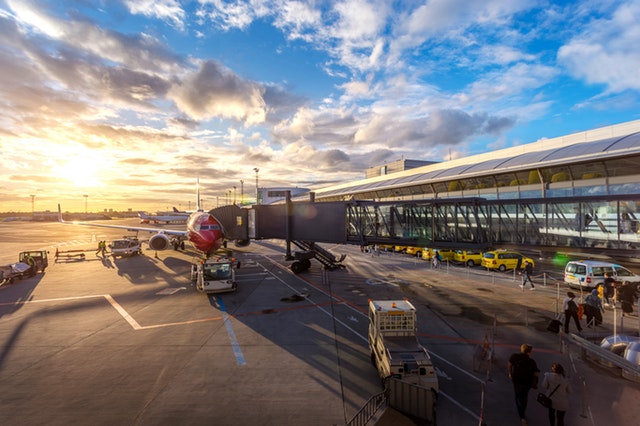
You have just arrived at Beauvais-Tillé on a Ryanair flight that departed at 6 a.m.; your next long-haul flight leaves from Charles de Gaulle in five hours, and the clock in the arrivals hall now seems a lot louder than it did in the booking confirmation. The journey from Beauvais to Charles de Gaulle Airport is not something that takes a short time—it's about 75 kilometres, and depending on the method you choose, the travel time can range from under an hour to more than two hours. This guide is for people taking a budget flight into Beauvais and a larger one out of CDG, and it examines all the options before presenting our recommendation. Booking a private transfer in advance removes most of the uncertainty, but let's look at the choices you are actually facing.
Quick Answer: The Best Way from Beauvais to Charles de Gaulle
For most travellers,, the private transfer (€€) is the best option on this route because it is the fastest door-to-door service and the only one that adjusts if your flight arrives late. The taxi (€€€) is comparable in terms of speed but costs more. Although the direct FlixBus (€) is the cheapest, it does not operate every day and takes up your buffer time.
| Distance | Fastest option | Cheapest option | Most comfortable |
|---|---|---|---|
| ~75 km / 47 miles | Private transfer or taxi | Direct bus (FlixBus) | Private transfer |
Understanding the Beauvais → Charles de Gaulle Routee
Beauvais-Tillé is northwest of Paris in the Oise department, while CDG is northeast of the capital at Roissy-en-France; the route therefore does not pass through central Paris and goes around it. Drivers take the A16 motorway, the same motor road which links Beauvais with the Paris area for most of its route.
Near Survilliers, the A16 joins the A1 right beside the junction marked Senlis, Charles de Gaulle and Goussainville — that's the point at which you actually start to feel as though you've reached your destination rather than just passing through the Picardy countryside. Then you travel a short distance on the A1 before taking off towards the terminals via the Route de l'Arpenteur (D212) and the Avenue Winston Churchill (D139).
There is no direct rail connection; if you take a train you have to go to Paris Nord first and then leave again—more on this below. When conditions are good, the drive takes less than an hour, but during morning and evening peak hours on the northern ring roads around Paris, you may need to add 20 to 40 minutes with little notice.
Your Transfer Options, One by One
The compromise between price and comfort on this route is considerable since the area actually consists of two separate airport zones connected by a single motorway. Let me explain how each option works.
Private Transfer
Verdict: it should be one that adapts to you, not the other way around.

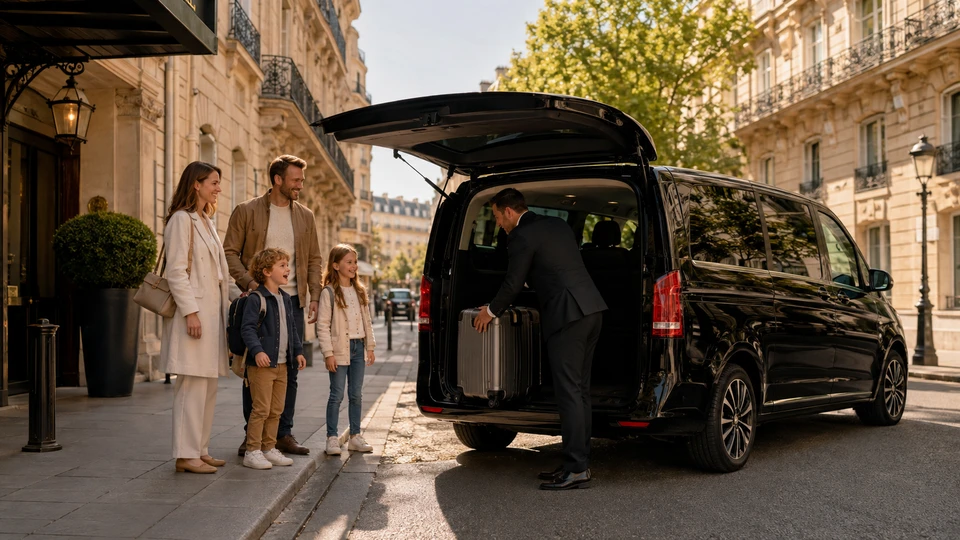
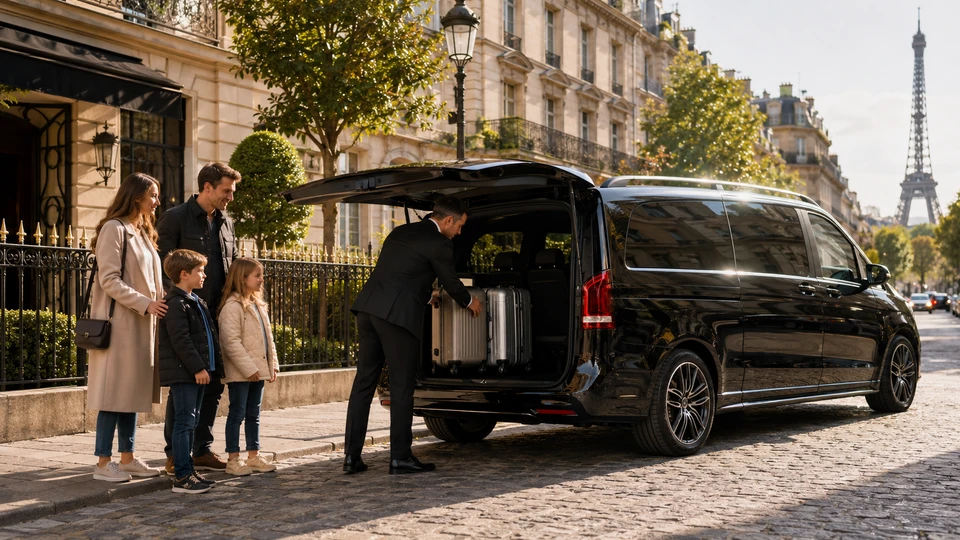
A private car that has been booked in advance comes to collect you at the Beauvais-Tillé arrival terminal — the driver is waiting for you with a name plate — and takes you directly to your CDG terminal by means of the A16/A1 motorway, making no stops, no transfers, and no need to catch a timetable.
The usual travel time is between 55 and 90 minutes, depending on traffic and the time of day; the price level is €€, with the rate given per vehicle not per person, a point which is important when there are multiple people involved.
- Pros: flight-tracked pickup, fixed price agreed before you land, direct terminal drop-off
- Cons: costs more than the bus for a solo traveller, needs booking ahead
Taxi
Verdict: it does work, but you're paying the full retail price for the same route.

At the taxi rank outside both the Beauvais-Tillé terminals, taxis will take you on the same A16/A1 route as a private transfer. The only difference is that you have to hail the taxi when you arrive rather than booking a fare and fixing the price in advance—since it is a long journey between airports rather than a short trip through the city, there is no fixed rate, unlike the situation with some of the shorter Paris routes.
Price level: €€€, as the most expensive of the direct services. The journey time is about the same as that of the transfer, ranging from 55 to 90 minutes.
- Pros: available on arrival without pre-booking
- Cons: highest price bracket, no fixed fare agreed up front, queue length at the rank varies by flight bank
Direct Bus (FlixBus)
Verdict: the cheapest option, provided that the calendar and the clock match up.
FlixBus operates a direct coach from Beauvais Sud to Charles de Gaulle Airport, arriving at the CDG bus station. It is the most economical option available, although it runs only six days a week, so verify the timetable against your travel day before making plans.
The journey takes about 1 hour and 20 minutes and the price is given as € per person.
- Pros: cheapest direct option, no changes required
- Cons: doesn't run every day, one bus a day rather than a rolling timetable, tight if your connection window is short
Train + RER Combo
The verdict is that it's all right provided that you have some extra time and lightweight bags; otherwise it's very unpleasant.
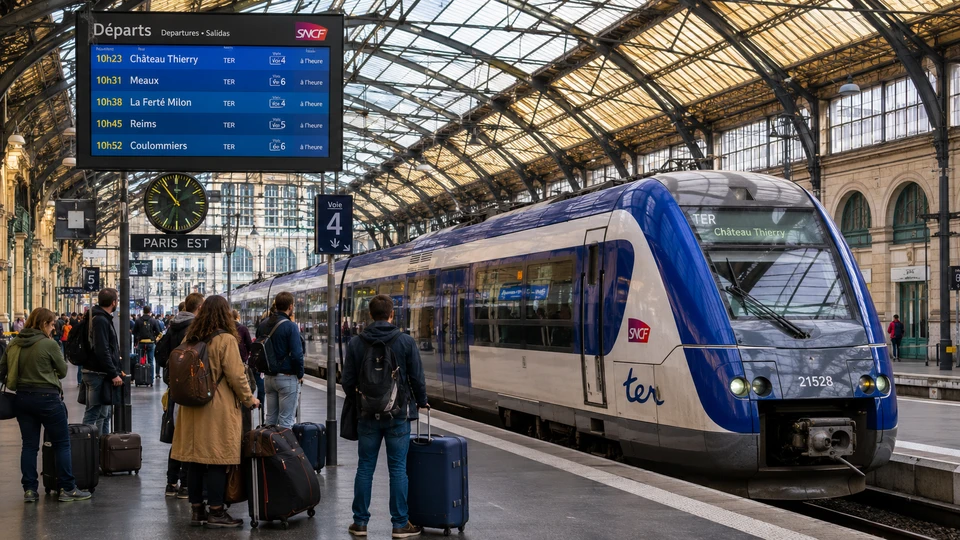
There is no direct train available, so you'll have to take a regional service from Beauvais station to Paris Nord (Gare du Nord), then catch the RER B back to CDG. This is a perfectly viable option for a single traveller who is carrying only a backpack and has a sufficient amount of time between connections—indeed, it isn't a bad way of seeing a bit of the city while travelling—but if you're travelling with suitcases and have to make two changes, it doesn't take long before the journey becomes anything but relaxing.
The journey takes roughly one hour fifty-five minutes to two hours thirty minutes, including the change at Gare du Nord. The price is at the €€ level per person and becomes more expensive if you're travelling as a family.
- Pros: frequent departures, no need to pre-book far ahead
- Cons: two changes with luggage, longest realistic journey time, per-person pricing hurts for groups
You can check official train schedules and connections on the SNCF timetable page
Car Rental
Verdict: This only makes sense if CDG is not your final stop.

You can rent a car in Beauvais and drop it off at CDG, and the route is the same as the A16/A1 road. However, because of fuel costs, tolls, and the one-way drop charge, this option rarely makes sense compared to a private transfer unless you intend to detour somewhere else in the Paris area first.
- Pros: flexible if you have stops to make along the way
- Cons: one-way drop fees, tolls on the A1, parking logistics at CDG before your flight
Side-by-Side Comparison
| Option | Door-to-door time | Price level | Luggage | Transfers needed | Best for |
|---|---|---|---|---|---|
| Private transfer | ~55–90 min | €€ | No limit, handled by driver | None | Groups, families, tight connections |
| Taxi | ~55–90 min | €€€ | No limit | None | Last-minute, no pre-booking |
| FlixBus | ~1h20m | € | Limited hold space | None (when running) | Solo budget travellers, flexible dates |
| Train + RER | ~1h55m–2h30m | €€ | Awkward with 2 changes | 1 (Paris Nord to RER B) | Light packers with time to spare |
| Car rental | ~55–90 min (driving) | €€–€€€ | No limit | None | Travellers adding extra stops |
Which of the options is right for you??
For families with small children: arranging a private transfer with a child seat booked in advance is worth while at Gare du Nord if you're taking a stroller and have a five-year-old.
For budget travellers alone: if your connection time is ample and your travel dates match up with FlixBus's timetable, this really is the cheapest method of covering the distance.
For business travellers who are connecting to a long-haul flight, having a fixed time for pickup and a driver who monitors the status of your incoming flight is what protects the one thing you can't get back — your onward check-in window.
Groups of four or more: split a private transfer's per-vehicle price four ways and it often comes out lower per head than four separate train or bus tickets.
For people having a lot of luggage—such as ski bags, golf clubs, and large suitcases—the two changes and the station stairs won't match; in that case, take the direct route.
Late-night or early-morning arrivals: Beauvais's low-cost schedule means plenty of flights land outside normal hours, when the RER B is running a reduced service or not at all — road transport is your only reliable option then.
The Case for Booking a Private Transfer with Top Paris Transfer
The relevant figures for this route are as follows: when a family of four buy train tickets, they pay four times the amount, whereas a private transfer is charged on a per-vehicle basis — therefore, for a group, the transfer often ends up being cheaper per person than four individual €€ train fares, without even considering the trouble of having to make two changes with their bags.
We'll monitor your arrival time in Beauvais-Tillé, so if your flight is late, the driver will still be waiting for you. There will be no unexpected charges, no need to worry about per-person bus tickets — just one fixed price, which you and the driver agree upon before you land, and a driver at the arrivals hall who has a name board and will take you directly to the car. Child seats can be arranged with no extra hassle, and there is ample boot space, so ski bags or a double buggy don't need to be discussed.
A recent example was a couple who arrived at Beauvais on an early Ryanair flight and then had a long-haul connection at CDG Terminal 2E three hours later. The FlixBus service was not operating that day, and the train journey required a change and involved two large suitcases. Because they had pre-booked their transfer, they could make the journey from terminal to terminal with more than an hour's buffer time.
👉 Book a private transfer from Beauvais to Charles de Gaulle with Top Paris Transfer: the price is fixed, and the driver will be waiting for you at the arrivals hall.
When to Travel: Traffic & Timing on This Route
Outside the peak times, the A16 is quite clear, as it is not a route used by commuters going into central Paris. The bottleneck is further south, where on weekday mornings (from about 7:30 to 9:30) and evenings (from 17:00 to 19:30) traffic coming from the northern ring roads and the A1 corridor near Roissy builds up.
The A1/CDG junction becomes highly congested during school holidays and in the lead-up to Christmas, because it handles a large amount of regular airport traffic in addition to the transfers to Beauvais. When your connection time is less than two hours, it is not optional to add extra buffer time during these periods.
What This Route Really Costs
The prices can be clearly seen according to the mode of transport: FlixBus is the € choice, with the fare charged per person and it is the cheapest option overall when the service is running. The train plus RER also comes to €€ per person when you add both sections together, so it ceases to be a good deal for anyone travelling with others. Both the private transfer and the taxi are priced at €€ and €€€ respectively, but in both cases the charge is per vehicle — the transfer becomes the better value as soon as there is more than one passenger.
Things you should be aware of include tolls on the A1 when driving yourself or hiring a car, the one-way drop charge associated with car rentals, and the straightforward cost of missing a connection if a delay in a public transport section causes you to rebook your flight. For a typical group of two or more with a tight connection, the higher overall price of a private transfer is generally the cheaper option once the risk of missing a flight is eliminated.
Mistakes to Avoid on the Beauvais → Charles de Gaulle Journey
- If you assume there is a direct train, that's not the case since the journey involves going from Beauvais to Paris Nord and then taking the RER B back out, and if you treat this as one continuous trip you'll be wrong about the timing.
- If you check the FlixBus timetable too late, you will find that the service does not operate every day of the week, and this fact only becomes apparent after you have landed, leaving you in a rush.
– Underestimate the time it will take to get to your terminal at CDG. If you are directed to a bus station or an RER stop, you should allow extra time to reach your particular terminal, particularly 2E or 2F. - If you book a direct connection without any buffer time, then with two changes and no guaranteed padding of the timetable, you'll be asking for trouble since the time between landing at Beauvais and the departure of your CDG flight is under two hours.
- Without taking into account the weekday rush hour around the A1/CDG junction. A trip which takes less than an hour at 11 a.m. may become much longer at 8 a.m. or at 6 p.m.
- Forgetting the luggage restrictions on buses and trains. Bags that are not a problem in a private car can be rather inconvenient when travelling on a coach or going through the turnstiles at a station.
FAQ
Is there a direct train from Beauvais to Charles de Gaulle?
By no means—you have to take a regional train to Paris Nord (Gare du Nord) and then switch on to the RER B in order to get to CDG; the entire journey takes about one hour fifty to two hours thirty.
How long does the drive from Beauvais to CDG actually take?
Normally, it takes about 55 to 90 minutes to get there using the A16 and A1; during weekday rush hour near the A1/CDG junction, add an extra 20 to 40 minutes.
Does the FlixBus run every day?
Not at all—the direct flight from Beauvais Sud to CDG runs six days a week, not every day, so it's a good idea to check the current timetable against your travel date before relying on it.
Is a private transfer worth it for a solo traveller?
If your budget is tight and your connection window is generous, the bus or train can work fine solo. A private transfer earns its keep on tight connections, with luggage, or when travelling with anyone else — the per-vehicle price stops being a premium and starts being the practical choice.
Which CDG terminal will I be dropped at?
A private transfer takes you directly to your specific terminal — 1, 2 (with its sub-halls like 2E and 2F), or 3 — based on your flight, so there's no need to identify the right terminal shuttle yourself.
Is the A16 usually busy on this route?
Not especially — it's not a commuter corridor into Paris. The congestion tends to build further south, near where the A1 meets the roads into CDG, particularly during weekday peaks and school holiday travel days.